


Exploring the Untold Story of Vanport, Oregon's Rise and Fall.

Updated: Aug 11
Vanport, Oregon vanished so fast that people who left for a holiday afternoon came back to find their streets, schools, churches, and living rooms underwater.
That’s the part that still catches people off guard. Vanport wasn’t an old mining camp that faded away over decades. It wasn’t a tiny settlement with a few weathered cabins and a cemetery on a hill. It was a full city, built almost overnight during World War II, home to tens of thousands of people, then wiped off the map in a single Memorial Day flood in 1948.
Today, if you walk around the area near Delta Park, Portland International Raceway, and the low ground between Portland and the Columbia River, you won’t see much that looks like a lost city. That makes Vanport even stranger. The ghost isn’t in standing buildings. It’s in the shape of the land, the floodplain, the memories, and the way Portland grew after the water went down.
Vanport’s story is about wartime urgency, housing shortages, race, work, family, poor planning, and what happens when officials trust temporary systems for permanent lives. It’s also about resilience. Survivors carried Vanport’s memory into Portland, into schools, into churches, into civil rights work, and into the city’s long conversation about who gets protected when disaster comes.


Vanport, Oregon, was a city built quickly for a war that couldn’t wait.
Vanport was born from a problem the Pacific Northwest couldn’t ignore: World War II needed ships, and shipyards needed workers.
When the United States entered the war, Henry J. Kaiser’s shipyards in Portland and Vancouver became major engines of production. Workers poured in from across the country, including the South, the Midwest, and other parts of the West. Many came with families. They weren’t visiting for a season. They needed roofs, beds, kitchens, schools, grocery stores, bus routes, doctors, and a way to build a life while the war demanded everything they could give.
Portland didn’t have enough housing for them.
So Vanport was built on low-lying land between Portland and Vancouver, near the Columbia River. Its name came from the two cities it sat between: Vancouver and Portland. Construction began in the early 1940s, and the place rose with the speed of an emergency project. Instead of brick homes and tree-lined subdivisions, Vanport got apartment blocks, dormitories, utility buildings, schools, and shops designed to meet a need right now.
It was never meant to feel timeless. It was meant to work.
At its peak, Vanport was one of the largest cities in Oregon. It had thousands of housing units and a population often described as reaching around 40,000 people during the war years. For a place many officials saw as temporary, that’s a stunning number.
A rough timeline helps show how compressed the story was:
Year | What happened |
1942 | Vanport was developed to house workers for Kaiser shipyards and related wartime industries. |
1943 to 1945 | The city grew rapidly as workers and families arrived for war jobs. |
After 1945 | Shipyard work slowed, but many people stayed because housing options elsewhere were limited. |
1946 | Vanport College opened, serving veterans and working adults. |
May 30, 1948 | A flood breached the protective berms and destroyed the city. |
After 1948 | Survivors scattered across Portland and beyond, while Vanport College later became part of Portland State University’s origin story. |
Vanport, Oregon, was unusual from the start because it forced a segregated region to confront change faster than it wanted to. Portland had a small Black population before the war, partly because of Oregon’s long history of exclusionary laws, racist housing practices, and social barriers. Wartime labor needs changed the numbers quickly. Black workers came for shipyard jobs, and many lived in Vanport because other parts of Portland shut them out through discrimination, restrictive rental practices, or simple refusal.
So Vanport became one of the most diverse places in Oregon at the time. Black and white families lived closer together than they did in much of Portland. Children attended schools in the same city. People lined up at the same shops and rode buses to the same shipyards.
That doesn’t mean Vanport was free of racism. It wasn’t. But it did create a rare environment where people from different regions and backgrounds had to share space, services, and daily routines. Some former residents remembered that closeness with warmth. Others remembered tension and unequal treatment. Both memories can be true.
Vanport was a wartime answer to a housing crisis, but it became much more than a housing project. It became a city with its own rhythms.

What daily life felt like in a city made of temporary walls
It’s easy to picture Vanport as a gray, stamped-out workers’ camp. That misses the human part.
People made homes there.
Apartments were small. Buildings were plain. Mud was common in wet weather. The city sat on vulnerable land, and everyone knew the river was nearby. Still, residents cooked dinner, decorated rooms, started friendships, raised kids, attended dances, joined churches, and waited for paychecks. Children turned open spaces into playgrounds. Adults built routines around shift work, shopping, school events, and buses.
Former residents, in oral histories and public memories, often describe Vanport as a place of contradictions. It could feel crowded, muddy, and provisional. It could also feel lively, neighborly, and full of possibility.
One common memory from people who grew up there is the freedom children felt. Kids played outside with whoever lived nearby. They remember running between apartment buildings, exploring fields, and treating the whole development as one big neighborhood. Some recalled not fully understanding the racial and economic pressures adults faced. To a child, Vanport could feel like a place where families lived side by side.
Adults saw more. They knew Vanport carried a stigma. Some Portlanders looked down on it as temporary housing for war workers, less fortunate families, and newcomers. Black residents dealt with racism both inside and outside Vanport. After the war, when jobs changed and many wartime workers were no longer needed in the shipyards, housing became even more uncertain.
Yet Vanport also offered things many residents couldn’t easily find elsewhere.
Schools gave Vanport a lasting legacy.
Vanport had schools for children, and those schools mattered. In a region with a troubled record on race, Vanport’s schools became part of the story of integration in Oregon. Children of different backgrounds studied in the same system, which shaped how some former students remembered the city. The classrooms weren’t magic solutions to racism, but they did create daily contact that many other Oregon communities avoided.
Then there was Vanport College.
Vanport College opened after the war to serve veterans and working adults, many of whom needed flexible education. It started in the same practical spirit as the city itself: people needed access, so the college met them where they were. When the flood destroyed Vanport, the college didn’t disappear. It moved, adapted, and helped lay the groundwork for what became Portland State University.
That connection is one reason Vanport’s history still reaches beyond the flood. A city built as temporary housing helped plant the roots of a major urban university.
Residents turned plain housing into a real community.
Anecdotes from former residents often linger on small details rather than big historic themes.
People remembered laundry hanging near apartment windows. They remembered neighbors watching one another’s children. They remembered the smell of meals in crowded units after long shifts. They remembered mud, especially the kind that stuck to shoes and followed people indoors. They remembered buses packed with workers headed to the yards.
Some families arrived with almost nothing but the promise of work. For them, Vanport offered a start. It wasn’t glamorous, but it was shelter. It was a paycheck within reach. It was a place where a family could land after a long trip west.
One type of story appears again and again in survivor accounts: people didn’t think the city would last forever, but they also didn’t think it would vanish in an afternoon. That gap between “temporary” and “disposable” sits at the heart of Vanport’s tragedy.
Officials may have seen the buildings as temporary. Residents filled them with permanent memories.

The Memorial Day flood that erased Vanport
The disaster came on Sunday, May 30, 1948.
The Columbia River was swollen from spring runoff. The region had seen conditions that put pressure on the dikes and berms protecting low-lying areas. Vanport sat in a floodplain, and its safety depended on those barriers holding.
That day was Memorial Day, and many residents were away from home or preparing for a relaxed afternoon. Some had gone to picnics, church gatherings, or family outings. Others were at home. The danger did not arrive as a dramatic warning everyone could clearly understand.
Residents received reassurance that the dikes were safe at that moment and that they would have time to leave if needed. The most widely remembered warning told people not to get excited. That message has become one of the hardest parts of the story to read now, because it shows how disaster communication can fail even before the water arrives.
Then a railroad berm gave way.
Water rushed into Vanport with terrifying speed. Streets became channels. Buildings shifted, broke apart, or floated. People grabbed children, coats, photo albums, pets, whatever they could reach. Some had minutes. Some had less.
Survivors later described the sound as something they never forgot: rushing water, cracking wood, people shouting, cars stalling, furniture banging against walls. For children, the memory often came in flashes. A parent’s hand. A climb to higher ground. A bus ride. A floating house. A lost toy. Water where a street had been.
The official death toll is usually given as 15 people, though some community members and later observers have questioned whether the full human cost was captured. What cannot be questioned is the scale of displacement. Tens of thousands of residents lost their homes. Many lost nearly everything they owned.
Vanport didn’t decline in the slow way most ghost towns do. It was gone.
Why the flood was so destructive
Several factors made the disaster worse:
The city sat on low land.
Vanport was built in a flood-prone area near the Columbia River. The location made sense for quick access to shipyards and available land, but it came with serious risk.
The housing was temporary by design.
Many buildings were not made to survive a major flood. They served an urgent wartime need, not a long-term safety plan.
The population included many people with limited options.
Residents stayed after the war because Portland’s housing market was tight and discriminatory. For many Black families, Vanport was one of the few places they could live.
Warnings did not match the danger.
The reassuring tone of official communication left many people unprepared for how fast the situation would change.
Evacuation was difficult
A large population, limited time, and fast-moving water made orderly escape nearly impossible once the breach happened.
Disasters are rarely only “natural.” Floodwater may be natural, but the level of harm depends on human choices: where people are allowed to live, how infrastructure is maintained, how warnings are written, and whose safety gets taken seriously.
Vanport shows that clearly.
This is where the theater used to be.

Why Vanport still matters to cities and disaster planning
Vanport is more than a sad local history story. It has lessons that still matter for urban development and disaster management across the United States.
Cities still build in floodplains. Temporary housing still becomes long-term housing. Low-income residents still often live in places with higher environmental risk. Official warnings still sometimes soften danger because leaders fear panic. And after disasters, displacement still falls hardest on people who had the fewest options before the crisis.
That’s why Vanport feels modern, even though the flood happened in 1948.
Temporary housing can become permanent life.
Vanport was planned as wartime housing, but residents didn’t stop needing homes when the war ended. The shipyards slowed down, but families remained. Veterans enrolled in college. Children kept attending school. People built networks.
This happens often in city planning. A “temporary” solution sticks around because the deeper problem never gets solved. The buildings may be temporary, but the people are not.
Vanport forces a hard question: If a city creates emergency housing, who is responsible when that housing becomes the only realistic option for thousands of people?
The answer can’t be “no one.”
Risk follows inequality
The flood did not affect every Portland-area resident equally. It destroyed a city where many residents lived because they had been pushed there by economics and racism.
Black Portlanders were especially affected. Vanport had housed a large share of the region’s Black population. After the flood, many survivors tried to find housing in Portland, but discriminatory practices limited where they could go. Several Black families settled in North and Northeast Portland, helping shape the city’s cultural and political life for generations.
That history connects Vanport to later conversations about redlining, urban renewal, freeway construction, and displacement in Portland. The flood scattered people, but it didn’t erase the systems that had limited their choices.
Disaster warnings need plain honesty.
One of Vanport’s clearest disaster management lessons is communication.
People need warnings that are specific, direct, and matched to the risk. Reassurance can be dangerous when conditions are uncertain. Telling people they’ll have time to leave may reduce panic in the moment, but if the timeline changes quickly, that reassurance can cost lives.
A better warning would have told residents what was known, what was not known, and what actions they should take right away. Modern emergency management often uses clearer evacuation levels, maps, alerts, and repeated messages across channels. Vanport shows why those tools matter.
Memory is part of recovery.
After the flood, physical Vanport disappeared. That made memory even more important.
For many years, the site did not carry the kind of visible memorial presence you might expect for a destroyed city. People drove over, around, or past the area without realizing how many lives had once filled it. Over time, historians, artists, former residents, descendants, and community groups worked to bring Vanport back into public conversation.
That recovery of memory matters. Without it, the land looks empty. With it, the same land becomes a place of warning, grief, migration, work, childhood, and survival.


Visiting the site today takes imagination and respect.
Urban explorers often love places where the past still stands in brick, rust, and broken glass. Vanport asks for a different kind of attention.
There are no grand ruins to wander through. You won’t find a silent downtown with storefronts still standing. Much of the former site is now covered by roads, recreation areas, open land, and modern development near Delta Park and Portland International Raceway.
That can feel disappointing if you expect a classic ghost town. But Vanport’s invisibility is part of its power.
To understand the place, you have to read the land. Notice how flat and low it is. Think about the river systems nearby. Picture apartment buildings laid out in rows. Picture children walking to school, shipyard workers waiting for buses, college students carrying books, families listening for news about the rising water.
Then picture all of it gone by nightfall.
A respectful visit isn’t about hunting for ruins. It’s about standing in a place where a city existed and letting that fact rearrange what you see.
If you go looking for Vanport history, keep a few things in mind:
Start with maps and historical context before visiting.
Old maps and local history resources help connect today’s roads and landmarks to the former city layout.
Treat the area as a memorial landscape.
Even where there are no visible ruins, people lost homes and loved ones there.
Look for public markers and local exhibits.
Museums, universities, and community history projects in Portland have helped preserve Vanport stories.
Listen for survivor voices.
Oral histories are some of the richest sources for understanding daily life before the flood.
Vanport rewards patience. The less it shows on the surface, the more you have to bring curiosity, humility, and imagination.
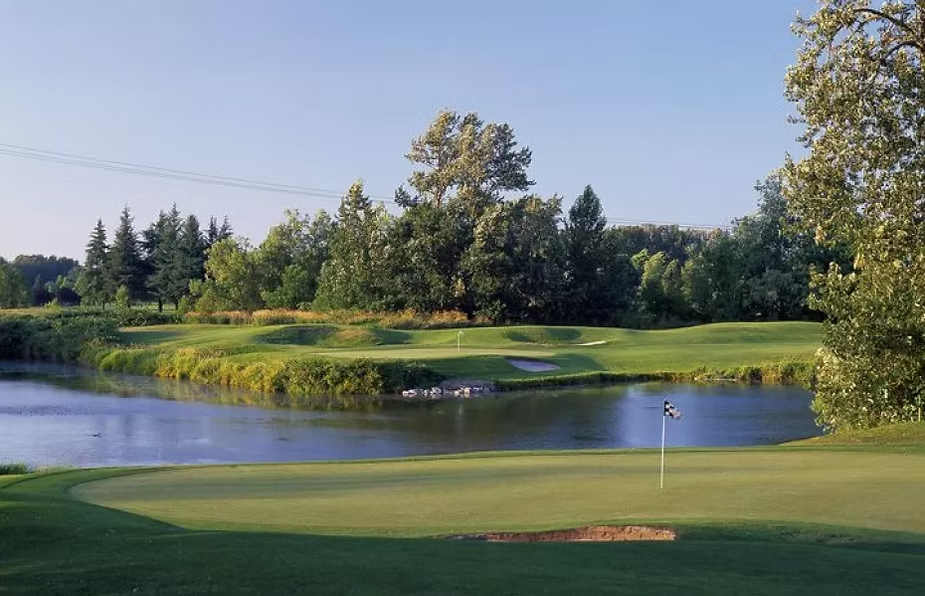
I spent some time in the bleachers of the International Raceway and wondered how many people come here to watch the races and don't realize they're in an abandoned ghost town. How many people even go out to Heron Lakes Golf Course and play a round of golf, not having a clue that Vanport used to be here?


If you ever come to this area and want to see the old Ghost Town, you will have to drive to the southwest part of the Portland International Raceway. If you get adventurous, you can even talk to the head groundskeeper there, and her name is Karen, a.k.a. The Mayor of Vanport. She and her parents used to live in Vanport, and she has a lot of interesting stories to share. She also has a lot of items that she has found around the area.


FAQ
Was Vanport a real city?
Yes. Vanport was a large wartime housing community between Portland, Oregon, and Vancouver, Washington. It had homes, schools, shops, public services, and, for a time, one of the largest populations in Oregon.
Why was Vanport built?
Vanport was built during World War II to house workers and families connected to the Kaiser shipyards and other war industries. Portland did not have enough housing for the sudden arrival of workers.
What happened to Vanport?
On May 30, 1948, floodwaters from the Columbia River breached a protective berm and rushed into the city. The flood destroyed Vanport and displaced tens of thousands of residents.
Can you visit Vanport today?
You can visit the general area where Vanport stood, near Delta Park and Portland International Raceway, but you should not expect a traditional ghost town with standing ruins. The site is best understood through maps, markers, oral histories, and the shape of the land.
Why is Vanport important?
Vanport matters because it connects World War II labor, housing discrimination, racial change in Oregon, urban planning, and disaster preparedness. Its story shows how decisions about land, housing, and warnings can shape who survives a disaster and what happens afterward.
Vanport was built fast, lived in deeply, and destroyed suddenly. That’s why it stays with people.
It reminds us that cities are more than buildings. They’re promises. A place to sleep is a promise. A warning from officials is a promise. A dike is a promise. So is the idea that temporary housing can still protect real families.
In Vanport, too many promises failed at once.
What remains is a different kind of ghost town, one without many ruins but full of echoes. If you stand on that low ground today, the city may not announce itself. Give it time. The story is still there, just under the surface.
Final Thoughts on Vanport
Vanport’s story is one of ambition, resilience, and tragedy—a city built in haste during World War II to house shipyard workers, and lost in a single day to the devastating flood of 1948. What remains is not the physical town, but the memory of its diverse community: a place where thousands of families, including many African Americans migrating west, found opportunity and forged new lives.
The floodwaters erased the structures, but they could not wash away Vanport’s legacy. Its rise and fall reshaped Portland’s social and cultural landscape, influencing housing, civil rights, and community identity for decades to come. Today, remembering Vanport is an act of honoring both the promise it represented and the lessons it left behind.
In reflecting on Vanport, we are reminded that cities are more than buildings—they are stories, struggles, and hopes. To walk through its history is to acknowledge both the fragility of human endeavor and the enduring strength of community.
Because of the scams going on with Airbnb and Vrbo, I will not recommend places listed here on my blog. Here is a link to a couple of cases if you would like to read them.
Places To Stay:
You can show your appreciation with a virtual coffee if you have found value in my blog.

Do not forget to subscribe to get my monthly newsletter.
Some of the links found on my website are affiliate links. I earn from qualifying purchases as an Amazon Associate and an Expedia Associate. Through other links, I may also receive a small commission at no extra cost to you. Using them is a way to support me, help offset the cost of running this website, and ensure that I can continue providing free content and resources.
I truly appreciate the support!

Best understanding of Vanport II’ve gained online. Thank you.
Great pictures! Love the old toys!