


Uncover Lopburi Monkey Temple, Thailand. It Will Leave You Amazed

Updated: Aug 11
A monkey might steal your water bottle before you’ve even taken your first photo. That’s part of the chaos, charm, and warning label of visiting Lopburi Monkey Temple in central Thailand.
Officially, the temple most travelers mean is Phra Prang Sam Yot, a striking Khmer-style ruin in the heart of Lopburi city. Unofficially, it’s “the monkey temple,” because hundreds of long-tailed macaques rule the streets, railings, shrines, and traffic lights around it like they’ve owned the place for centuries.
They haven’t, of course. But after a few minutes there, it can feel that way.
Lopburi is one of Thailand’s oldest cities, with layers of Khmer, Ayutthaya, and modern Thai history sitting right on top of each other. What makes the Monkey Temple special is the mix: ancient stone towers, Buddhist devotion, local folklore, and a troop of clever monkeys who know exactly how to unzip a backpack.

The history of Lopburi Monkey Temple starts with Khmer roots.
Phra Prang Sam Yot is one of the most recognizable landmarks in Lopburi. Its name means “three sacred prangs,” and that’s exactly what you see: three connected towers built in a Khmer architectural style, similar to temple structures found in Cambodia.
The temple is generally linked to the Khmer period, when Lopburi was an important city in the region. The three towers were built from laterite and decorated with stucco, and the site likely had Hindu or Mahayana Buddhist associations before later becoming part of Thailand’s Buddhist landscape.
That shift says a lot about Lopburi itself. The city has changed hands, faith expressions, and political roles over time, yet it kept absorbing new influences rather than erasing the old ones.
During the Ayutthaya Kingdom, Lopburi rose again in importance, especially under King Narai the Great in the 17th century. He made Lopburi a major royal and diplomatic center, and you can still see traces of that era around the city, including palace ruins and European-influenced buildings.
Phra Prang Sam Yot isn’t a polished, quiet temple complex like some famous sites in Bangkok or Chiang Mai. Its appeal is rougher and more unusual. The towers sit near roads, shops, shrines, and everyday city life. You don’t feel like history has been sealed behind glass. You feel like it’s still being lived around, climbed on, and occasionally raided by monkeys.
Why the monkeys matter in Lopburi
The macaques are the star attraction for many visitors, but they’re more than a quirky photo opportunity. In Lopburi, they’re tied to local belief, identity, and tourism.
Many people connect the monkeys with Hanuman, the monkey warrior from the Ramakien, Thailand’s version of the Indian epic Ramayana. Hanuman is brave, loyal, mischievous, and powerful, which feels pretty fitting when you watch a macaque leap from a temple wall onto a street sign with total confidence.
Locals have long tolerated, fed, and lived alongside the monkeys. Some treat feeding them as an act of merit, while others see them as part of Lopburi’s character and economy. The city is famous for its annual monkey feast, often called the Lopburi Monkey Buffet Festival, when large spreads of fruit and food are laid out for the macaques. It’s playful, photogenic, and very Lopburi.
That said, the relationship isn’t always simple. These are wild animals living in an urban place. They can damage buildings, snatch food, and scare visitors. For locals, they’re both cultural symbols and daily neighbors with sharp teeth.
That balance is what makes the place so interesting. Lopburi doesn’t present a sanitized version of Thai culture. It shows how religion, folklore, tourism, and real city life can overlap in messy, memorable ways.
What the monkeys are really like
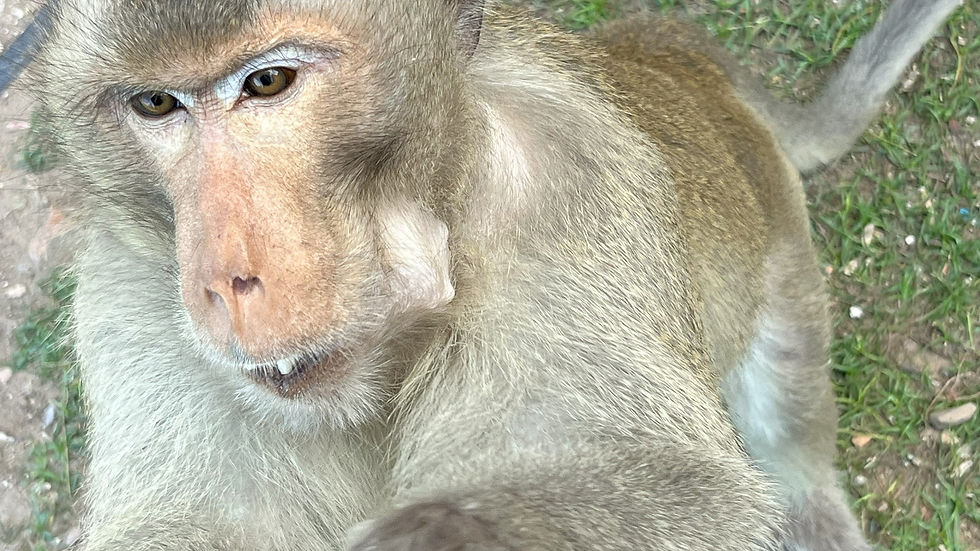
The monkeys around Phra Prang Sam Yot are usually long-tailed macaques. They’re smart, social, fast, and very used to humans.
You’ll see them grooming each other, chasing across rooftops, wrestling on the pavement, lounging on temple ledges, and watching tourists with the focus of tiny pickpockets. Younger monkeys tend to be extra playful. Bigger adults can be more dominant, especially around food.
They aren’t “cute pets,” even if they look adorable from a distance. They know tourists carry snacks, plastic bags, sunglasses, hats, and phones. Anything loose can look interesting to them.
Common monkey behavior around the temple includes:
Snatching food
If you carry snacks openly, assume a monkey has already noticed.
Jumping onto people
This can happen if they see food or shiny items, or if visitors encourage them.
Grabbing bags and bottles
Plastic bags are especially risky because monkeys often associate them with food.
Showing teeth
This can look like a funny grin, but it may be a warning sign.
Fighting with each other
Troop disputes can break out quickly, especially near food.
Watching them is great fun, as long as you stay calm and keep some space. The best moments often happen when you stop trying to pose with them and observe. A baby clinging to its mother, a group grooming in the shade, or a macaque casually sitting on an ancient stone carving can be more memorable than any staged selfie.

How to visit safely without annoying the monkeys
A good visit to Lopburi Monkey Temple comes down to one thing: respect the monkeys, but don’t trust them.
They’re not villains. They’re just wild animals that have learned human habits very well. If you act predictably and avoid tempting them, you’ll have a much easier time.
Keep food hidden or skip carrying it.
Don’t walk around the temple area with snacks in your hand. Avoid carrying fruit, chips, or drinks where monkeys can see them. Even a closed plastic bag can attract attention.
If you buy food nearby, put it inside a zipped bag and move away from the monkey-heavy area before eating.
Secure your valuables before you arrive.
Before you step near the temple, pack away:
Sunglasses
Loose hats
Water bottles
Dangling camera straps
Scarves
Small bags
Anything shiny or swinging
A crossbody bag with zippers works better than a tote. Keep your phone firmly in hand, and don’t wave it near a monkey’s face for a close-up.
Don’t feed them from your hand.
Feeding monkeys may look fun, but it teaches them to approach people more aggressively. It also puts your fingers close to their teeth.
If food is part of a managed local event, follow local instructions. On a normal visit, it’s better to watch than feed.
Don’t stare, tease, or touch.
Direct staring can feel threatening to some animals. Touching is a bad idea, even if a monkey comes close. Never tease a monkey with food or pretend to offer something and pull it back.
That’s a fast way to turn a funny moment into a bite.
Stay calm if one climbs on you.
If a monkey jumps onto you, don’t scream, hit it, or run. Stay still, avoid grabbing it, and let it move off. If it’s after an item, gently lower or loosen what it wants if that’s safe.
Running can trigger chasing. Panic makes the whole scene worse.
Give mothers and babies extra room.
Baby monkeys are cute, but adults can be protective. Keep a respectful distance from mothers with infants, and don’t crouch too close for photos.
Check current local guidance.
Rules and monkey management can change. When you arrive, pay attention to signs, barriers, and advice from staff or locals. If an area is closed, there’s usually a reason.


Architectural Marvel
While the monkeys offer amusement, the stunning architecture of the Lopburi Monkey Temple is equally captivating. The central prang rises to 24 meters and showcases distinctive Khmer-style architecture, adorned with intricate carvings that tell stories of the past. As you stroll through the temple grounds, please take a moment to appreciate the skillful craftsmanship involved in its construction.
The combination of ancient stone structures with the playful chaos of monkeys makes the temple an exceptional spot for photography. Imagine capturing the grandeur of the historical site alongside lively monkeys in their natural habitat. This unique visual juxtaposition is bound to delight anyone who visits.
The best time to visit Lopburi
The most comfortable time to visit Lopburi is during Thailand’s cool, dry season, roughly November through February. Days are still warm, but walking around ruins is much easier than in the hottest months.
March through May can be intensely hot. If you visit then, go early, wear a hat, drink plenty of water, and take breaks in the shade.
The rainy season, around June through October, can still be a good time to travel. Showers often come in bursts, and the city can feel less crowded. Bring a light rain jacket or umbrella, and expect slippery surfaces around old stone and pavement.
For the temple itself, early morning or late afternoon is usually best. The light is softer, the heat is lower, and the monkeys are often active. Midday can be harsh, especially if you’re standing around waiting for photos.
If you want the liveliest experience, look into the timing of the monkey festival in late November. Just know that it can draw crowds, photographers, and tour groups. It’s fun, but it’s not the quiet version of Lopburi.


A Cultural Experience
The Lopburi Monkey Temple is not just about impressive history and adorable monkeys. It provides an engaging cultural experience. The bustling atmosphere around the temple fosters friendly interactions among visitors, making it an ideal place to form new friendships.
Additionally, the temple is conveniently located within a broader historical zone in Lopburi, featuring various ancient sites. After your visit, consider exploring nearby attractions such as King Narai’s Palace. This palace showcases the legacy of the Ayutthaya Kingdom. You might also visit the San Phra Kan Shrine, home to a large population of monkeys. Each location adds depth to your understanding of the region’s historical tapestry.
How to get there and what to expect
Lopburi sits north of Bangkok and is commonly visited by train, van, car, or as part of a central Thailand route. The train is a popular choice because Lopburi’s station is close to the historic area, and the ride gives you a slower look at the countryside.
Once you’re in town, Phra Prang Sam Yot is easy to reach by walking, tuk-tuk, or local transport, depending on where you start. The temple area includes active streets, so watch both monkeys and traffic. It’s a strange combination, but that’s part of the experience.
Dress comfortably, but remember you’re visiting a historic religious site. Light clothing is fine in the heat, but it’s smart to avoid overly revealing outfits. Comfortable shoes help, since you’ll be walking across uneven surfaces and around old ruins.
Bring:
A zipped day bag
Water kept out of sight near the monkeys
Sunscreen
A hat that fits securely
Small bills for local purchases
A camera strap you can secure
Hand sanitizer
Plan for a few hours if you only want to see the monkey temple and nearby historic sites. Stay overnight if you want to slow down, eat locally, and see Lopburi after day-trippers leave.
I recommend visiting here as part of a tour group. I have done numerous tours with Wander Siam, and they are excellent. Wander Siam is based in Bangkok and offers tours throughout the area.

Nearby attractions worth adding to your Lopburi trip
Lopburi is much more than one monkey-filled temple. The historic center has several sites close enough to combine in a relaxed day.
King Narai’s Palace shows Lopburi’s royal side.
King Narai’s Palace, also known as Phra Narai Ratchaniwet, is one of the city’s key historical stops. The palace grounds reflect Lopburi’s role as a royal city during the Ayutthaya period. You’ll find ruins, courtyards, and museum displays that help connect the city’s local story to Thailand’s wider history.
It’s a great pairing with Phra Prang Sam Yot because it shows a different layer of Lopburi: less monkey chaos, more royal history.
Wat Phra Si Rattana Mahathat is atmospheric and easy to reach
Near the train station, Wat Phra Si Rattana Mahathat is a large temple ruin with impressive prangs, brickwork, and quiet corners. It’s one of those places where you can slow down and imagine how important Lopburi once was.
If you like ancient architecture, don’t skip it.
Phra Kan Shrine is closely tied to the monkeys.
Phra Kan Shrine sits near the monkey zone and is another important local religious site. Monkeys gather around here too, so the same safety rules apply. The shrine adds more context to how local belief and monkey lore overlap in Lopburi.
Ban Wichayen adds an international twist.
Ban Wichayen is connected to foreign envoys and officials during King Narai’s time. Its ruins hint at Lopburi’s diplomatic links and the international character of the royal court in the 1600s.
It’s not as famous as the monkey temple, but it helps round out the city’s story.
Sunflower fields make a seasonal side trip.
Lopburi province is known for sunflower fields during the cool season. If your timing lines up, they make a cheerful break from ruins and macaques. The exact blooming period varies with weather and planting, so ask locally before making a special trip.
A simple one-day Lopburi plan
If you’re visiting from Bangkok or passing through central Thailand, this easy route works well:
Arrive in Lopburi in the morning.
Visit Phra Prang Sam Yot before the heat peaks.
Walk or ride to Phra Kan Shrine.
Break for noodles, grilled chicken, or a cold drink.
Visit King Narai’s Palace.
Stop at Wat Phra Si Rattana Mahathat near the station.
Head back or stay overnight for a slower evening.
If you’ve got more time, add Ban Wichayen or a seasonal sunflower field trip.
The Essence of Lopburi
The Lopburi Monkey Temple is not merely a historical site; it represents a vibrant ecosystem where ancient ruins and playful monkeys coexist. This magical destination seamlessly blends culture, history, and nature, ensuring it captivates every traveler.
Whether you’re a history enthusiast, a lover of nature, or in search of unique travel experiences, the Lopburi Monkey Temple promises to leave an unforgettable mark on your journey through Thailand. Don’t miss the chance to witness this hidden wonder and its charming residents for yourself! I’m not recommending feeding the monkeys, but if you do, I was told they love these:

With its blend of stunning history, impressive architecture, and lively wildlife, you will surely leave with cherished memories and plenty of stories to share. Embrace a sense of adventure, and immerse yourself in the enchanting world of the Lopburi Monkey Temple!
FAQ
Is Lopburi Monkey Temple safe to visit?
Yes, it’s safe if you stay alert and treat the monkeys as wild animals. Keep food hidden, secure loose items, don’t touch the monkeys, and follow local signs or staff guidance.
What temple is called the Monkey Temple in Lopburi?
Most travelers use “Lopburi Monkey Temple” to mean Phra Prang Sam Yot, the three-towered Khmer-style ruin in central Lopburi. Monkeys also gather around nearby streets and shrines.
Can I feed the monkeys in Lopburi?
It’s better not to feed them during a normal visit. Feeding can encourage pushy behavior and may put you at risk of scratches or bites. If you visit during a managed festival or event, follow local instructions.
How long should I spend in Lopburi?
A half day is enough for the monkey temple and a few nearby ruins. A full day or overnight stay gives you more time for King Narai’s Palace, local food, and a slower look around the old city.
When is the Lopburi Monkey Buffet Festival?
The festival is commonly held in late November. Dates can vary, so check locally before planning a trip around it.
The takeaway
Lopburi Monkey Temple is one of those places that’s hard to compare with anywhere else in Thailand. You get ancient Khmer-style towers, royal history, Thai spiritual traditions, and streetwise macaques all packed into a few blocks.
Go for the monkeys, but stay curious about the city behind them. Visit early, secure your snacks, give the macaques space, and leave time for palace ruins and a good bowl of noodles. That’s the version of Lopburi you’ll remember long after the monkey photos stop making everyone laugh.
Because of the scams going on with Airbnb and Vbro, I will not recommend places listed here on my blog. Here is a link to a couple of cases if you would like to read them.
Places to Stay:
You can show your appreciation with a virtual coffee if you have found value in my blog.

Do not forget to subscribe to get my newsletter.
Some of the links found on my website are affiliate links. I earn from qualifying purchases as an Amazon Associate and an Expedia Associate. Through other links, I may also receive a small commission at no extra cost to you. Using them is a way to support me, help offset the cost of running this website, and ensure I can continue providing free content and resources.
I truly appreciate the support!


Comments