


Ayutthaya Historical Park Guide: Must-See Temples, Tips, and Personal Travel Stories

Updated: Aug 11
Ayutthaya has a way of making you slow down.
One minute you’re pedaling past traffic circles and noodle shops. The next, you’re standing in front of a weathered brick chedi that has watched over Thailand for centuries. Dogs nap in temple shade. Monks in saffron robes cross the road quietly. A rooster crows somewhere near a ruined wall. Then the late afternoon light hits the old stones, and the whole place feels alive again.
That’s the magic of Ayutthaya Historical Park. It isn’t a polished museum where history sits behind glass. It’s a living city layered around an ancient one, and you can move through it at your own pace.
Ayutthaya was once one of the great capitals of Southeast Asia. It was founded in 1350 and served as the capital of the Kingdom of Siam for more than 400 years. At its height, it was a major center of trade, diplomacy, religion, and art. Merchants and envoys came from across Asia and Europe. Temples rose across the island city. Royal processions, river trade, and Buddhist ceremonies shaped daily life.
Then, in 1767, the city was destroyed during a Burmese invasion. The capital later moved south, eventually to Bangkok. What remains in Ayutthaya today is haunting, beautiful, and deeply important. The ruins are part of a UNESCO World Heritage Site, and they tell the story of a kingdom that helped shape modern Thailand.
This guide walks through the must-see temples, how to plan your visit, and the little moments that made the city stick with me long after I left.

Ayutthaya’s story is bigger than its ruins.
Before visiting, I knew Ayutthaya mostly from photos: the Buddha head wrapped in tree roots, the tall prangs, the rows of headless statues. What surprised me was how much the city still feels connected to everyday Thai life.
The historic center sits on an island formed by rivers, including the Chao Phraya. That location made Ayutthaya powerful. Rivers worked like highways. Goods came in by boat. Foreign traders built settlements nearby. The city became wealthy, cosmopolitan, and influential.
Ayutthaya’s kings sponsored grand temples and monasteries, many built in brick and later covered with stucco. Some sites held royal relics. Others served as royal chapels or active monasteries. The architecture blends Khmer influence, Sri Lankan Buddhist forms, and local Thai styles. Once you start looking, you’ll notice differences everywhere.
Some ruins have tall corn-cob-shaped prangs. Others have bell-shaped chedis. Some are almost skeletal, with only brick foundations and pillars. Others still hold large Buddha images that draw worshippers today.
That mix matters. Ayutthaya isn’t just a collection of old buildings. It shows how Buddhism, monarchy, international trade, and Thai identity grew together over centuries. Even in ruin, the city carries a sense of power.
The best way to understand Ayutthaya is to give it time. Don’t rush from photo spot to photo spot. Let the scale of the old capital sink in.
My first morning there, I rented a bike and set out before the heat got serious. I expected to “see the temples.” That sounds tidy. In reality, I kept stopping. A broken wall here. A line of seated Buddhas there. A lotus pond near a crumbling chedi. At one point, I pulled over to watch school kids ride past a ruin like it was the most normal backdrop in the world.
That’s when Ayutthaya clicked for me. The old capital hasn’t vanished. It’s woven into the modern town.

The temples and ruins you shouldn’t miss
You could spend several days visiting temples in and around Ayutthaya. If you’ve only got one full day, focus on the central historic park and add one or two outer sites if you have time. These are the places I’d put at the top of the list.
Wat Mahathat is the one everyone remembers.
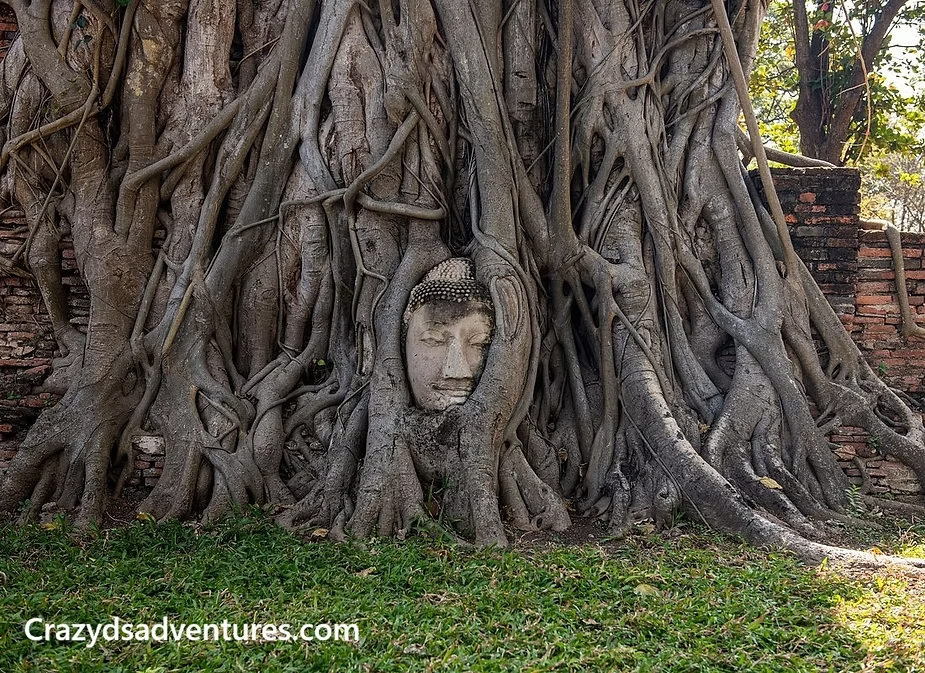
Wat Mahathat is the site most people picture when they think of Ayutthaya. It’s famous for the stone Buddha head entwined in the roots of a banyan tree. You’ve probably seen the photo, but seeing it in person feels different.
The head sits low to the ground, calm and almost hidden, with roots curling around it like they’ve been holding it for generations. Visitors gather quietly. Signs remind people to crouch or sit when taking photos, so their heads aren’t positioned above the Buddha image. It’s a small detail, but it says a lot about how to visit respectfully.
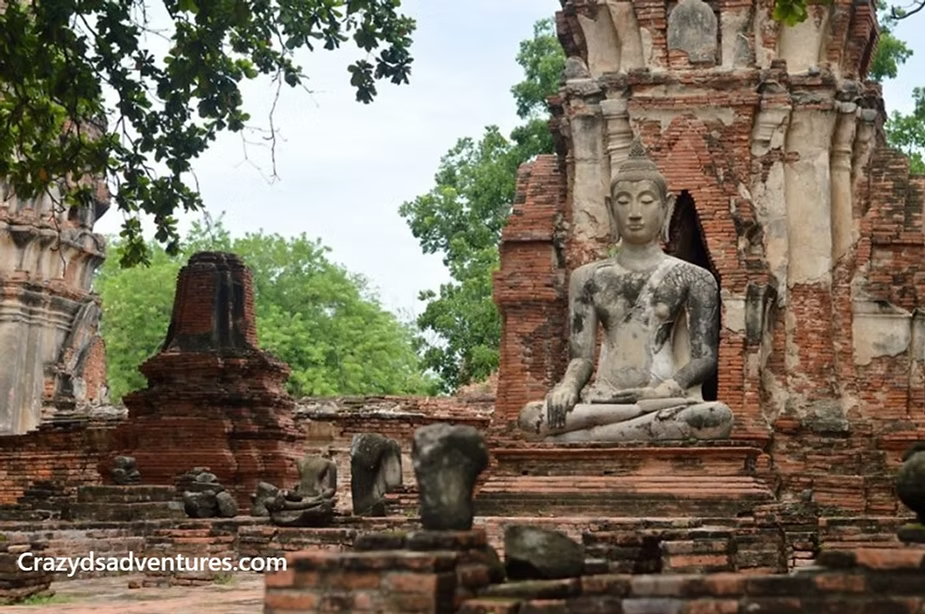
Wat Mahathat was once one of Ayutthaya’s most important temples. It likely held sacred relics and stood near the political and religious heart of the city. Today, much of it is ruined, but the remaining prangs, chedis, and Buddha statues give a strong sense of its former importance.
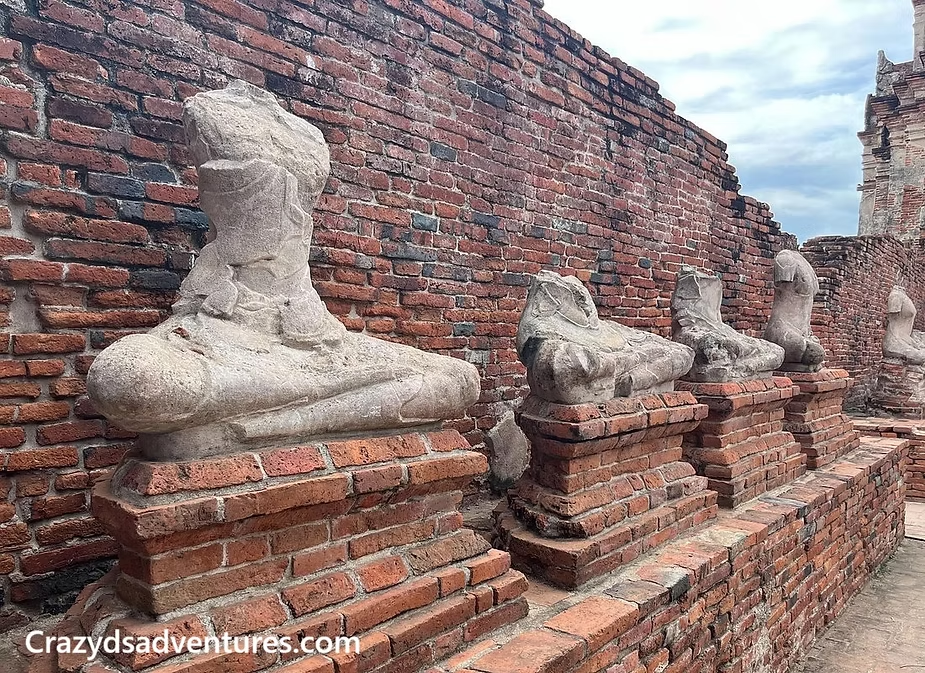
Walk slowly here. Don’t just make a beeline for the tree roots. Some of the most moving parts are the rows of damaged Buddha images, many without heads, sitting in quiet symmetry. They’re beautiful, but they’re also a reminder of violence, loss, and time.
Tip: Visit Wat Mahathat early in the morning if you want a calmer experience. Tour groups tend to build through the day.
Wat Phra Si Sanphet feels royal even in ruins.
Wat Phra Si Sanphet was my favorite site in the central park. It was the royal temple of the old palace complex, used by Ayutthaya’s kings. Unlike many monastery temples, it didn’t house resident monks. It stood within the royal area and played a major ceremonial role.
The three large chedis are the main draw. They stand in a row, elegant and balanced, and they once held the ashes of Ayutthayan kings. Even now, stripped of much of their former decoration, they have a calm authority.
I visited in the late afternoon, when the brick turned warm gold, and the grass around the ruins softened in the light. A few travelers wandered through, but it wasn’t crowded. I remember sitting on a low wall for a while, just looking at the scale of the place. It felt less dramatic than Wat Mahathat, but more majestic.
Nearby, you’ll find the remains of the old royal palace area and Viharn Phra Mongkhon Bophit, which houses a large bronze seated Buddha image. It’s worth pairing these together because they help you understand how religion and royal power sat side by side in Ayutthaya.
Tip: If you’re choosing one place for golden-hour photos in the historic park, Wat Phra Si Sanphet is a strong pick.
Wat Ratchaburana rewards curious wanderers
Wat Ratchaburana is close to Wat Mahathat, so it’s easy to combine the two. It was built in the 15th century and is known for its large central prang. The temple has a dramatic backstory tied to royal succession, but even without knowing every detail, the structure itself is striking.
The central prang rises above the surrounding ruins, with detailed stucco work still visible in places. If access is open during your visit, you may be able to go inside part of the crypt area. Conditions can change, so follow on-site signs and staff guidance.
This temple felt quieter when I visited. After the crowd around the Buddha head at Wat Mahathat, Wat Ratchaburana gave me space to breathe. I walked around the prang in a slow loop, watching lizards dart over sun-warmed bricks. It’s the kind of site where small details pull you in.
Look for:
Remaining decorative patterns on the central prang
The layout of the ordination hall and surrounding chedis
Views back toward nearby ruins
Brick textures that show layers of repair and age
Tip: Visit Wat Ratchaburana right after Wat Mahathat. They’re close, and together they show two different moods of Ayutthaya.
Wat Chaiwatthanaram is best at sunset.
Wat Chaiwatthanaram sits off the main island on the west bank of the Chao Phraya River. It takes a little more effort to reach, but it’s absolutely worth it.
This temple is one of Ayutthaya’s most photogenic sites. Its central prang and surrounding smaller prangs create a strong, symmetrical layout influenced by Khmer-style architecture. The temple was built in the 17th century, during the later Ayutthaya period, and it likely had royal significance.
The setting makes it special. Because it sits by the river, the light opens up around it. At sunset, the brick glows, the sky changes color, and the temple’s silhouette becomes unforgettable.
This was one of my favorite evenings in Thailand. I arrived a little too early, sweaty and hungry, wondering if I’d overplanned the day. Then the sun dropped lower, and everything changed. People got quieter. A few locals posed in traditional Thai clothing, which you can rent nearby. Boats moved along the river. The temple looked both grand and fragile.
Tip: Save Wat Chaiwatthanaram for late afternoon or sunset. Bring mosquito repellent, especially near the river.
Wat Lokayasutharam is simple but memorable.
Wat Lokayasutharam is known for its large reclining Buddha, an outdoor image resting calmly among low brick ruins. It doesn’t take long to visit, but it leaves an impression.
The Buddha image is long, pale, and serene, often draped in orange cloth. Compared with the towering prangs and royal chedis elsewhere, this site feels open and direct. There’s less to “figure out,” which can be nice after several temple stops.
When I stopped there, a vendor nearby was selling cold drinks, and I remember being wildly grateful for the simplest bottle of water. That’s one of those travel truths that doesn’t make it into romantic temple photos: Ayutthaya is hot, and cold water can feel like a blessing.
Tip: Don’t skip smaller sites just because they’re quick. They help round out the day and give you a break from the larger ruins.
Wat Yai Chai Mongkhon is worth the short trip.
Wat Yai Chai Mongkhon sits outside the central island, but it’s one of Ayutthaya’s most rewarding temples. Unlike many ruins in the historic park, it remains an active temple, so you’ll see worshippers, monks, offerings, and restored areas alongside historic structures.
The large chedi dominates the site, and rows of seated Buddha images line the temple grounds. The atmosphere is more devotional than archaeological. That contrast is useful. It reminds you that Buddhism in Thailand isn’t just something preserved from the past. It’s still lived and practiced.
Depending on your route, Wat Yai Chai Mongkhon pairs well with a driver or tuk-tuk itinerary, especially if you’re also visiting sites outside the island.
Tip: Dress and act respectfully here, since it’s an active religious site, not just a ruin.
How to plan a day that doesn’t feel rushed
Ayutthaya can be done as a day trip from Bangkok, but if you can stay overnight, I’d do it. The ruins are more beautiful early and late in the day, while midday can be brutally hot.
Here’s a realistic one-day route if you’re coming from Bangkok or staying in town.
Time | Plan |
Morning | Start with Wat Mahathat before it gets crowded, then walk or bike to Wat Ratchaburana. |
Late morning | Visit Wat Phra Si Sanphet and Viharn Phra Mongkhon Bophit |
Lunch | Take a break in town, cool down, and drink more water than you think you need |
Afternoon | See Wat Lokayasutharam or a smaller nearby site |
Late afternoon | Head to Wat Chaiwatthanaram for sunset |
Evening | Eat dinner by the river or near the night market area if it’s operating |
If you’re staying overnight, split this into two easier days. Do the central park on day one, then visit outer temples on day two. That gives you more time to wander, which is where Ayutthaya shines.
The best time to visit Ayutthaya
The most comfortable time to visit is generally November through February, when the weather is cooler and drier. “Cooler” is relative, because this is central Thailand, but it’s much easier for walking and biking.
March through May can be extremely hot. If you visit then, start early, rest during midday, and plan sunset temple stops. June through October is the rainy season. Rain can interrupt plans, but it also brings greener grounds and fewer visitors. A short downpour isn’t the end of the day if you’ve got flexible timing.
No matter the season, aim for:
Early morning for popular sites like Wat Mahathat
Midday for lunch, coffee, or a museum break
Late afternoon for Wat Phra Si Sanphet or Wat Chaiwatthanaram
Sunset near the river if skies are clear
My biggest mistake was thinking I could power through the heat because the distances looked short on a map. They are short, technically. But temple grounds are exposed, shade can be limited, and brick reflects heat. By noon, even a 10-minute ride can feel longer.
Plan like a relaxed person, not like a checklist person.
How to get there from Bangkok
Ayutthaya is close enough to Bangkok for a day trip, which makes it one of the easiest historic escapes from the capital.
Common options include:
Train
The train from Bangkok to Ayutthaya is usually the most classic option. It’s affordable, scenic in a low-key way, and brings you to Ayutthaya Railway Station, which is across the river from the historic island. From there, you can take a short ferry, tuk tuk, or local transport into town.
Minivan or bus
Minivans and buses connect Bangkok with Ayutthaya and can be convenient depending on where you’re staying. They may be faster, but comfort and drop-off points vary.
Private driver or tour
A private car or organized tour costs more, but it removes planning stress. This is a good choice if you want to see outer temples, travel with family, or avoid dealing with transport in the heat.
Boat tours
Some Bangkok to Ayutthaya trips include a river cruise segment. These can be pleasant, but they often take longer and follow a more fixed schedule.
How to get around Ayutthaya
Once you arrive, your transport choice shapes the whole day.
Bicycle
Cycling is popular and gives you freedom. The central historic area is mostly flat, and many temples are close enough to reach by bike. I loved biking in the morning. It made the city feel open and easy.
That said, traffic can be uneven, and heat is no joke. Wear a helmet if one is available, stay alert, and don’t assume drivers will give you tons of space.
Tuk tuk
Ayutthaya’s tuk tuks are practical for temple hopping. You can hire one for individual rides or negotiate for several hours. Agree on the route, time, and price before you start. This is a good option if you want to cover more ground without wearing yourself out.
Walking
Walking works for a few central sites, especially around Wat Mahathat, Wat Ratchaburana, and Wat Phra Si Sanphet. For the wider park, it gets tiring fast.
Scooter
Some travelers rent scooters, but only do this if you’re experienced, licensed, and comfortable with local traffic. Roads around the park can be manageable, but conditions vary.
Boat
A boat ride around the island is a memorable way to see temples from the water. Some routes stop at riverside sites. It’s especially nice near sunset.
If I went again, I’d bike in the morning, rest in the middle of the day, then use a tuk tuk or boat for late afternoon sites farther out. That gives you freedom without turning the day into an endurance event.

What to know before you go
A little preparation makes Ayutthaya much more enjoyable. The park is easy to visit, but it helps to know the rhythm of the place.
Dress respectfully and comfortably.
Many sites are ruins, but they’re still sacred places. Some are active temples. Dress with respect, especially if entering worship areas.
Good choices include:
Lightweight pants, a long skirt, or shorts that aren’t too short
A shirt that covers your shoulders, or a scarf to cover up when needed
Comfortable shoes you can walk in on uneven brick and dirt
A hat and sunglasses
You’ll see travelers dressed in all kinds of outfits, but covering shoulders and knees is the safer and more respectful choice at religious sites.
Bring cash and small bills.
Some temples charge small entry fees, and cash is useful for tuk tuks, drinks, snacks, and local vendors. Don’t rely only on cards. Keep small bills handy, so you’re not trying to pay for a bottle of water with a large note.
Hydrate more than feels normal.
This sounds obvious until you’re standing in full sun at your fourth temple. Bring water, buy more when you see it, and take breaks. Coconut water, iced coffee, and cold fruit can become emotional support items here.
I still remember sitting under a patch of shade near a temple wall, drinking an iced Thai tea too fast and feeling like I’d been personally rescued. Ayutthaya will give you grand historical moments, but it’ll also make you appreciate ice.
Don’t climb where you shouldn’t
Some ruins allow limited climbing or access to certain platforms. Others clearly don’t. Follow signs and barriers. The bricks are old, and the sites need protection. A better photo isn’t worth damaging a place that has survived for centuries.
Be mindful with Buddha images.
When taking photos with Buddha images, avoid posing in a silly or disrespectful way. Don’t touch sacred statues. At the famous Buddha head in tree roots at Wat Mahathat, keep your head lower than the Buddha image when photographing nearby.
This isn’t just rule-following. It shows respect for a living religion and local culture.
Leave room for the unexpected.
The best part of my Ayutthaya visit wasn’t one single ruin. It was the in-between time.
I remember riding down a quiet road and smelling grilled chicken from a street stall. I remember a temple cat stretching across warm stone like it owned the kingdom. I remember getting mildly lost, then realizing the “wrong” road led past a beautiful chedi I hadn’t planned to see.
Ayutthaya rewards a loose schedule. Pick your must-sees, then leave space around them.

Where the personal side of Ayutthaya sneaks up on you
Historic places can feel distant if you treat them like a list of facts. Ayutthaya doesn’t work that way. It gets personal in small moments.
At Wat Mahathat, I expected to feel awe. I did. But I also felt quiet sadness. The rows of damaged Buddha statues are hard to look at without thinking about what destruction does to a place and its people. Even if you don’t know every historical detail, you can feel the absence.
At Wat Phra Si Sanphet, I felt something closer to admiration. The three chedis stand like they still know their role. They’ve lost their royal world, but not their dignity.
At Wat Chaiwatthanaram, I felt lucky. Not in a dramatic way, just grateful to be there at the right hour, with the light changing and the river moving nearby. Travel sometimes gives you a moment that doesn’t need much explanation. That sunset was one of mine.
Ayutthaya also made me think differently about Bangkok. If you visit the Grand Palace, Wat Pho, or other major temples in Bangkok after Ayutthaya, you start noticing continuities: the forms, the rituals, the royal symbolism, the river connections. Bangkok didn’t appear from nowhere. It inherited, adapted, and carried forward parts of what Ayutthaya built.
That’s why I think Ayutthaya is more than a side trip. It adds depth to a Thailand itinerary. Beaches are beautiful. Bangkok is exciting. Chiang Mai has its own charm. But Ayutthaya gives you a clearer sense of the historical roots beneath the country’s modern identity.

Reflections on My Journey
As my day at Ayutthaya Historical Park concluded, I found myself thinking deeply about the incredible journey I had taken. The ruins, the captivating stories, and the welcoming people painted a complete picture of Thailand’s vast history.
Wandering through the park, I felt as if I were part of the historical narrative unfolding in this remarkable location. The beauty of Ayutthaya lies in its stunning architecture and the enduring spirit of resilience and continuity that permeates the air.

FAQ
Is Ayutthaya worth visiting as a day trip from Bangkok?
Yes. Ayutthaya is one of the best day trips from Bangkok because it’s close, historically rich, and easy to explore in a single day. If you have time, staying overnight makes the visit more relaxed and lets you enjoy sunrise or sunset at the ruins.
How many temples should I visit in one day?
Four to six sites is a comfortable number for most people. A good route includes Wat Mahathat, Wat Ratchaburana, Wat Phra Si Sanphet, Wat Lokayasutharam, and Wat Chaiwatthanaram. Add more only if you’re traveling by tuk tuk or private driver and don’t mind a full schedule.
Do I need a guide for Ayutthaya Historical Park?
You don’t need one, but a guide can add a lot of context. If you enjoy history, hire a licensed guide or join a quality tour. If you prefer moving at your own pace, read a little before you go and use signs at each site.
Can I visit Ayutthaya by bicycle?
Yes, biking is a popular way to explore the central historic area. The terrain is mostly flat, and distances between major central temples are manageable. Go early, watch traffic, and avoid biking too much during the hottest part of the day.
What should I wear to Ayutthaya temples?
Wear lightweight, respectful clothing. Cover shoulders and avoid very short shorts or skirts, especially at active temples. Comfortable shoes are a must because you’ll walk on uneven surfaces, grass, dirt, and old brick.
Take your time with the old capital.
Ayutthaya is easy to reach, but it doesn’t feel ordinary. The city holds centuries of Thai history in its brick towers, broken Buddha images, royal chedis, and river views. It’s beautiful, but not in a polished way. Its power comes from age, loss, survival, and daily life carrying on around the ruins.
If you’re planning a visit, give yourself the best chance to enjoy it. Start early. Choose a few key temples. Drink water. Move slowly. Save the riverside ruins for late afternoon if you can.
And when you find yourself sitting in the shade, dusty and sweaty, looking at a centuries-old chedi while scooters pass in the distance, stay a little longer. That’s when Ayutthaya starts to feel less like a stop on an itinerary and more like a place you’ll remember.
A Journey Worth Taking
Visiting Ayutthaya Historical Park was more than a simple outing; it was a time-traveling adventure that left an indelible mark on my heart. The majestic temples and vibrant local culture are intertwined with the stories of a bygone era, creating an unforgettable experience.
If you find yourself in Thailand, I wholeheartedly recommend exploring Ayutthaya Historical Park. It’s a place where history comes alive, and the marvels of the past await you. Whether you’re a history enthusiast or seeking a unique adventure, Ayutthaya will leave you inspired.
I did this with a tour, and I recommend checking them out. They are located in Bangkok, and the ride here is in an air-conditioned van. Here is their information:
WanderSiam - Tour Operator, 459/1 Thanon Chaokhamrop, Khwaeng Pom Prap, Khet Pom Prap Sattru Phai, Krung Thep Maha Nakhon 10100, Thailand
Here is their link; it’s much cheaper to book through them than through Tripadvisor.
This was our tour guide, Tony.

As I departed the park, I carried not just memories of breathtaking ruins but also a deeper appreciation for the resilience of cultures and the narratives that shape our world. Ayutthaya stands as a testament to humanity’s enduring spirit, and I am grateful to have experienced its wonders firsthand.
Because of the scams going on with Airbnb and Vbro, I will not recommend places listed here on my blog. Here is a link to a couple of cases if you would like to read them.
Places to Stay:
You can show your appreciation with a virtual coffee if you have found value in my blog.

Do not forget to subscribe to get my monthly newsletter.
Some of the links found on my website are affiliate links. I earn from qualifying purchases as an Amazon Associate and an Expedia Associate. Through other links, I may also receive a small commission at no extra cost to you. Using them is a way to support me, help offset the cost of running this website, and ensure I can continue providing free content and resources.
I truly appreciate the support!


Comments