


Ayutthaya, Thailand UNESCO World Heritage Guide to Temple Ruins, and Local Flavors

Updated: Aug 17
If you enjoy this blog post, consider subscribing to get my newsletter.
Comments are always welcome and appreciated.
Ayutthaya, Thailand doesn’t feel like a place that reveals itself all at once. One minute you’re passing a coffee shop or a roadside noodle stall, and the next you’re standing in front of a brick chedi that has survived war, weather, and centuries of change.
That mix is what makes the old capital so memorable. Ayutthaya isn’t a museum sealed off from daily life. It’s a living Thai city wrapped around the ruins of one of Southeast Asia’s most powerful kingdoms.
Founded in 1350, Ayutthaya became the Siamese kingdom's second capital after Sukhothai. For more than 400 years, it grew into a wealthy, cosmopolitan city with royal palaces, grand temples, foreign trading communities, and diplomatic ties that reached across Asia, Europe, and the Middle East. At its height, visitors described it as one of the world's great cities.
Then came 1767. Burmese forces sacked the city, and Ayutthaya’s role as the capital ended. The Thai kingdom later rebuilt its center of power farther south, first in Thonburi and then Bangkok. But Ayutthaya never disappeared. Its towers, Buddha images, monastery walls, and river routes still speak clearly if you give them time.
Today, the Historic City of Ayutthaya is a UNESCO World Heritage Site, recognized for its urban plan, religious monuments, and historical importance. It’s also one of the easiest major heritage sites to visit from Bangkok, making it a great choice if you want history without a complicated trip.
This guide walks through why Ayutthaya matters, which temples and ruins are worth your time, when to visit, how to move around, and what to eat while you’re there.
Why Ayutthaya, Thailand, still matters
Ayutthaya’s story is bigger than ruins and photo stops. It helps explain how Thailand developed, how the region connected through trade, and how Buddhist kingship shaped the old Siamese world.
The city sits on an island formed by the Chao Phraya, Lopburi, and Pa Sak rivers. That location wasn’t random. The rivers gave Ayutthaya natural defenses, fertile land, and direct access to trade routes leading to the Gulf of Thailand. Ships could move goods, ideas, weapons, art, and people in and out of the kingdom.
Over time, Ayutthaya became a major trading hub. Chinese merchants, Japanese communities, Persian traders, Portuguese missionaries, Dutch merchants, French envoys, and others all left their mark on the city. The old capital wasn’t isolated. It was connected, wealthy, and politically skilled.
You can still feel that scale when you visit. Even in ruins, the city shows how ambitious it was.
It was the capital of a powerful kingdom.
For more than four centuries, Ayutthaya served as Siam's political and ceremonial heart. Kings ruled from here, armies marched from here, and religious merit was displayed through large-scale temple construction.
The city’s temples weren’t only places of worship. They were statements of royal authority, Buddhist devotion, artistic skill, and economic power. Tall prang towers, bell-shaped chedis, monastery halls, and rows of Buddha images all worked together to project sacred order.
That’s why even a broken wall or headless statue can feel powerful here. Ayutthaya wasn’t built as a small sacred town. It was built as a royal capital.
UNESCO recognition protects a rare urban history
UNESCO added Ayutthaya to the World Heritage List in 1991. The protected area includes major parts of the historic city, especially the temple ruins and royal structures on and around the old island.
UNESCO status matters because Ayutthaya isn’t just a collection of pretty ruins. It preserves the remains of a planned capital, with monasteries, palaces, roads, canals, and waterways arranged around royal and religious life.
The city also shows a distinct Thai style shaped by many influences. You’ll see echoes of Khmer architecture, Sri Lankan Buddhist forms, local Thai design, and artistic choices that became closely tied to Ayutthaya’s identity.
The easiest way to understand Ayutthaya is to see it as both a sacred city and a river city. Its temples reached toward heaven, while its waterways connected it to the world.
The temples and ruins that tell Ayutthaya’s story
Ayutthaya has many ruins, and trying to see everything in one day can turn the visit into a checklist. A better approach is to choose a few key sites and give yourself time actually to look around.
The main historical park is fairly spread out. Some temples sit close together, while others are across town or across the river. If you’re short on time, focus on the sites that show different sides of the old capital.
Wat Phra Si Sanphet was the royal temple.
If one site captures Ayutthaya’s royal power, it’s Wat Phra Si Sanphet. This was the most important temple within the old Royal Palace grounds, used for royal ceremonies rather than as a monks' residence.
Its three large chedis are among Ayutthaya’s most recognizable sights. They held the ashes of Ayutthaya kings and still dominate the area with calm, balanced beauty. Even though the temple lost much of its original decoration, the layout makes its former importance clear.
This is a good place to start because it gives you a sense of the old capital’s ceremonial core. Walk slowly around the chedis, then look across the surrounding grounds. The open space helps you imagine a royal district that once held palace buildings, halls, rituals, and processions.
Nearby, you can also visit Viharn Phra Mongkhon Bophit, a working temple with a large seated Buddha image. The contrast is useful. Wat Phra Si Sanphet feels like a royal memory, while the viharn reminds you that Buddhist worship is still part of daily life here.
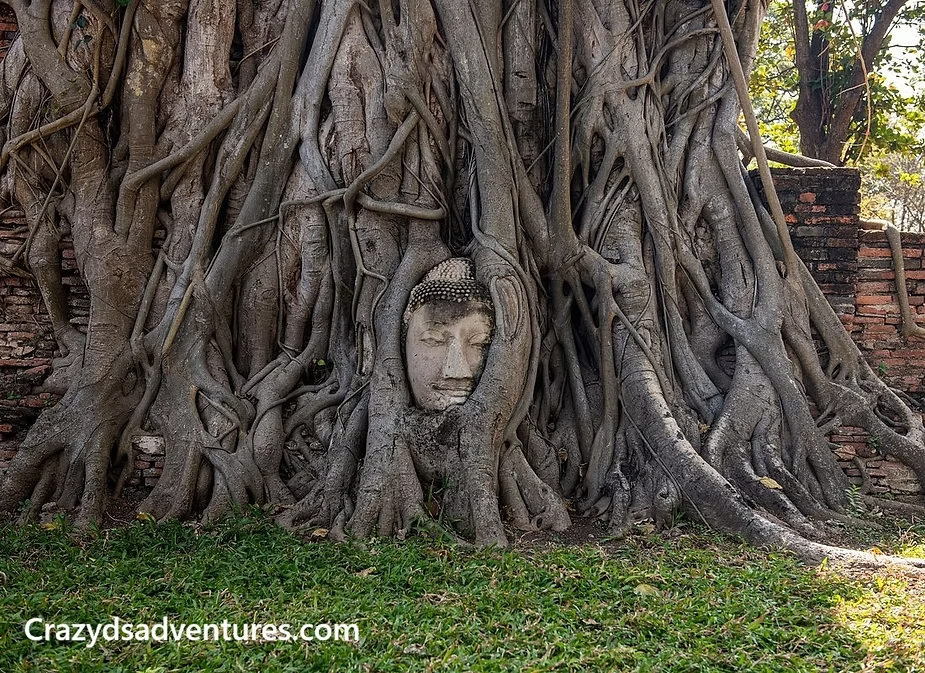
Wat Mahathat is famous for the Buddha head in tree roots.
Wat Mahathat is probably Ayutthaya’s most photographed temple, thanks to the Buddha head wrapped in the roots of a banyan tree. It’s a striking image, and yes, it’s worth seeing. But the site itself deserves more attention than a quick photo.
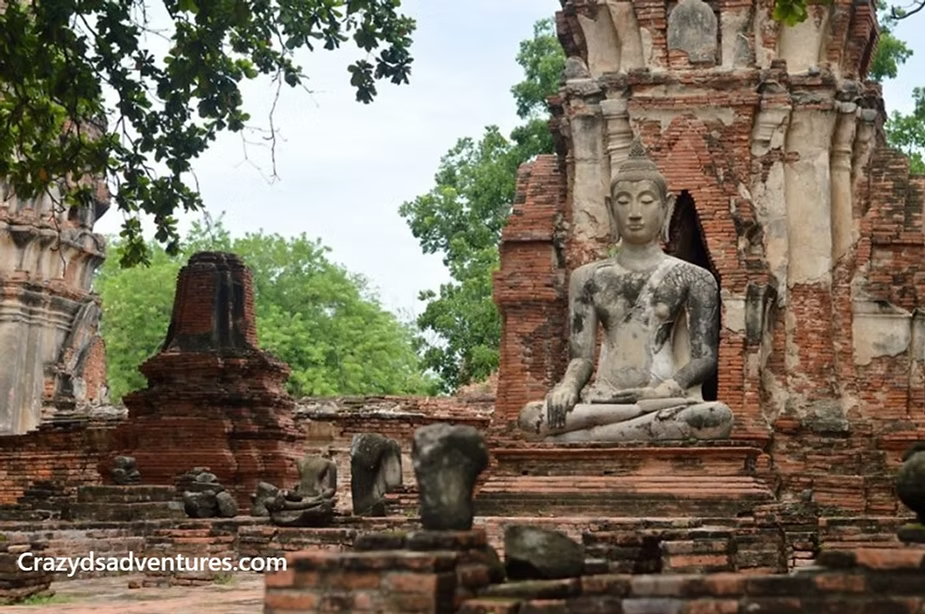
This temple was one of the city’s most important religious centers. Its central prang has collapsed, but the remaining brick structures, Buddha images, chedis, and courtyards still create a strong sense of sacred space.
The famous Buddha head sits low to the ground, so visitors should be respectful when taking photos. In Thai culture, the head is sacred, and it’s polite to keep your own head lower than the Buddha image when posing nearby. Staff may remind you, but it’s better to know beforehand.
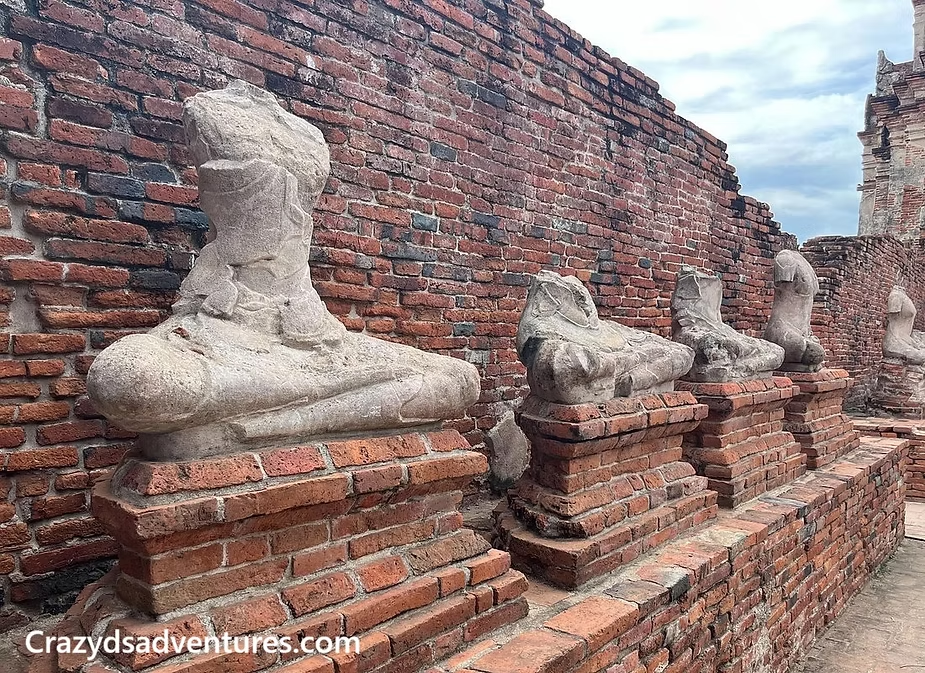
Wat Mahathat also shows the damage Ayutthaya suffered after the city fell. Many Buddha images are missing heads, and parts of the temple are broken. It can be beautiful, but it’s also sobering. This isn’t decorative decay. It’s history made visible.
Wat Ratchaburana rewards people who linger.
Wat Ratchaburana sits close to Wat Mahathat, so it’s easy to pair the two. Built in the 15th century during the Ayutthaya period, it's known for its tall central prang.
What makes this temple special is the feeling of verticality. The prang rises with strong Khmer influence, and its carved details hint at the site's former richness. Some visitors rush past it after seeing Wat Mahathat, but that’s a mistake.
If access is open during your visit, the crypt area has historically been one of the site’s most interesting features. As with many heritage sites, access rules can change for preservation and safety, so follow posted guidance.
Wat Ratchaburana is a good reminder that Ayutthaya’s temples weren’t all the same. Some were royal, some were monastic, some were tied to specific events, and many changed over time.

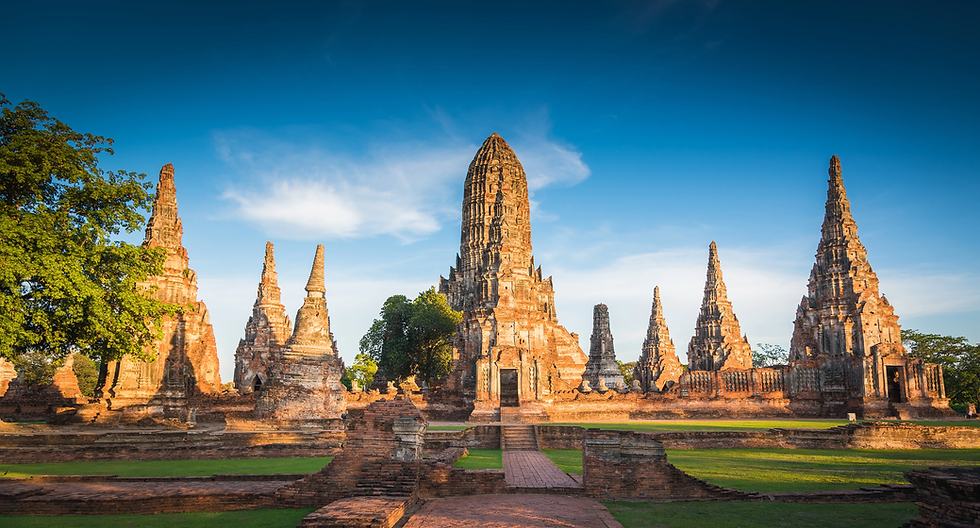
Wat Chaiwatthanaram is best at golden hour.
Wat Chaiwatthanaram sits on the west bank of the Chao Phraya River, a short ride from the central historical park. If you’ve seen photos of Ayutthaya at sunset, there’s a good chance they were taken here.
Built in the 17th century, the temple is one of Ayutthaya’s most elegant ruins. Its central prang is surrounded by smaller prangs and galleries, creating a balanced layout that feels ceremonial and dramatic.
Late afternoon is the best time to visit. The brick warms in the low light, shadows stretch across the grounds, and the river adds to the mood. It can get busy, especially near sunset, but the site is large enough that you can usually find a quieter angle.
You’ll also see visitors renting traditional Thai clothing for photos here. That can be fun and beautiful when done respectfully. Just keep in mind that Wat Chaiwatthanaram is still a sacred historic site, not only a backdrop.
Wat Yai Chai Mongkhon feels more alive.
Wat Yai Chai Mongkhon is slightly outside the central island, but it’s one of the most rewarding stops. Unlike some ruins, this temple still has an active religious atmosphere. You’ll see local worshippers, monks, bright saffron cloth, incense, and rows of Buddha images.
The large chedi is the main feature, and you can often climb partway up for a view of the grounds. Around the temple, seated Buddha images line the walls in a way that feels both grand and intimate.
This is a great place if you want Ayutthaya to feel less like an archaeological site and more like a living religious city. It also pairs well with nearby stops outside the island.
Wat Lokayasutharam has a huge reclining Buddha.
Wat Lokayasutharam is known for its large reclining Buddha, open to the sky and draped in saffron cloth. Most of the surrounding monastery structures are gone, which makes the image even more striking.
It doesn’t take long to visit, but it’s worth including if you’re nearby. The reclining Buddha represents the Buddha entering final nirvana, a theme you’ll see in Thai Buddhist art across the country.
Because the site is open and exposed, go early or late if you can. Midday sun can be intense, and there isn’t much shade.
Museums help fill in the missing pieces.
Ruins are powerful, but they don’t explain everything on their own. If you have time, add a museum stop.
The Chao Sam Phraya National Museum is especially useful because it displays Ayutthaya artifacts, including religious objects and items found in temple crypts. Seeing the craftsmanship up close helps you imagine how richly decorated the temples once were.
Today, the ruins are mostly brick, stone, and stucco. In the past, many were covered with plaster, paint, gilding, ornament, and sacred objects. A museum visit brings back some of that lost detail.
How to plan your visit without rushing it
Ayutthaya is close enough to Bangkok for a day trip, but it’s better with an overnight stay if you have the time. The city changes after the day-trippers leave. The ruins grow quieter, the evening light softens the brick, and dinner by the river feels like part of the experience.
The best time to visit Ayutthaya
The most comfortable months are usually November through February, when the weather is cooler and drier. This is the easiest season for walking, cycling, and spending long hours outside.
March through May is the hot season. You can still visit, but plan carefully. Start early, take a long lunch break somewhere shaded or air-conditioned, and save outdoor ruins for late afternoon.
The rainy season often runs from around June through October. Rain can interrupt plans, but it doesn’t ruin the trip. The ruins look beautiful with greener surroundings, crowds can be thinner, and showers often pass. Bring a light rain jacket or umbrella, and keep your schedule flexible.
Season | What to expect | Best strategy |
November to February | Cooler, drier, more popular | Book ahead and start early |
March to May | Very hot, bright sun | Visit temples in the morning and late afternoon |
June to October | Rain at times, greener scenery | Carry rain gear and allow extra time |
If you’re visiting during Thai holidays or long weekends, expect more local travelers. That can make the city feel lively, but temple areas and restaurants may be busier than usual.
One day is possible, but two days are easier.
A day trip from Bangkok can cover the headline sites. You might see Wat Mahathat, Wat Phra Si Sanphet, Wat Chaiwatthanaram, and one or two smaller stops. That’s a full day, especially in the heat.
With two days, you can slow down. You can visit temples in the cooler morning hours, take a break after lunch, then head out again for sunset. You’ll also have more time for river views, markets, museums, and food.
Here’s a relaxed plan that works well:
Time | Plan |
Early morning | Visit Wat Mahathat before crowds build |
Midmorning | Walk or ride to Wat Phra Si Sanphet and nearby ruins |
Lunch | Try boat noodles or grilled river prawns |
Afternoon break | Rest at a cafe, hotel, or museum |
Late afternoon | Visit Wat Chaiwatthanaram for golden hour |
Evening | Eat by the river or explore a local night market |
That pace gives the sites room to breathe. Ayutthaya rewards attention, not speed.
Getting around Ayutthaya is part of the trip.
The historical park covers a wide area, so you’ll need a transportation plan. The best choice depends on your energy, budget, weather, and comfort level.
Bicycle
Cycling is popular because many sites are relatively close. It’s affordable and gives you freedom. The downside is heat and traffic. If you bike, start early, wear sun protection, and avoid rushing across busy roads.
Tuk-tuk
A tuk-tuk is a good option if you want comfort and efficiency. Drivers often offer routes covering several temples. Agree on the price, time, and stops before leaving. It’s a simple way to see more sites without draining your energy.
Private car or hired driver
This works well for families, small groups, or anyone visiting in the hot season. It also makes it easier to reach temples outside the central island.
Boat tour
A boat ride around the island gives you a different view of the old capital. Since rivers shaped Ayutthaya’s rise, seeing temples from the water adds useful context. Late afternoon boat trips can be especially nice.
Walking
Walking works for small clusters of ruins, but not for the whole city. Distances can feel longer than they look on a map, especially under the sun.
Small habits make the day much better.
Ayutthaya isn’t difficult to visit, but a little planning goes a long way.
Bring:
A refillable water bottle
Sunscreen and a hat
Comfortable shoes
A light scarf or cover-up for temples
Cash for small vendors, transport, and entry fees
Mosquito repellent, especially near water or after rain
Dress modestly at temples. Cover your shoulders and knees where required, and remove your shoes before entering active worship spaces. Even at ruins, it’s better to treat the place with respect.
Don’t climb on fragile structures unless signs clearly allow it. The brickwork has already survived a lot. Let it keep surviving.

Local flavors worth planning your day around
Food is one of the best reasons not to rush back to Bangkok. Ayutthaya has dishes and sweets that are closely tied to the city’s rivers, markets, and local communities.
The food here isn’t only fuel between temples. It’s part of the place.
Boat noodles are a classic Ayutthaya meal.
Boat noodles are one of the city’s most famous dishes. They’re usually served in small bowls with a rich, savory broth, noodles, herbs, spices, and meat such as pork or beef. Portions are often small, so ordering several bowls is normal.
The dish has roots in Thailand’s canal and river culture. Vendors once served noodles from boats, and the compact portions made sense in that setting. Today, you’ll find boat noodle restaurants on land, but the name and style remain.
If you like strong flavors, this is a must-try. Add chili, vinegar, fish sauce, or sugar at the table to adjust the taste, but try the broth first. Many shops balance it carefully.
Grilled river prawns are the big splurge.
Ayutthaya’s rivers make freshwater prawns a local favorite. Grilled river prawns are often served split open, with smoky shells, firm meat, and rich orange head fat. A spicy seafood dipping sauce usually comes on the side.
This isn’t always the cheapest meal in town, but it’s one of the most memorable. It’s especially good at riverside restaurants, where the setting matches the food.
If you’re unsure how much to order, ask the restaurant what size they recommend. Prices can vary by weight and season, so check before committing.
Roti sai mai is Ayutthaya’s signature sweet
Roti sai mai is the treat people bring home from Ayutthaya. It’s made with thin, colorful strands of spun sugar wrapped in soft roti, almost like a Thai cotton candy wrap.
It’s sweet, light, and fun to eat. You’ll often see stacks of roti and bags of sugar threads sold along roadsides and near market areas. It also makes an easy edible souvenir, though it’s best eaten fresh.
The sweet is often linked to Thai Muslim communities in Ayutthaya, which is a nice reminder of the city’s long history as a place shaped by many cultures.
Markets and riverside meals round out the experience.
If you like grazing, look for local markets where you can try grilled skewers, Thai desserts, fruit, curry over rice, fried snacks, and iced drinks. Markets are also useful if you’re traveling with people who want different things.
For dinner, a riverside restaurant is a good choice. After a day of temple-hopping, sitting near the water helps the whole trip make sense. Ayutthaya rose because of its rivers, and eating beside one brings that history back into the present.
A few foods to look for:
Food | Why try it |
Boat noodles | A local classic with deep, savory broth |
Grilled river prawns | Freshwater favorite with bold seafood sauce |
Roti sai mai | Ayutthaya’s famous sweet snack |
Thai iced tea or herbal drinks | Helpful in the heat |
Coconut desserts | Easy market treats after a spicy meal |

A few cultural tips that make Ayutthaya feel richer
The best Ayutthaya visits happen when you move through the city with patience. It’s tempting to chase the most famous photo spots, but the real reward is noticing small details.
Look at how the bricks are laid. Notice the shape of the chedis. Watch how active shrines sit near broken monastery walls. Listen for temple bells, birds, boat engines, and the everyday sounds around the ruins.
Ayutthaya asks you to hold two truths at once. It was a magnificent capital, and it was violently damaged. It’s a protected heritage site, and it’s also a normal city where people shop, pray, go to school, cook lunch, and ride motorbikes past ancient walls.
That mix can make the ruins hit harder than perfectly preserved monuments. You’re not only looking at what remains. You’re seeing how history lives beside ordinary life.
Respect the sacred parts of the ruins.
Even when a temple is no longer active in the usual sense, Buddha images deserve respect. Don’t climb on them, sit on them, touch them for photos, or point your feet toward them when seated.
For photos, keep poses calm and respectful. Ayutthaya is beautiful, but it isn’t a theme park.
Give yourself time for quiet corners.
Some of the best moments come away from the most famous sites. A small ruined chedi under a tree, a quiet lotus pond, or a row of worn Buddha images can stay with you longer than the headline stops.
If you can, visit one major temple early, one museum or shaded site around midday, and one river-facing temple near sunset. That rhythm keeps the day from becoming exhausting.
Think beyond the day trip if you can
A day trip is fine if that’s what your schedule allows. But if you love history, photography, food, or slower travel, stay overnight.
Morning and evening are the best times in Ayutthaya. The light is softer, the temperature is kinder, and the city feels less crowded. You’ll also have time to enjoy dinner without watching the clock for the ride back to Bangkok.
I recommend visiting here as part of a tour group. I have done numerous tours with Wander Siam, and they are excellent. Wander Siam is based in Bangkok and offers tours throughout the area. NOTE: If you buy tickets through them, it is cheaper than buying them on online websites.
This is Tony, our Wander Siam tour guide.

FAQ
Is Ayutthaya worth visiting from Bangkok?
Yes. Ayutthaya is one of the best day trips from Bangkok because it’s close, historically important, and packed with impressive temples and ruins. If you can stay overnight, the visit feels even better.
How much time do you need in Ayutthaya?
One full day is enough to see the major highlights. Two days is better if you want to visit museums, eat at a relaxed pace, take a boat ride, and enjoy temples in the cooler morning and evening hours.
What is Ayutthaya most famous for?
Ayutthaya is famous for its ancient temple ruins, its role as Siam's former capital, and its UNESCO World Heritage status. Wat Mahathat’s Buddha head in tree roots is one of its most iconic sights.
Can you visit Ayutthaya without a guide?
Yes, you can explore independently by bike, tuk-tuk, boat, or hired car. A guide can add helpful context, especially if you’re interested in history, architecture, and Buddhist symbolism.
What should you eat in Ayutthaya?
Try boat noodles, grilled river prawns, and roti sai mai. If you have time, add a riverside dinner or a market stop for snacks, desserts, and iced drinks.
Ayutthaya stays with you because it doesn’t flatten history into one simple story. It gives you royal temples, broken statues, river trade, local sweets, active worship, and quiet ruins all in the same place.
Go for the UNESCO-listed temples, but don’t stop there. Eat the noodles, watch the river, step into the museum, rest in the shade, and let the old capital feel human. That’s when Ayutthaya becomes more than a side trip. It becomes one of the clearest windows into Thailand’s past and present.
Because of the scams going on with Airbnb and Vbro, I will not recommend places listed here on my blog. Here are links to a couple of cases if you would like to read them.
Places to Stay:
You can show your appreciation with a virtual coffee if you have found value in my blog.

Do not forget to subscribe to get my newsletter.
Some links on my website are affiliate links. I earn from qualifying purchases as an Amazon Associate and an Expedia Associate. Through other links, I may also receive a small commission at no extra cost to you. Using them supports me, helps offset the cost of running this website, and ensures I can keep providing free content and resources.
I truly appreciate the support!


Comments