


Exploring the Rich History and Haunting Tales of Wolf Creek Inn, Oregon

Updated: Aug 11
Some places feel old the second you step through the door. The floorboards have a voice. The stair rail feels polished by hands that are long gone. The air seems to hold onto conversations from a hundred years ago.
That’s the feeling people talk about at the Wolf Creek Inn, a weathered and beloved landmark tucked into the small community of Wolf Creek in Southern Oregon. It’s the kind of place where history doesn’t sit behind glass. It creaks under your feet, lingers in the dining room, and, if the stories are true, sometimes knocks back.
Built in the late 1800s, the inn has welcomed stagecoach travelers, writers, movie stars, road-weary families, ghost hunters, and curious overnight guests. It’s known as one of Oregon’s oldest continuously operating inns, and that alone would make it worth a stop. But the real pull is stranger than age.
People come for the history. They stay for the possibility that someone, or something, never left.
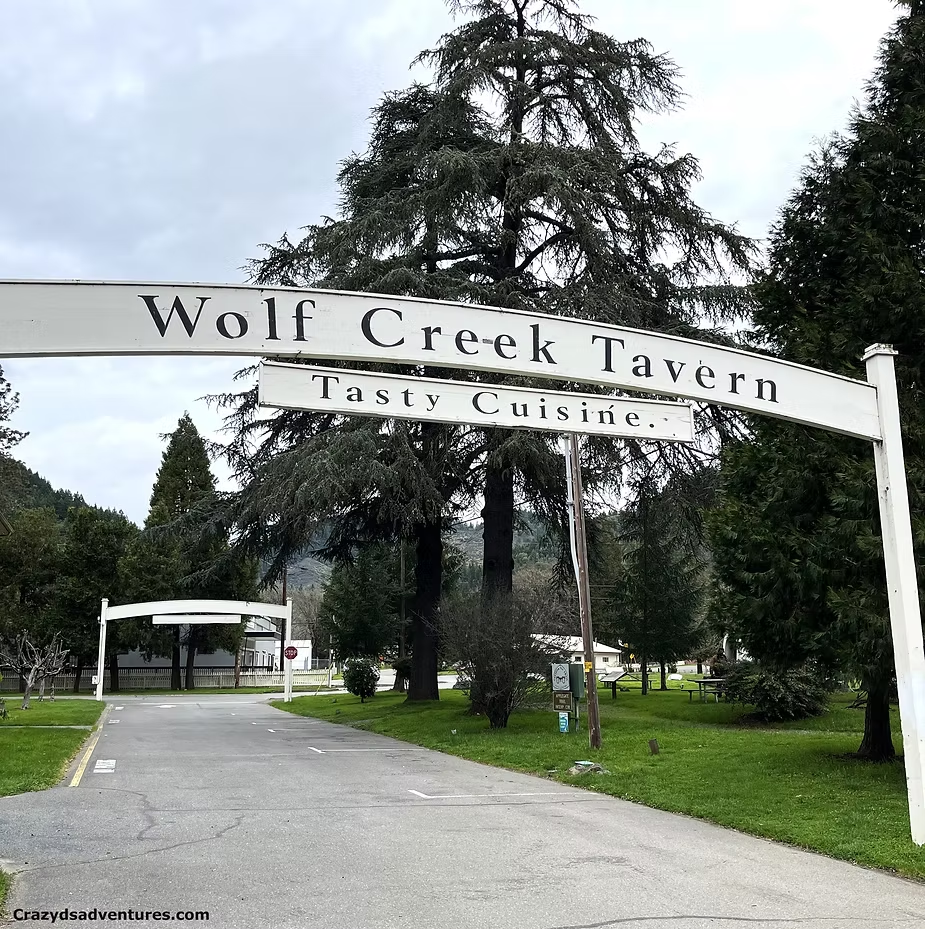
The inn began as a stagecoach stop in wild Southern Oregon.
Long before interstate exits and weekend road trips, travel through Southern Oregon was slow, muddy, and uncertain. The route through Wolf Creek mattered because it connected people moving between the Willamette Valley, the Rogue Valley, and Northern California. Travelers needed food, horses needed rest, and everyone needed a safe place to sleep.
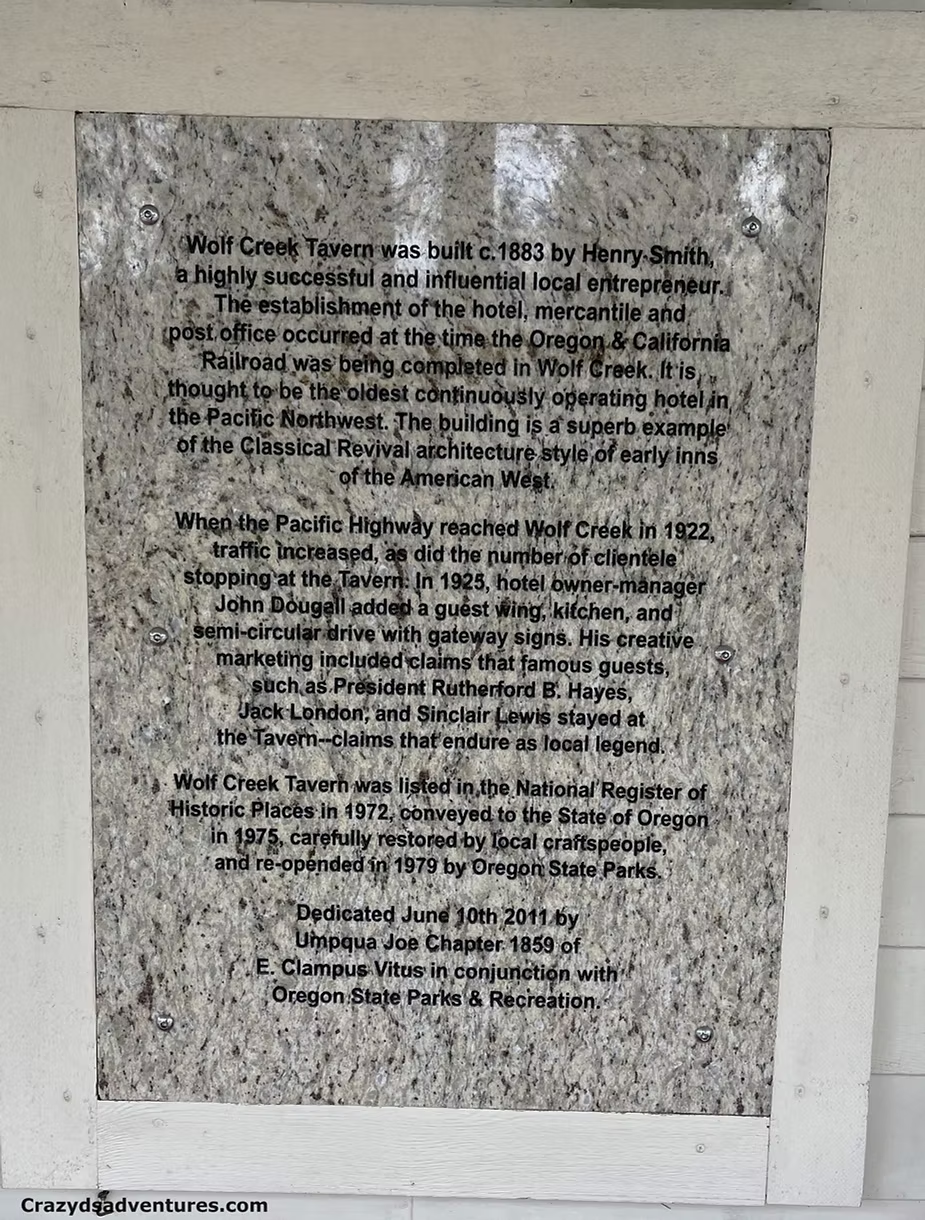
The inn was built in 1883, during a time when stagecoach stops were lifelines. A night at the tavern meant more than comfort. It meant warmth, a meal, news from the road, and a chance to recover before the next rough stretch.
The building we see today has lived through Oregon’s shift from wagon roads to automobiles, from isolated rural travel to modern tourism. That continuity is a huge part of its charm. Plenty of historic buildings survive as museums, but fewer keep doing the thing they were built to do.
Wolf Creek Inn has remained a place where travelers stop, eat, sleep, and swap stories.
That matters.
When a building stays in use for generation after generation, it collects layers. Not just wallpaper, paint, and furniture, but habits. A front desk where guests still check in. A dining room where plates still clink. Guest rooms where people still listen at night and wonder whether that sound came from the hallway, the walls, or somewhere older.
The inn is often associated with Oregon State Parks and is recognized as a historic site. Its preservation gives visitors a rare chance to experience a late 19th-century roadside inn without turning it into something cold or untouchable. It still feels human. That might be why the ghost stories land so well here.
A polished mansion can feel distant. A working inn feels personal.
You can imagine a tired traveler arriving in the rain. You can picture boots on the stairs, lantern light against the walls, voices low in the parlor. Then, when someone says they heard footsteps crossing an empty floor above them, it doesn’t sound silly.
It sounds like the building remembering.
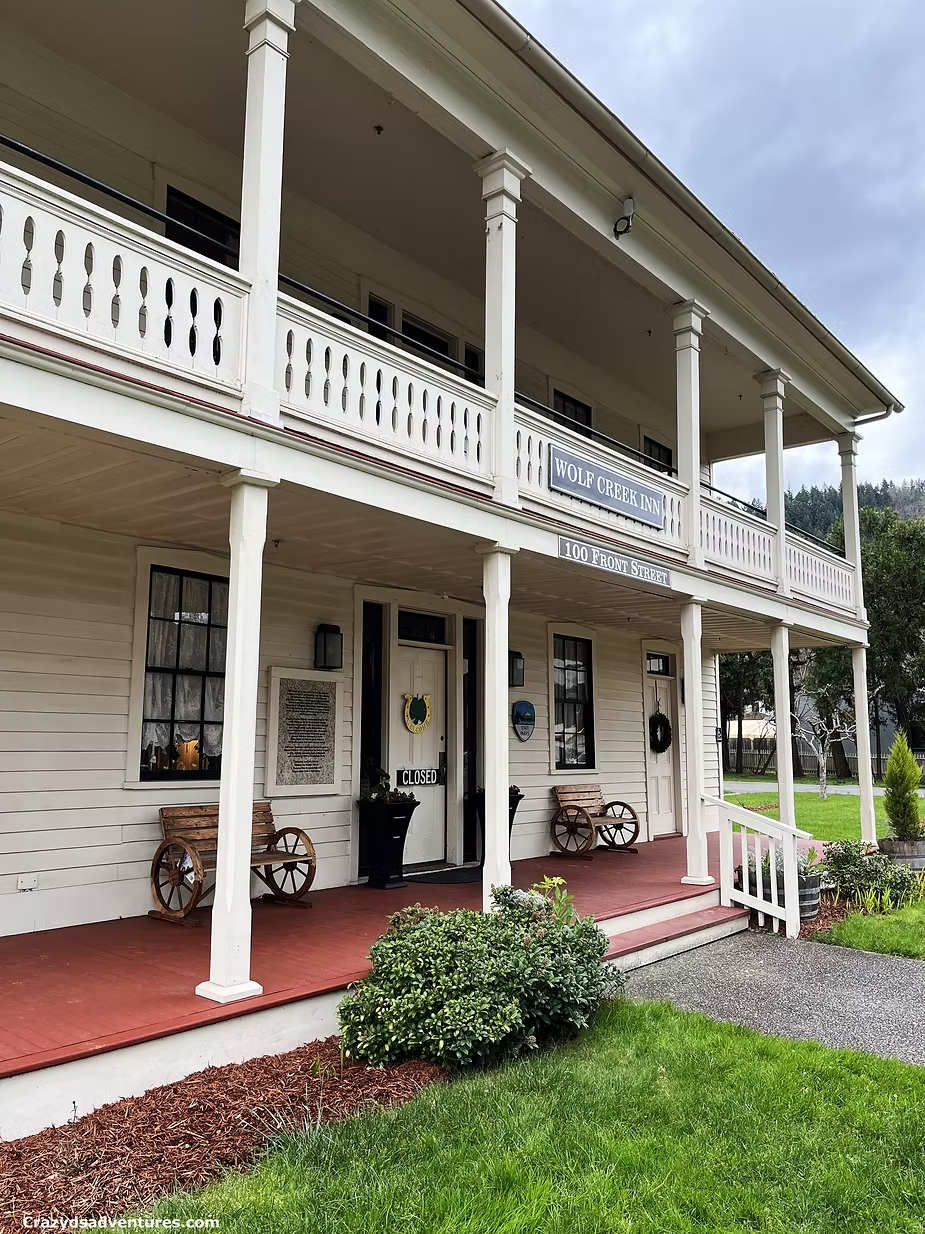
Famous guests helped turn the inn into a legend.
Historic inns collect names the way old trunks collect travel stickers. Wolf Creek’s guest list has become part of its identity, and a few names stand out again and again in local stories.
The most famous is Jack London, the author of The Call of the Wild and White Fang. London traveled widely through the Pacific Northwest, and the inn is strongly tied to his legend. One room is often associated with him, and guests who love literary history tend to seek it out.
The connection makes sense. London was drawn to rough places, working people, frontier stories, and the edge between civilization and wilderness. Southern Oregon, with its forests, mining history, and long travel roads, fits the mood of his writing.
Then there are the movie stars.
Over the years, the inn has been linked in popular lore to Hollywood figures such as Clark Gable, Carole Lombard, Orson Welles, Mary Pickford, and Douglas Fairbanks. As with many historic hotels, the exact details can blur depending on who’s telling the story, but the broader point is clear: Wolf Creek became more than a roadside stop. It became a place with a reputation.
By the early automobile era, old stage routes had turned into motoring routes. Travelers weren’t arriving by coach anymore, but the pattern stayed the same. Stop, eat, sleep, move on.
Only now, the visitors might be actors, writers, touring entertainers, and travelers with more money and fewer mud-splashed trunks.
That mix gives the inn its strange personality. It’s rustic, but not anonymous. It’s small-town, but connected to big names. It carries traces of pioneers and performers, drifters and celebrities.
And if ghost stories grow best in places with layers, this inn has perfect soil.
Think about it. A building doesn’t need a murder mystery in every room to feel haunted. Sometimes all it takes is heavy use over a long span of time. Emotional arrivals. Sad departures. Exhausted travelers. Big dreams. Bad weather. Loneliness. Celebration. The ordinary stuff of life, repeated for more than a century.
That’s the quieter kind of haunting, and it’s often the most believable.
The ghost stories are part of the stay.
Ask around about haunted places in Oregon, and Wolf Creek almost always comes up. The stories vary, but they tend to circle a few familiar kinds of activity.
Guests and staff have reported:
Footsteps in empty hallways
Doors opening or closing without an obvious cause
Cold spots in rooms or corridors
Unexplained voices
Objects that seem to move
The feeling of being watched
Apparitions or shadowy figures
Strange sounds late at night
None of that can be proven from a blog post, of course. Old buildings make noise. Pipes knock. Wood expands and contracts. Guests mishear things, especially when they already know a place is supposed to be haunted.
But the stories have lasted for a reason.
The most interesting hauntings aren’t usually the loud, movie-style ones. They’re the little moments people can’t quite explain. A door latch clicking when no one is on the other side. The sound of a dress brushing past in a hallway. A quick glimpse at the top of the stairs, gone before the eyes can focus.
At Wolf Creek, the paranormal reputation feels woven into the place rather than pasted on for tourism. The inn doesn’t need fake fog or jump scares. Its age does the work.
The presence linked to Jack London.
One of the best-known ghostly threads involves Jack London. Some guests claim to have sensed a presence in or near the room associated with him. Others have described odd sounds, an unusual heaviness in the air, or the sense that someone is occupying the space even when it looks empty.
The idea of a writer’s ghost has a special pull. Writers already leave pieces of themselves behind in words. So when a historic inn claims a literary spirit, people lean in.
Does Jack London haunt the room? No one can honestly say that with certainty.
But the story sticks because it feels right. A restless author. A historic inn. A lonely room. A place along the road, neither beginning nor end.
That’s ghost-story gold.
The woman in the old rooms
Many historic hotels have a woman in white, a lady on the stairs, or a quiet female figure in a hallway. Wolf Creek has similar tales, with visitors describing a feminine presence or the sense of a woman moving through the building.
Stories like this often change with each retelling. Sometimes the figure is connected to a former guest. Sometimes she’s described as staff, a caretaker, or a woman tied emotionally to the inn. The details may shift, but the mood stays steady.
She’s not usually described as threatening. More often, she seems watchful.
That detail matters. A lot of haunted hotel stories aren’t about danger. They’re about custody. The idea that someone loved a place, worked in it, suffered in it, or stayed too long in memory.
A ghost doesn’t always have to be angry. Sometimes a ghost is just attached.
The hallway footsteps
Footsteps are among the most common reports at old inns, and they’re also some of the easiest to dismiss. Historic buildings are noisy by nature.
Still, footsteps hit differently.
A creak could be the wind. A thump could be plumbing. But slow, measured steps overhead when the room above is empty? That gets attention.
Guests have described hearing movement in empty parts of the building, especially at night when the inn quiets down. The sound of someone crossing a floor, pausing, then moving on is deeply human. That’s what makes it unsettling.
Your brain can explain a bang. It struggles more with a rhythm.
Step. Step. Step.
Then silence.
The feeling that someone is nearby
This might be the most common ghost report of all, and the hardest to describe without sounding dramatic. Many people who visit haunted places talk about a sudden physical feeling: pressure, chills, prickling skin, or the strong sense that someone has entered the room.
At Wolf Creek, visitors have reported that kind of presence. Not always visible. Not always noisy. Just there.
Skeptics might call it suggestion. Believers might call it a spirit. Either way, it’s part of the inn’s power. Once a building has a haunted reputation, every quiet second becomes charged.
That doesn’t make the experience fake. It makes it psychological, historical, and atmospheric all at once.
A haunted inn works on every level.
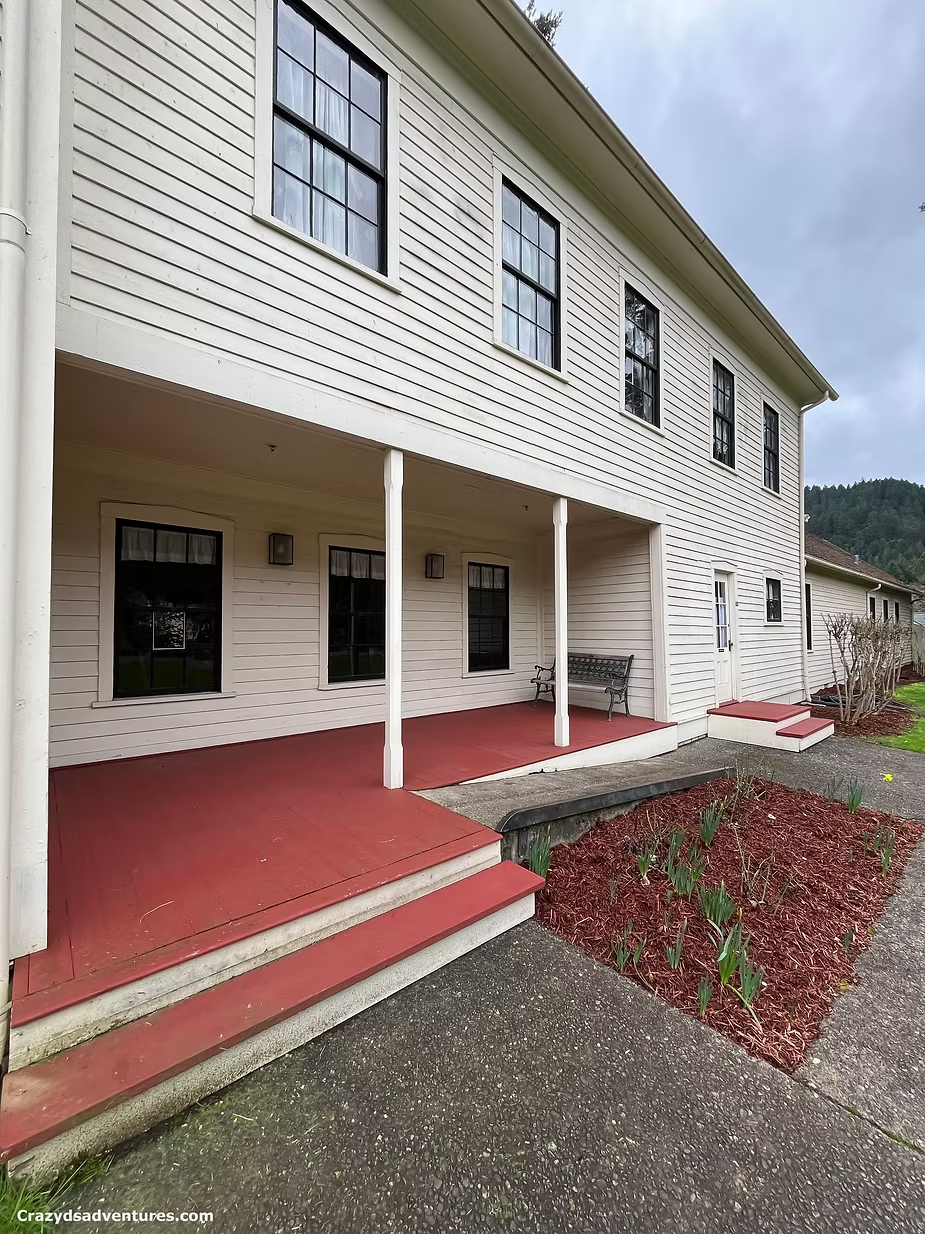
Visitor experiences keep the mystery alive.
The best ghost stories don’t come from official plaques. They come from people saying, “Okay, this sounds weird, but here’s what happened.”
That’s how Wolf Creek’s haunted reputation keeps breathing. Guests stay overnight, hear something, feel something, or notice something odd. Then they tell the story. Staff hear versions of it. Other travelers compare notes. Paranormal groups visit and add their own impressions.
Over time, the inn becomes more than a historic building. It becomes a shared mystery.
Some visitors go in hoping for activity. They book a room with a reputation, keep the lights low, and listen for every creak. Others arrive for dinner or a quiet historic stay and leave with a story they didn’t expect.
That second kind of report is often more compelling.
A guest who wants a ghost can turn any sound into evidence. But when someone says they didn’t believe in ghosts, didn’t know much about the inn’s reputation, and still felt something strange, the story has more bite.
Common visitor experiences include waking in the night for no clear reason, hearing footsteps outside the door, noticing sudden cold air, or feeling watched from the corner of a room. Some people mention dreams that feel unusually vivid. Others say they felt calm, not scared, as if the presence in the building was curious rather than hostile.
That range is part of what makes the inn interesting. The haunting isn’t one-note.
It’s not all screams and slamming doors. It’s often subtle. A whisper. A draft. A shadow at the edge of sight.
And the setting helps.
Wolf Creek is a small place, surrounded by wooded hills and Southern Oregon quiet. At night, the area doesn’t have the constant noise of a big city. That gives the inn room to speak. Old walls pop. Floorboards shift. Wind presses against the building. Rain adds its own rhythm.
In a newer hotel, those sounds might be annoying.
In an inn from the 1880s, they feel like a message.
There’s also the simple fact that sleeping in a historic room changes your sense of time. Modern hotels are designed to erase the past: same lamps, same carpet, same sealed windows, same neutral art. Historic inns do the opposite. They remind you that people slept there before you, and those people had whole lives you’ll never know.
That thought can be lovely. It can also be unnerving at 2:17 AM.
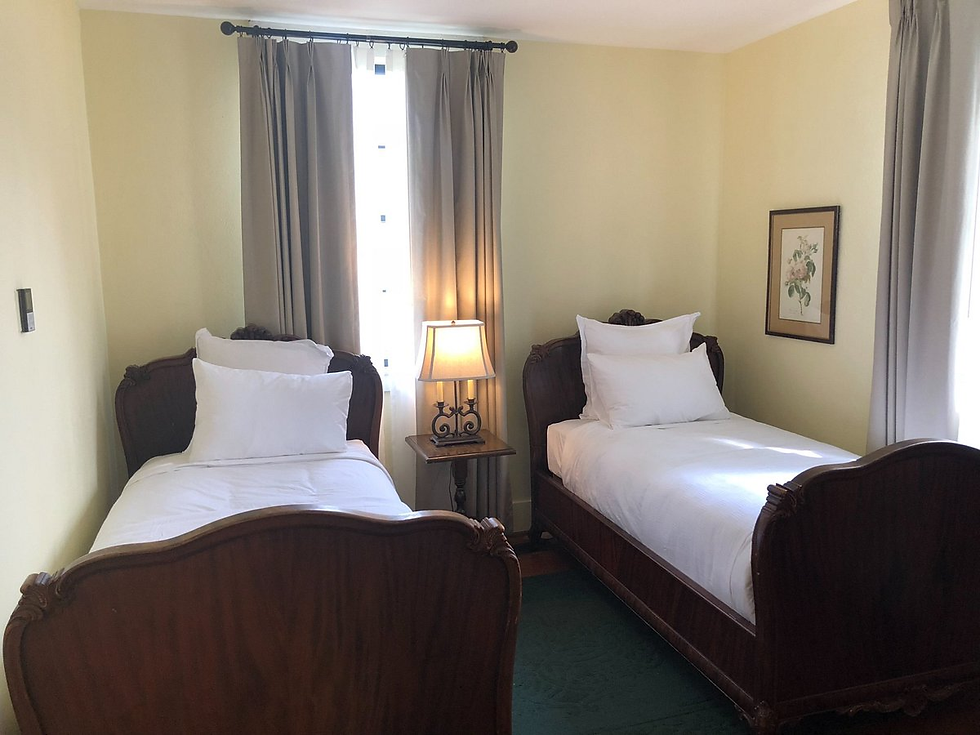
Why haunted travelers are drawn to this Oregon inn
Plenty of places claim ghosts. Not all of them earn the reputation.
Wolf Creek works because the haunting rests on a real historic foundation. The building is old. The location mattered. The inn served travelers for generations. Famous names passed through, or at least became attached to its lore. The rooms still feel connected to the past.
That makes it satisfying for both kinds of visitors: the history lovers and the ghost seekers.
If you care about Oregon history, the inn offers a rare look at how people traveled before highways made everything easier. You can feel the stagecoach era in the proportions of the building, the old-fashioned hospitality, and the sense of a stop carved out along a difficult route.
If you care about hauntings, the inn gives you atmosphere without trying too hard. It has the creaks, the stories, the named rooms, the late-night silence, and the long record of strange reports.
It’s also accessible in a way that some haunted places aren’t. Many famous haunted sites are private, closed, or only available through special tours. Wolf Creek has long been known as a place where people can actually stay, dine, and experience the building as intended.
That overnight element changes everything.
A daytime ghost tour can be fun, but it has a clear ending. The guide turns on the lights, everyone laughs nervously, and people leave together.
Spending the night is different.
You close the door. You turn out the light. The hallway goes quiet. Suddenly, every story you heard downstairs becomes personal.
Was that the old building settling?
Was that another guest?
Did someone pause outside your room?
That’s why haunted inns are so effective. They place you inside the story, then make you wait.
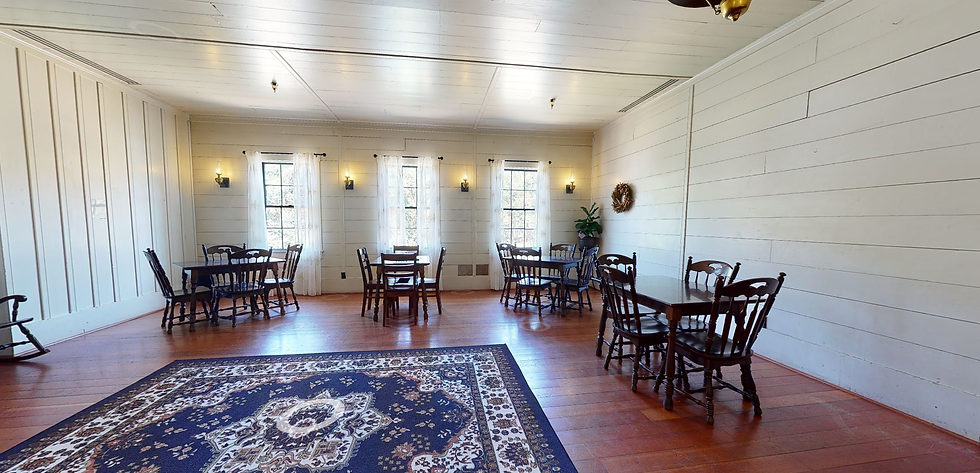
A closer look at the inn’s historical mood
The haunted reputation tends to get the attention, but the history is what gives the place its depth. Without it, the ghost stories would feel thin.
The inn belongs to a particular chapter of Oregon’s past, when travel was physical in a way that’s hard to imagine now. Roads were rough. Weather mattered. A journey could take days instead of hours. A roadside inn was part hotel, part restaurant, part news center, part refuge.
People arrived with sore bodies and urgent needs. They brought letters, gossip, money, grief, illness, hope, and exhaustion. Some were moving west. Some were looking for work. Some were chasing opportunity in mining country or heading toward farms, ports, or cities.
The building sat there through all of it.
Then the automobile changed the rhythm of travel. Highways reshaped where people stopped and how far they could go in a day. Some old inns faded. Others were demolished, remodeled beyond recognition, or turned into curiosities.
Wolf Creek survived.
That survival gives it a rare emotional weight. It’s not just old because no one bothered to tear it down. It’s old because people kept finding a reason to use it.
That’s also why its ghosts, real or imagined, feel less like decorations and more like echoes.
A stagecoach stop is already a place of comings and goings. It’s a doorway. People pause, recover, and move on. A haunting, in a way, is the opposite: someone pauses and never quite leaves.
That tension sits at the heart of the inn’s appeal.
How to visit with the right expectations
If you’re thinking about visiting, go for the full mix. Don’t treat the inn like a haunted attraction only. Give the history equal attention.
Walk slowly. Look at the structure. Notice the details that survived. Think about the shifts from stagecoaches to cars, from candlelit rooms to modern travel, from anonymous guests to famous names.
Then, if you’re staying overnight, let the place be quiet.
A few simple tips can make the experience better:
Read a little history before you go.
The ghost stories make more sense when you understand the inn’s role as a travel stop.
Ask staff about the stories respectfully.
People who work in historic inns often hear a lot. Be curious, not pushy.
Keep a light sense of humor.
Old buildings make weird sounds. Half the fun is not knowing.
Don’t bother other guests.
A haunted stay is still a shared stay. Keep late-night ghost hunting polite and quiet.
Write down anything strange right away.
Memory changes fast, especially when fear or excitement gets involved.
It also helps to leave room for uncertainty. You don’t have to prove a ghost to enjoy a haunted place. Sometimes the best part is the question mark.
Maybe the footsteps were pipes.
Maybe the cold spot was a draft.
Maybe the shadow was your tired eyes.
Or maybe, in one of Oregon’s oldest inns, the past has learned how to walk.
The real magic is the overlap of history and haunting.
The most memorable haunted places aren’t just spooky. They’re meaningful.
That’s why Wolf Creek has lasted in the imagination. Its ghost stories aren’t floating in space. They’re tied to real travel, real age, famous names, and a building that has watched Oregon change around it.
The inn gives visitors a rare feeling: the sense that the past isn’t gone, only quiet.
You can sit in a historic room and picture the stagecoach road. You can imagine Jack London passing through. You can think about actors, travelers, workers, and families stopping under the same roof. Then, later, when the building settles and a floorboard creaks outside your door, all those layers press a little closer.
That’s the appeal.
Not terror. Not cheap thrills.
Something older and better: the feeling that a place remembers.
FAQ
Is Wolf Creek Inn really one of Oregon’s oldest inns?
Yes. It dates to the 1880s and is widely known as one of the oldest continuously operating inns in Oregon. Its long use as a lodging place is a major reason it’s so historically significant.
Is the inn actually haunted?
Many guests and paranormal enthusiasts say it is, and the inn has a long reputation for ghostly activity. Reports include footsteps, cold spots, voices, moving objects, and strange presences. None of those claims can be proven for every visitor, but the stories are a big part of the inn’s appeal.
What famous people are associated with the inn?
Jack London is the name most strongly tied to the inn’s lore. The inn has also been linked over the years to Hollywood figures such as Clark Gable, Carole Lombard, Orson Welles, Mary Pickford, and Douglas Fairbanks.
Can guests stay overnight at the haunted inn?
The inn has long operated as a historic lodging place, which is part of what makes it special. Availability and operations can change, so it’s best to check current information before planning a trip.
What kind of paranormal activity do visitors report most often?
Footsteps, unexplained sounds, cold spots, and the feeling of being watched seem to come up often. Some visitors also describe apparitions or shadowy figures, especially in hallways and older guest rooms.
The takeaway for a ghostly Oregon road trip
Wolf Creek Inn is the kind of place that rewards patience. Don’t rush through it looking for a jump scare. Let the age of the building do its work. Listen to the floors. Notice the quiet. Think about everyone who stopped there before highways made travel easy.
Maybe nothing strange will happen.
Maybe you’ll sleep peacefully, eat well, and leave with a good historic travel story.
Or maybe, sometime after midnight, you’ll hear footsteps in the hall and remember that some guests check out later than others.
Because of the scams going on with Airbnb and Vbro, I will not recommend places listed here on my blog. Here is a link to a couple of cases if you would like to read them.
Places To Stay:
You can show your appreciation with a virtual coffee if you have found value in my blog.

Do not forget to subscribe to get my monthly newsletter.
Some of the links found on my website are affiliate links. I earn from qualifying purchases as an Amazon Associate and an Expedia Associate. Through other links, I may also receive a small commission at no extra cost to you. Using them is a way to support me, help offset the cost of running this website, and ensure I can continue providing free content and resources.
I truly appreciate the support!


Comments