


Mistakes Tourists Make in Thailand and How to Travel Smarter

If you enjoy this blog post, consider subscribing to get my newsletter.
Comments are always welcome and appreciated.
Thailand is easy to love, but it’s also easy to misunderstand. One minute you’re eating the best noodles of your life for a few dollars, and the next you’re sweating outside a temple because your shorts are too short, or arguing with a tuk-tuk driver because you didn’t agree on the fare first.
The good news? Most travel mistakes in Thailand are avoidable. A little local know-how goes a long way, whether it’s your first trip or your fifth.
Here are seven common slip-ups tourists make in Thailand, plus simple ways to travel with more confidence, respect, and fun.

Mistakes Tourists Make in Thailand
Respecting Thailand's Temples As Sacred Places, Not Just Photo Stops
The camera comes out fast in Thailand. Golden chedis catch the sun, temple roofs glow red and green, and monks in saffron robes move quietly through courtyards. It’s easy to see why people want photos.
But a temple isn’t a backdrop. It’s an active sacred place where people pray, make offerings, mourn, celebrate, and seek peace. Many of Thailand’s most beautiful temples are also living community spaces. If a visit feels like a quick content stop, something gets lost.
You can still take photos. You can still be amazed. The goal is to slow down enough to notice where you are and act like a guest.
Temples in Thailand are living places of worship.
In Thailand, Buddhist temples, called `wat`, are woven into daily life. They’re not only historic sites or tourist attractions. People visit to make merit, listen to monks chant, light incense, give food, sit quietly, or mark important moments in life.
That means the mood can change from one temple to the next. One space might feel open and busy, with tour groups moving through. Another might be still and quiet, with local families kneeling in prayer. In both cases, the temple deserves care.
A good rule is this: look for what locals are doing before deciding what you should do. If people have removed their shoes, remove yours. If voices are low, lower yours. If nobody is taking photos in a certain space, keep your phone away.
This kind of awareness matters more than memorizing every rule. Thailand is welcoming, and many temples are used to visitors. Still, welcome doesn’t mean anything goes.
Dress like the space matters.
Mistakes Tourists Make in Thailand are that temple clothing guidelines aren’t random. They’re a sign of respect for sacred ground. In many Thai temples, shoulders and knees should be covered, and clothing should not be sheer, revealing, tight, or beach-like.
That can feel tricky in hot weather, but it’s manageable. Bring a light scarf, loose linen shirt, thin long pants, or a wrap skirt. Some major temples rent or lend cover-ups, but it’s better not to count on that.
Before entering temple grounds, check these basics:
Cover shoulders and knees
Avoid crop tops, short shorts, and swimwear
Take off hats when entering sacred buildings
Remove shoes before stepping inside a temple hall
Keep sunglasses off when speaking with monks or temple staff
Shoes can be a small source of confusion. Usually, you’ll see rows of shoes outside the entrance to prayer halls. That’s your cue. Step out of your shoes before entering, and don’t place your feet on raised platforms, thresholds, or mats meant for worship.
Feet are considered the lowest part of the body in Thai culture, both physically and symbolically. Pointing your feet toward a Buddha image, monk, or person can come across as rude. When sitting, tuck your feet to the side or sit cross-legged if that’s comfortable.
Take photos with care, not entitlement.
Photography is where temple etiquette often gets messy. A phone can make people forget the room around them. One minute someone is admiring a Buddha image, the next they’re posing with their back to it, making a peace sign, or blocking worshippers.
The safest approach is simple: pause before taking the shot.
Ask yourself a few questions:
Is photography allowed here?
Is someone praying nearby?
Am I blocking a walkway or doorway?
Would this pose look disrespectful if a local person saw it?
Am I treating a monk, worshipper, or ritual like scenery?
Some temples clearly mark no-photo areas, especially inside ordination halls or around sacred images. Follow those signs even if other visitors ignore them. A quiet “everyone else is doing it” doesn’t make it respectful.
Be careful with selfies near Buddha images. In Thailand, Buddha images are sacred, not props. Climbing, leaning, touching, copying poses, or turning your back in a silly way can offend people. If you want a photo, stand at a respectful distance and keep your body language calm.
Photos of monks require extra care. Don’t sneak photos during prayer, eating, study, or private moments. If a monk is clearly part of a public ceremony, take wide, discreet shots from a distance if photography is allowed. For closer portraits, ask first. If there’s any doubt, skip it.
And please, don’t chase the “perfect” photo by stepping into restricted areas, ringing bells, moving offerings, or crowding people who came to worship. The memory of being respectful will age better than a rushed photo ever will.
Mind your body language and voice.
Temples invite a slower pace. That doesn’t mean you have to act stiff or scared, but it does mean toning down the usual travel energy.
Speak softly. Silence your phone. Don’t play videos, take calls, or use speakerphone on temple grounds. If you’re with friends, keep joking and loud reactions for later.
Inside temple buildings, move gently. Don’t step over people who are seated or praying. Don’t touch Buddha images, altar items, monk seats, or offerings unless a sign or guide says it’s allowed. Offerings such as flowers, candles, incense, and food are part of religious practice. They’re not decorative objects to rearrange for a better picture.
There are also a few monk-related customs to know. Monks follow rules that shape how they interact with laypeople. Women should avoid touching monks or handing items directly to them. If giving something, place it on a cloth or nearby surface, or pass it through a man if that’s the local setup. This isn’t personal. It’s part of the monastic code.
If you’re unsure what to do, a small smile and a respectful distance go a long way.
Let the visit be more than a checklist item.
Some of the best temple moments happen when you stop trying to collect them. Sit for a few minutes in the shade. Watch how people enter the hall. Notice the murals, small shrines, lotus flowers, incense smoke, donation boxes, tile patterns, and worn steps.
You don’t need to understand every symbol to show respect. Curiosity is welcome when it comes with humility. If there’s an information sign, read it. If a guide is available, listen. If a local person corrects you, accept it without getting defensive.
A temple visit can be beautiful because of the architecture, yes. But it can also be meaningful because you gave the place your full attention.
Here’s a simple way to approach any temple in Thailand:
Slow down before entering.
Check your clothing.
Notice signs and local behavior.
Keep your voice low.
Take fewer, more respectful photos.
Leave space for worshippers.
Carry the same calm out with you.
Respecting Thailand's temples as sacred places, not just photo stops, doesn’t make travel less fun. It makes it richer. You still get the beauty, the color, and the memory, but you also leave room for the people who keep these places alive.
The wai, the Thai greeting with palms pressed together, is also worth learning. You don’t need to use it perfectly, but a small attempt shows respect. If someone offers you a wai, a smile and a gentle wai back is usually appreciated.
Also, be careful when talking about the Thai royal family. Thailand has strict laws and deep cultural respect around the monarchy. As a visitor, the smartest move is simple: don’t joke about it, don’t criticize it, and treat images of the King, including on money, with respect.

Unethical Elephant or Tiger Experiences
That “once-in-a-lifetime” photo with an elephant or tiger can come with a cost you never see in the frame.
Thailand is full of incredible wildlife, and it’s completely understandable to want a close encounter while you’re there. Elephants are beautiful, intelligent animals. Tigers are powerful and rare to see up close. The problem is that many tourist experiences are built around control, performance, and constant human access, not animal welfare.
The good news is you don’t have to skip wildlife completely. You need to know what to avoid, what red flags to look for, and how to choose experiences that don’t harm the animals you came to admire.
The problem with elephant rides and performances
Elephants aren’t built for tourist entertainment. They’re strong, yes, but that doesn’t mean carrying people, performing tricks, standing on command, or posing all day is natural or harmless.
In many traditional elephant attractions, the animals are trained to obey humans through fear and control. Young elephants may be separated from their mothers, restrained, and taught that resistance brings punishment. Even if a camp looks calm when visitors arrive, that doesn’t tell the full story of how the elephant was trained or how they live outside visiting hours.
Common red flags include:
Elephant rides with seats or saddles
Elephants painting, dancing, playing soccer, or doing tricks
Animals chained for long periods
Bullhooks or sharp tools used by handlers
Loud crowds gathering around one animal
Babies being used for photos or bottle-feeding sessions
The issue isn’t that every handler is cruel or that every tourist means harm. Most people book these activities because they love animals. But money keeps the system going. When riding and performances sell, more animals get trained for riding and performances.
If an elephant is being asked to entertain you, that’s a sign to walk away.
Tiger selfies are not conservation.
Tiger experiences can be even harder to read because they often look polished. You might see clean paths, relaxed-looking animals, and staff guiding people through quick photo sessions. But a tiger that calmly lies still while strangers touch it, sit nearby, or pose for selfies is not behaving like a normal wild predator.
Tigers are solitary, powerful animals. They don’t naturally want a steady stream of people touching them. Attractions that offer close-contact tiger photos usually depend on heavy control. That can include small enclosures, constant handling from a young age, or routines that train the animal to tolerate humans for photos.
You may hear people say the tigers are drugged. That claim gets repeated a lot, and it may not always be true. But the bigger point stands even without it: a healthy, respected tiger should not be used as a photo prop.
Be especially careful with places that offer:
Tiger cub holding
Walking with tigers
Petting adult tigers
Photos where visitors sit beside or behind a tiger
“Guaranteed close contact” with big cats
Breeding programs with little clear conservation work
Real conservation doesn’t need you to cuddle a tiger. It focuses on habitat protection, anti-poaching work, rescue, research, and education from a safe distance.
“Sanctuary” doesn’t always mean ethical.
This is where things get tricky. A place can call itself a sanctuary and still offer harmful activities. The word sounds comforting, but it’s not a guarantee.
Some venues have shifted away from obvious red flags like elephant riding, but still allow constant bathing, hugging, feeding, and close-contact photo sessions. That can be better than riding in some cases, but it still keeps the animals working around tourists.
Elephant bathing is a good example. It can look gentle and fun. But if several groups a day are brought into the water to splash, touch, and pose with the same animals, it becomes another performance. Elephants bathe naturally, but they don’t need tourists climbing around them to do it.
A better place will put animal choice first. That means the animals can move away, refuse interaction, and spend most of their day behaving naturally.
Look for places that:
Do not allow riding
Do not allow performances or tricks
Do not offer tiger petting or cub photos
Keep a respectful distance between visitors and animals
Explain each animal’s rescue story without turning it into a show
Limit group sizes
Focus on observation, not touching
Be transparent about how animals are cared for
A true ethical experience can feel less dramatic. You might walk quietly, watch elephants forage, or listen to staff explain how rescued animals recover. That’s not boring. That’s the point.
Your money sends a clear message.
Tourism shapes what businesses offer. If travelers keep paying for rides, tricks, cub photos, and tiger selfies, those activities stay profitable. If travelers choose observation-based sanctuaries instead, better models have a stronger chance.
This doesn’t mean blaming people who booked one of these experiences in the past. Many attractions are marketed as loving, educational, or even helpful to animals. Many travelers only learn the truth afterward.
What matters is what you do once you know.
Before booking, take a few minutes to check the details. Don’t rely only on pretty photos or glowing reviews. Reviews often focus on how fun the visitor experience was, not whether the animals had freedom, rest, and proper care.
Ask yourself:
Can visitors touch, ride, hug, or pose closely with wild animals?
Are animals performing unnatural behaviors?
Are babies used to attract tourists?
Does the venue explain where the animals came from?
Do the animals have space, shade, water, and the ability to move away?
Is the experience built around watching animals, or controlling them?
If the main selling point is “get the perfect photo,” that’s usually a bad sign.
Better ways to enjoy wildlife in Thailand
You don’t have to give up meaningful animal experiences. In fact, the best ones usually feel more real because the animals aren’t being forced to interact.
Try experiences like:
Visiting no-touch elephant rescue centers
Observing elephants from a respectful distance
Supporting wildlife rescue organizations with transparent policies
Visiting national parks with licensed guides
Birdwatching, snorkeling, or nature walks
Learning about habitat protection and local conservation efforts
You can also support ethical tourism by talking about it kindly. If friends are planning Thailand trips, share what you’ve learned without shaming them. A simple “I found out elephant rides and tiger selfies are harmful, but there are better sanctuaries” can make a difference.
The goal isn’t to ruin anyone’s trip. It's to help people have a better one, without leaving animals worse off.
If you want to experience elephants in their natural environment, I suggest heading to Hua Hin. Hua Hin is a lot more laid back than, say, Bangkok, Phuket, or Pattaya, but there is still plenty to do there.
A safari adventure to see wild elephants in the Kui Buri National Forest Reserve, a UNESCO World Heritage Site. You drive to the reserve and see the wild elephants in their natural habitat. This is about a six-and-a-half-hour tour, and there are between 250 and 300 elephants here. There are many tours available for this in Hua Hin. I recommend:

Assuming Every Beach Town Works The Same Way
It’s easy to look at a map of Thailand, see a line of beaches, and assume they’ll all feel roughly the same. Warm water, longtail boat rides, seafood, sunsets, beach bars. Done.
Then you actually go, and the differences hit fast.
One town feels mellow and local. Another feels built around nightlife. One beach is full of families and resorts, while the next one over is all dive shops, scooter rentals, and backpackers comparing ferry times. Even places that look close on a map can have totally different rhythms.
That’s the thing about Thailand’s beach towns: the beach is only one part of the experience. The town around it, the island’s geography, the kind of travelers it attracts, and the way locals live there all shape how a place feels.
Geography changes everything
A beach town’s personality usually starts with its setting.
Some places are easy to reach. Think towns connected by road, near airports, or close to big ferry routes. These spots tend to develop faster because people can arrive with less effort. That often means more hotels, more restaurants, more tour desks, and a wider range of travelers.
Other places take commitment. Maybe there’s a long ferry ride, a bumpy road, or a limited boat schedule. Those extra steps filter the crowd. The people who make it there are usually looking for something specific, like quiet beaches, diving, climbing, or a slower stay.
Geography also affects what people do all day.
A long, flat beach near a town center encourages wandering. People walk for breakfast, rent beach chairs, grab a massage, then drift into dinner without much planning.
A rocky coastline or hilly island works differently. You might need a scooter, taxi, or boat to get around. That can make the place feel more spread out, even if it isn’t huge.
Then there’s the sea itself. Some beaches are great for swimming year-round. Others are better for views than for lazy floating. Some coastlines pull in snorkelers and divers. Others are known more for beach clubs, sunsets, or boat trips.
So if a friend says, “The beach was amazing,” that’s useful, but incomplete. Amazing for what? Swimming? Photos? Families? Parties? Kayaking? Doing absolutely nothing?
Those details matter.
Each town attracts a different kind of traveler.
Travelers shape the mood of a place almost as much as the place shapes the travelers.
Some Thailand beach towns are set up for short vacations. People arrive with suitcases, stay in resorts, book a few tours, and want comfort right away. The town responds with polished restaurants, private transfers, spas, and easy activity menus.
Other places attract long-term travelers. You’ll notice monthly room rentals, laundry shops, cheap local meals, yoga classes, scooter garages, and people who know exactly which fruit shake stand has the best mango.
Then there are towns built around one big activity.
A diving island feels different from a party island. A wellness-focused beach feels different from a fishing village that slowly added guesthouses. A destination popular with domestic weekend travelers won’t always feel like one popular with international backpackers.
None of these are better by default. They’re just different.
That’s why two people can visit Thailand’s coast and come home with opposite opinions.
One person says, “It was peaceful and charming.”
Another says, “It was crowded and loud.”
They might both be right, just talking about different places, different seasons, or even different sides of the same island.
Local life gives each place its texture.
The best beach towns in Thailand aren’t only about visitors. They also have local routines, habits, and histories that affect the feel of daily life.
In some towns, tourism is the main event. The streets near the beach are lined with restaurants, bars, souvenir shops, massage spots, and tour agencies. That can be convenient, especially on a short trip. Everything you need is right there.
In other places, tourism sits next to ordinary local life. You’ll see morning markets, school traffic, fishing boats, neighborhood temples, repair shops, and families eating dinner by the road. The beach may be famous, but the town doesn’t exist only for tourists.
That changes how a place feels.
A town with a working pier has a different energy from a resort strip. A place with a strong fishing community feels different from one built around villas and beach clubs. A town with local night markets feels different from one where most dining happens inside hotels.
Food often shows this contrast clearly.
In one beach town, dinner might mean grilled seafood at a sandy beachfront restaurant with lanterns and cocktails. In another, it might mean plastic stools, a busy market, rice dishes, noodle soup, and locals grabbing takeaway after work.
Both can be great. But they’ll leave you with different memories.
Development changes the pace.
Some beach towns feel sleepy because they still are. Others feel sleepy only in photos.
Development affects almost everything: traffic, noise, prices, beach access, nightlife, and the mix of businesses. Once a place becomes easier to reach or heavily promoted, it can change quickly.
A quiet beach road can become a line of cafés and rental shops. A small pier can turn into a busy arrival point. A place once known for backpackers can shift toward boutique hotels and higher-end restaurants.
That doesn’t automatically ruin a place. Development can bring better roads, more food options, safer transport, and more choices for different budgets. But it does change the mood.
The key is to avoid judging every beach town by the same standard.
If a place has a lot of resorts, that might be perfect for a relaxed family trip or a low-effort vacation. If another place has rougher roads and fewer services, that might be exactly why people love it.
Convenience and character often pull in different directions. The trick is knowing which one matters more for that trip.
Season and timing can make the same town feel different.
Even the same beach town won’t feel the same all year.
Weather patterns vary across Thailand’s coasts. The Andaman Sea side and the Gulf side don’t always share the same best months. A town that feels sunny and calm during one season may feel wet, windy, or quiet during another.
Crowds change too. Long weekends, school holidays, big events, and peak travel months can shift the vibe fast. A calm beach in the morning can feel packed by late afternoon. A nightlife street might feel empty in low season and intense a few months later.
Time of day matters as well.
Early morning often shows the local side of a beach town: fishing boats, vendors setting up, monks walking, hotel staff arriving, dogs sleeping in the shade. Late afternoon brings swimmers, sunset watchers, and beach bars. Night can reveal a totally different town.
If you only pass through for a few hours, you might catch one mood and assume that’s the whole story.
It rarely is.
How to choose the right beach town for your trip
Before picking a place, ask what kind of days you actually want.
Not what looks best online. Not what everyone else says is a must-see. Think about the day-to-day version of the trip.
Do you want to walk everywhere, or are you fine renting a scooter? Do you want quiet nights, or do you want music and bars nearby? Do you care more about swimming, diving, food, scenery, comfort, or meeting people?
A few practical clues can tell you a lot:
Airport or ferry access
Easier access usually means more crowds and more services.
Accommodation style
Big resorts, beach huts, hostels, and villas each point to a different traveler mix.
Main activities
Diving, family resorts, nightlife, yoga, surfing, or island hopping all shape the town.
Map layout
A compact beach town feels different from an island where everything is spread across bays.
Recent traveler photos
Photos from the past few months often show the current feel better than old blog posts.
Most of all, don’t treat “Thailand beach town” as one single category. That’s how people end up disappointed. They pick a place famous for parties and expect peace, or choose a remote island and get annoyed that it doesn’t have endless restaurant options.
The better approach is simple: match the town to the trip.
Thailand’s coast has room for lazy resort stays, messy backpacker nights, quiet fishing villages, dive-focused islands, food-heavy town centers, and beaches where the main activity is choosing which patch of shade to sit under.
That variety is the whole point. If one beach town doesn’t feel right, it doesn’t mean Thailand’s beaches aren’t for you. It might just mean you picked the wrong rhythm.
Try adding one less obvious stop:
Nan for mountain roads, temples, and a relaxed northern feel
Lampang for old teak houses and horse carriages
Trang for islands and food without the same crowds as Phuket
Loei for cool-season hills and the Mekong River area
Khanom for quiet beaches and pink dolphin boat trips
Nakhon Si Thammarat for temples, food, and southern culture
Phrae for old-town charm and fewer tour buses
You don’t need to skip Bangkok, Chiang Mai, or the islands. Just leave space for somewhere that isn’t on every first-timer itinerary. That’s often where the best memories happen.

Trying To Pet The Monkeys
A monkey sitting on a temple wall can look cute, calm, and almost bored with tourists. Then, in half a second, it can grab your sunglasses, jump on your bag, or bite the hand you reached out with. Yes, the monkey in the picture jumped on me looking for food.
That’s the thing about monkeys in Thailand. They’re fascinating to watch, and in some places they’re very used to people. But they’re still wild animals. Petting them, touching them, or treating them like friendly street cats can turn a fun travel moment into a painful, stressful problem.
If you’re planning to visit temples, beaches, viewpoints, or towns where monkeys hang around, here’s why keeping your hands to yourself is the smart move.
Monkeys aren’t pets, even when they act comfortable around people.
The monkeys travelers usually meet in Thailand are macaques. You might see them near temples, forest parks, cliffs, beaches, or tourist lookout points. Some are bold because they’ve learned that people mean food, drinks, plastic bags, and easy rewards.
That doesn’t mean they’re tame.
A monkey that walks close to you isn’t asking for a cuddle. It may be checking whether you have food. It may be defending space. It may be curious, nervous, or annoyed. Those signals aren’t always easy for people to read.
A few common traveler mistakes include:
Holding out a hand to “let the monkey sniff”
Trying to pet a baby monkey
Standing too close for a selfie
Laughing and reaching for stolen items
Carrying snacks in an open bag
Feeding one monkey, then getting surrounded by others
Baby monkeys are especially risky. They look harmless, but the adults nearby may see you as a threat. A mother macaque won’t care that you had good intentions.
The safest approach is simple: watch from a distance and don’t invite contact.
Bites and scratches can become a serious medical issue.
A monkey bite isn’t like a playful nip from a pet. Macaques have sharp teeth, strong jaws, and dirty claws. Even a small scratch can break the skin, and in a humid travel setting, wounds can get infected quickly.
The biggest concern many travelers know about is rabies. Thailand has rabies risk, and any bite or scratch from a mammal should be treated seriously. Monkeys are not the most common rabies source, but you still don’t want to take any chances. If a monkey bites or scratches you, you need medical advice right away.
There are other concerns too. Macaques can carry bacteria that cause infections. They may also carry viruses, including herpes B virus, which is rare in humans but can be very serious. You don’t need to panic every time a monkey walks past you, but you do need to respect the risk if there’s a bite, scratch, or saliva on broken skin.
If contact happens, don’t wait to “see how it looks tomorrow.” Do this instead:
Wash the wound immediately.
Use soap and running water for several minutes. This is one of the most useful first steps you can take.
Use an antiseptic if you have it.
Clean the area as well as you can.
Go to a clinic or hospital.
Tell them it was a monkey bite or scratch. The doctor may recommend rabies shots, a tetanus booster, antibiotics, or other care based on the wound.
Don’t cover up the story.
Be clear about what happened. “A monkey scratched me at a temple” gives medical staff the information they need.
Travel insurance can also matter here. Animal bites can lead to repeat clinic visits, especially if rabies post-exposure shots are needed.
Feeding monkeys makes the problem worse.
A lot of monkey trouble in tourist areas starts with food.
One person hands over a banana or a packet of chips. The monkey grabs it. Other monkeys notice. Soon they’re climbing on railings, blocking stairs, snatching bags, and testing every visitor who walks by.
Feeding may feel kind, but it changes monkey behavior. It teaches them to see people as food sources. Over time, they can become more aggressive, more dependent on tourist scraps, and more likely to bite when food doesn’t appear fast enough.
Human food also isn’t good for them. Sweet drinks, salty snacks, candy, and processed food can harm their health. Even fruit feeding can create crowding and conflict when too many monkeys compete for handouts in the same area.
There’s also a practical side. In some places, feeding wildlife may be against local rules. Signs are easy to miss, and enforcement can vary, but the better choice is the same either way: don’t feed monkeys, don’t tease them with food, and don’t carry snacks where they can see or smell them.
If you’re visiting a monkey-heavy area, pack smart:
Keep food sealed inside your bag
Don’t carry plastic bags in your hand
Put sunglasses, hats, and loose straps away
Hold your phone firmly, but don’t wave it close to an animal
Zip your backpack fully
Avoid eating while walking through monkey areas
Monkeys are quick. If one steals something, don’t chase it or grab at it. That’s when bites often happen. Ask a local guide, park worker, temple caretaker, or staff member for help if the item matters.
Good photos don’t require touching wildlife.
It’s completely normal to want a great photo. Monkeys make funny faces, leap across walls, groom each other, and lounge in dramatic spots like they own the place.
But close contact isn’t the price of a good memory.
Use your camera zoom. Step back. Take photos of natural behavior rather than staged interaction. A monkey sitting on a temple stair or grooming another monkey is more interesting than a risky selfie where you’re trying to prove how close you got.
A few photo tips that keep things safer:
Stay several steps away
Don’t crouch right next to a monkey
Don’t put food near your camera
Don’t turn your back on a group
Don’t block their path
Leave baby monkeys alone
If a monkey approaches you, stay calm. Don’t scream, slap, or make sudden moves. Slowly create space. If you’re holding food or a drink, set it down only if you can do so safely and move away. Don’t try to bargain with the monkey like it’s a tiny chaotic person, even if it feels that way in the moment.
And please don’t copy videos where people let monkeys climb on them. Social media clips leave out the boring but important parts, like bites, clinic visits, infections, and the long wait for follow-up shots.
Respecting monkeys makes travel better for everyone.
Thailand’s monkeys are part of the experience in some places, but they’re not entertainment props. They’re intelligent wild animals trying to survive in spaces that often overlap with people.
Keeping your distance protects you, but it also protects them. When monkeys bite or harass tourists, local communities are left to deal with the fallout. Sometimes the animals get blamed for behavior that people encouraged through feeding, crowding, and teasing.
The best rule is easy to remember: look, laugh, take photos, then move on.
Don’t pet them. Don’t feed them. Don’t try to hold them. Don’t let them climb on you if one gets too close; back away slowly and give it space.
You’ll still get the fun of seeing monkeys in Thailand, just without turning your trip into a medical errand. That’s a trade worth making.

Getting Transportation Wrong Before The Trip Even Starts
A Thailand trip can start going sideways before you even land. Not because the country is hard to travel through, but because the first few transportation choices are easy to get wrong.
Maybe you book a late flight into Bangkok, then realize your next flight leaves from the other airport. Maybe you plan to reach an island the same night, but the last ferry has already gone. Or maybe you assume “it’s only 20 miles” means “it’ll take half an hour,” which Bangkok traffic will happily prove wrong.
The good news is that most Thailand transportation mistakes are avoidable with a little planning before the trip starts. You don’t need to map every minute. You need to know where the common traps are.
Know which airport you’re actually using.
Bangkok has two major airports, and mixing them up is one of the easiest ways to create a stressful first day.
Suvarnabhumi Airport, often shown as BKK, handles many international long-haul flights. Don Mueang Airport, shown as DMK, handles many domestic and regional low-cost flights.
They are not next door to each other.
If your international flight lands at BKK and your domestic flight leaves from DMK, build in plenty of transfer time. Immigration, baggage claim, traffic, and check-in can all take longer than expected. A tight connection between airports is not worth the anxiety.
Before booking a domestic flight, check:
The airport code for arrival and departure
Whether your bags are checked through or need to be picked up
How much time you have between flights
Whether you’ll be traveling during rush hour
If you’re tired after a long flight, the safest move is often simple: spend your first night in Bangkok, then continue the next morning. It may feel slower, but it can make the whole trip feel easier.
Don’t plan island transfers like city transfers.
Thailand’s islands are incredible, but many of them require more than one type of transportation. A route might include a flight, van, ferry, taxi, and sometimes another boat.
That means the timing matters.
For places like Koh Samui, Phuket, Koh Tao, Koh Phi Phi, Koh Lanta, or Koh Lipe, don’t assume you can arrive anytime and keep moving. Ferries often run on set schedules. Some routes are affected by season, weather, and daylight. If you land late in the day, you may need to overnight near the pier or in the gateway city.
This is where people get stuck. They book a flight that technically arrives “near” the island, then find out the last boat left hours ago.
Before you lock in hotels, search the full route from airport to hotel. Not just city to city. Door to door.
Ask these questions:
Which airport is the best gateway for the island?
What pier do I need?
Is the ferry still running when I arrive?
Do I need to book a combined van and ferry ticket?
What happens if my flight is delayed?
For islands, it’s smart to keep your first day flexible. Book the transfer that matches your actual arrival time, not the one that works in an ideal world.
Give Bangkok more time than the map suggests
Bangkok is huge, busy, and full of transportation options. That’s great, but the wrong option at the wrong time can be painful.
A taxi may be comfortable, but traffic can be brutal. The BTS Skytrain and MRT subway can be much faster for certain areas, but they may not go directly to your hotel. The Airport Rail Link can be useful from Suvarnabhumi, especially if you’re staying near connected transit lines.
The biggest mistake is judging travel time by distance. In Bangkok, a short distance can still take a long time.
If you’re booking a hotel before the trip, don’t just look at photos and price. Look at location. A cheaper room far from transit can cost you time every single day.
When choosing where to stay, check:
Walking distance to BTS or MRT stations
Distance from the airport you’ll use most
How easy it is to reach your tour pickup points
Whether the surrounding roads are known for heavy traffic
Whether you’ll be out late and need easy rides back
Ride-hailing apps can help, but don’t build your whole plan around getting a car instantly. During rain, rush hour, or big events, waits can be longer, and fares can rise. If you use the Grab app, they tend to book a ride and then cancel it. I've had this happen on numerous occasions, waiting twenty minutes only to have a ride canceled. I think the Bolt App is a better option.
A good Bangkok plan gives you options. Use trains when they make sense. Use taxis or ride-hailing when luggage, heat, or late nights make transit less appealing.
Book long-distance travel with the real experience in mind
Thailand has plenty of ways to travel between cities: domestic flights, trains, buses, vans, private cars, and ferries. The “best” choice depends on your route, budget, luggage, and patience.
Domestic flights are fast for longer routes, like Bangkok to Chiang Mai or Bangkok to Phuket. But remember to add airport time, transfer time, baggage rules, and the cost of getting to and from the airport.
Trains can be a great experience, especially sleeper trains between Bangkok and northern Thailand. They’re slower than flying, but they can save a hotel night and feel more relaxed. Popular routes can sell out, so don’t leave them until the last minute if your dates are fixed.
Buses and vans can be affordable, but they’re not all equal. Some are comfortable. Some are cramped. Vans may stop often. If you get motion sick or travel with large luggage, check the vehicle type before booking.
Private transfers cost more, but they can make sense for families, late arrivals, awkward routes, or places with limited public transit. Sometimes paying more for one simple ride is better than saving a little and losing half a day.
Before booking long-distance transport, compare the whole journey:
Option | Best for | Watch out for |
Domestic flight | Long routes and tight schedules | Airport transfers and baggage limits |
Train | Scenic trips and overnight routes | Slower travel and limited seats |
Bus or van | Budget travel between common stops | Comfort, stops, and luggage space |
Private car | Door-to-door ease | Higher cost and traffic delays |
Ferry | Island routes | Weather, season, and last departure times |
The cheapest ticket isn’t always the cheapest day. If it causes missed ferries, extra taxis, or an unplanned hotel, it may cost more in the end.
Have your first ride sorted before you land.
After a long flight, you’ll be tired, hot, and probably carrying too much. That’s not the best moment to make every transportation decision from scratch.
Plan your first ride before leaving home.
You don’t always need to pre-book a private transfer, but you should know your options. At the airport, official taxis are usually found through designated taxi areas. If you use a ride-hailing app, check where pickups happen. Some airports have specific zones, and drivers may message you with details.
Also save your hotel address in Thai if possible. A screenshot works even without data. Pin the hotel on your map app. If the hotel has a familiar landmark nearby, save that too.
For your arrival day, keep it simple:
Avoid tight dinner reservations
Don’t book a nonrefundable tour right after landing
Keep local currency or a card ready for transport
Download offline maps before the flight
Save booking confirmations where you can reach them without Wi-Fi
This is also a good time to think about luggage. If you’ll be using ferries, vans, stairs, or street transfers, a giant suitcase can become a problem fast. Pack in a way you can actually move with.
Build a backup plan, not a minute-by-minute schedule.
Thailand is generally easy to travel through, but delays happen. Rain happens. Traffic happens. Boats get rescheduled. Flights move. A good plan leaves room for real life.
The trick is to plan the things that matter most and stay loose with the rest.
Lock in transportation when:
You’re connecting to an island
You’re traveling during holidays or peak season
You need a sleeper train
You arrive late at night
You have a fixed hotel or tour date
Stay flexible when:
You’re moving around inside a city
You have several days in one place
You’re choosing between nearby beaches or neighborhoods
You can leave earlier or later without causing a chain reaction
Before the trip, make a simple note for each travel day: where you start, where you end, the main transportation leg, and one backup option. That’s enough to save you from panic without turning the trip into homework.
Transportation won’t be the most exciting part of your Thailand trip, but it can shape the whole experience. Get the first few moves right, especially airports, island transfers, and arrival-day plans, and everything feels smoother.
Leave space in the schedule, double-check the route before you book, and don’t trust the map alone. Thailand is much easier to enjoy when you’re not starting the trip by chasing a missed ferry or racing across Bangkok to the wrong airport.
In Bangkok, traffic can be brutal. The BTS Skytrain and MRT subway are often faster than sitting in a taxi. River boats can also be a fun way to move around near the Chao Phraya River.
For taxis, ask for the meter before you get in. If the driver won’t use it, move on or use a ride-hailing app where available. For tuk-tuks, agree on the price before the ride starts. They’re fun for short hops, but they’re not always the cheapest option.
For longer trips, don’t cut connections too close. Ferries can run late. Minivans may wait to fill seats. Rain can slow everything down. If you’re catching an international flight, get back to your departure city with plenty of buffer time.
One more thing: be cautious with scooters. Renting one can seem easy, especially on islands, but accidents are common. Many travelers also don’t realize their insurance may not cover motorbike crashes if they don’t have the right license.
If you ride, wear a helmet, carry the correct license or permit, follow local rules, and never ride after drinking. If you’re not experienced, skip it and use taxis, songthaews, or organized transfers instead.

Burning Season In The North
Some days in northern Thailand, the mountains disappear.
One morning you can see Doi Suthep clearly from Chiang Mai. A few days later, the same view turns into a pale gray wall. The air smells smoky, your throat feels scratchy, and everyone starts checking air quality apps before deciding whether to go outside.
That’s burning season.
If you’re living in, traveling through, or thinking about visiting the north, it helps to understand what’s really going on. The burning season in Northern Thailand isn’t caused by one thing, and it doesn’t affect every place in the same way. It’s a mix of farming, forest management, weather, geography, and regional politics. And yes, it can seriously shape daily life for a few months each year.
What burning season actually means
Burning season refers to the dry months when smoke from agricultural fires, forest fires, and land clearing builds up across northern Thailand and nearby countries.
In northern Thailand, it usually runs sometime between January and April, with the worst air often appearing from February through April. The exact timing changes year to year. Some years are milder. Some years feel relentless.
The smoke contains fine particles called PM2.5, which are tiny enough to get deep into the lungs. That’s why people worry about it. It’s not just haze blocking the view. It’s air pollution that can affect breathing, energy levels, sleep, and general comfort.
The places most often associated with smoky season include:
Chiang Mai
Chiang Rai
Mae Hong Son
Lampang
Lamphun
Phayao
Nan
That said, smoke doesn’t respect province borders. Wind can carry it across valleys, mountains, and countries.
Why the north gets so smoky
There’s no single villain here. The smoke comes from several sources that add up.
Farmers burn fields because it’s fast and cheap.
Many farmers burn crop residue after harvest. Cornfields, rice paddies, and other agricultural areas can be cleared quickly with fire. For small-scale farmers with limited money, equipment, or labor, burning can feel like the only realistic option.
It’s easy to say, “Just stop burning.” It’s harder when the person burning a field is trying to prepare land on time, keep costs low, and protect their income.
That doesn’t make the smoke harmless. It just means the problem is tied to real economic pressure.
Forest fires spread during the dry season.
Northern Thailand has a long dry stretch before the rains return. Leaves fall, grass dries out, and forests become easier to ignite. Some fires start naturally, but many are linked to human activity.
Fires may be set to clear land, hunt, collect forest products, or manage undergrowth. Once the ground is dry, even a small fire can spread.
Smoke also comes from neighboring countries.
Northern Thailand sits close to Myanmar and Laos. Burning happens across the wider region, not just inside Thai borders. On some days, local conditions may be bad even if nearby fires are limited, because smoke has drifted in from elsewhere.
This is one reason the issue feels so hard to solve. Local rules help, but they can’t fix the whole air basin by themselves.
Weather traps the pollution.
The geography of the north makes things worse. Cities like Chiang Mai sit in valleys surrounded by hills and mountains. When the air is still, smoke can settle instead of blowing away.
Dry season weather can also create temperature inversions. That’s when a layer of warm air traps cooler, polluted air near the ground. The smoke has nowhere to go, so it hangs around.
That’s why the sky can look heavy for days, then suddenly clear after wind or rain.
What it feels like day to day
Burning season isn’t the same every day. Some mornings are just a little hazy. Other days, the air feels thick before you even open the door.
Common signs include:
A smoky smell indoors and outside
Low visibility, especially around mountains
Dry eyes or an irritated throat
More coughing or sneezing than usual
Less desire to exercise outdoors
Air purifiers running all day
Schools or outdoor events adjusting plans during severe periods
For travelers, the biggest surprise is often how much it changes the mood of a place. Northern Thailand is famous for green mountains, clear temple views, and outdoor markets. During bad smoke days, everything feels flatter and quieter.
For locals and long-term residents, it becomes part of daily planning. People check AQI readings, seal windows, tape gaps, replace purifier filters, and choose indoor cafes over hiking trails.
How to protect yourself during smoky months
You can’t control the sky, but you can make the season easier on your body.
Check air quality daily.
Look at PM2.5 levels, not just general weather. AQI apps can give a quick read, though different apps may show slightly different numbers.
Use a proper mask outdoors.
A cloth mask won’t do much for fine smoke particles. A well-fitting N95, KN95, or similar respirator is much better for smoky days.
Run an air purifier inside.
If you’re staying for more than a few days during peak season, an air purifier can make a big difference. Keep doors and windows closed when the air is bad.
Avoid heavy outdoor exercise when pollution is high.
A slow walk may be fine for some people, but running or cycling hard in heavy smoke means breathing in more polluted air.
Create one cleaner room.
If you can’t purify your whole home or hotel room, focus on the bedroom. Sleep matters, and several hours in cleaner air can help.
Take extra care if you’re sensitive to smoke.
Children, older adults, pregnant people, and anyone with asthma, heart issues, or lung conditions should be more cautious. If symptoms feel serious or unusual, it’s best to speak with a medical professional.
This is general information, not medical advice.
Should you visit northern Thailand during burning season?
You can, but you should go in with clear expectations.
If your dream trip is hiking, mountain views, long scooter rides, and sunrise photos over misty valleys, burning season may disappoint you. The scenery can be hidden for days, and outdoor time can feel unpleasant.
If your plans are more about food, temples, cooking classes, cafes, massage, markets, and slow city time, you might still enjoy the trip. Just build in flexibility.
Here’s a simple way to think about it:
Best odds for clearer air
Riskiest period for smoke
Best travel style during smoke
Worth packing
Rainy season and the cooler months before the worst smoke arrives
Often February through April
Flexible plans, indoor activities, short outdoor windows
N95 or KN95 masks, eye drops, light scarf, any needed medication
If you’re already in Thailand and the north gets too smoky, consider heading south for cleaner coastal air. Islands and beach towns can be a good escape, though conditions vary by weather and wind.
Why solving it is so difficult
Burning season continues because the causes are tangled together.
Farmers need affordable alternatives. Local governments need enforcement that actually works. Communities need fire prevention support. Regional leaders need cross-border cooperation. Consumers and companies also play a role when demand for crops encourages large-scale land clearing.
There have been bans, patrols, hot spot monitoring, public campaigns, and efforts to support non-burning farming methods; some help. None solve the issue alone.
The hard truth is that smoke is both an environmental problem and a livelihood problem. Treating it as only one or the other misses the point.
The clearest takeaway
Burning season in northern Thailand is more than a hazy travel inconvenience. It’s a yearly air quality crisis shaped by farming practices, dry forests, mountain geography, and regional smoke.
If you’re planning time in the north, check the season before you book, stay flexible, and take PM2.5 seriously. If you’re already there, protect your indoor air, wear a real mask on bad days, and don’t feel guilty about changing plans.
The north is still beautiful, generous, and worth knowing. During burning season, it just asks for a little more patience, and a lot more attention to the air you’re breathing.

Eating Only Familiar Dishes And Missing The Best Food
Ordering pad Thai on your first night in Thailand makes total sense. It’s famous for a reason, it’s easy to love, and it shows up on menus everywhere. But if every meal becomes fried noodles, green curry, and mango sticky rice, you’ll miss the dishes locals line up for, the regional flavors that change from north to south, and the tiny food-stall moments that make a trip feel real.
Thailand rewards curious eaters. You don’t need to be fearless or know every ingredient. You need to look past the most familiar names and let the country surprise you a little.
The famous dishes are only the front door.
There’s nothing wrong with the classics. Pad Thai, tom yum, massaman curry, and som tam are popular because they’re genuinely good. They’re also a safe starting point if you’ve just landed, you’re tired, and you want something you recognize.
The problem starts when familiar dishes become a food bubble.
Thai food is deeply regional. A dish from Chiang Mai can feel completely different from one in Phuket or Bangkok. Some foods are smoky and herbal. Some are rich with coconut milk. Some are fiery, sour, salty, and funky all at once. If you stick only to what you’ve seen on takeout menus back home, you’ll taste a small part of the story.
Think of the famous dishes as the front door. Walk through, then keep going.
A few lesser-known dishes worth looking for include:
Khao soi
A northern curry noodle soup with crispy noodles on top, often served with pickled mustard greens, shallots, and lime.
Moo ping
Grilled pork skewers sold from street carts, usually eaten with sticky rice. Simple, smoky, and perfect for breakfast or a snack.
Gaeng hung lay
A northern pork curry with ginger, tamarind, and warm spices. It’s rich without tasting heavy.
Kanom jeen nam ya
Fresh rice noodles with fish curry sauce, herbs, and crunchy vegetables.
Hoy tod
A crispy oyster or mussel omelet that’s especially fun if you like texture.
None of these require a “brave eater” badge. They’re just dishes that don’t always get the same spotlight.
Follow the crowd, not the English menu.
One of the easiest ways to eat well in Thailand is to notice where local people are eating. A packed stall with fast turnover is usually a good sign. Food moves quickly, ingredients stay fresh, and the cook has likely made the same dish hundreds of times.
This doesn’t mean you need to avoid places with English menus. Plenty of great spots help travelers order. But don’t use English as your only filter. Some of the best meals happen when the menu is short, the cooking station is busy, and you point to what looks good.
Look for clues like:
A stall that sells only one or two dishes
A steady line during meal times
Big pots of broth getting refilled
Fresh herbs, limes, chiles, and vegetables on the side
People eating quickly and happily, not taking photos for twenty minutes
That last one isn’t a rule, just a hint.
If you’re nervous, start with stalls where you can see the food being cooked. Watch what others order, then ask for the same thing. A smile and a point go a long way. Learning a few simple phrases helps too. Street food can be fantastic, but use common sense. Choose stalls with high turnover, food cooked fresh, and clean-looking prep areas. If a place is packed with locals, that’s usually a good sign.
Try these:
`Aow an nee`
“I want this.”
`Mai phet`
“Not spicy.”
`Phet nit noi`
“A little spicy.”
`Aroi mak`
“Very delicious.”
Even if your pronunciation isn’t perfect, people usually appreciate the effort.
Say yes to regional food.
If you want to find the best food in Thailand, pay attention to where you are. The country’s food changes with geography, climate, history, and local ingredients.
In the north, around Chiang Mai and Chiang Rai, meals often include sticky rice, grilled meats, herbal dips, and less coconut milk than you might expect. Khao soi gets the fame, but don’t skip nam prik noom, a roasted green chili dip served with vegetables and pork cracklings. It’s smoky, spicy, and incredibly snackable.
In the northeast, known as Isan, food gets punchy. Expect lime, fish sauce, chiles, fermented flavors, grilled chicken, sticky rice, and papaya salad. Som tam is the famous one, but Isan menus go much further. Larb, a minced meat salad with toasted rice powder and herbs, is one of those dishes that feels bright and bold from the first bite.
Central Thailand, including Bangkok, gives you variety at full speed. You’ll find noodle soups, stir-fries, curries, Chinese-Thai dishes, royal Thai influences, and late-night street food. Bangkok is a great place to try boat noodles, crispy pork with rice, and crab omelets if you find a good spot.
In the south, flavors often get stronger and spicier. Coconut, turmeric, fresh seafood, and bold curry pastes show up often. Try gaeng tai pla if you like intense flavors, or start softer with a southern yellow curry.
The trick is simple: don’t order the same thing in every city. Ask what the area is known for, then try that.
Let breakfast and snacks count.
Travelers often treat breakfast as a throwaway meal, then wait for lunch to “really” eat. Thailand will reward you if you start earlier.
Breakfast might be jok, a rice porridge with pork, ginger, and a soft egg. It might be grilled pork skewers with sticky rice from a morning cart. It might be pa thong ko, deep-fried dough usually eaten with warm soy milk or pandan custard.
Snacks matter too. Thai food culture isn’t locked into three formal meals. Small bites can be just as memorable as a full dinner.
Try:
Fried bananas from a street cart
Coconut pancakes called kanom krok
Fresh fruit with chili salt
Thai tea from a small drink stand
Sai oua, a northern herb sausage
Roti with condensed milk, especially in the south
These aren’t filler foods. They’re part of the rhythm of eating in Thailand.
Know your comfort zone, then stretch it gently.
You don’t have to eat everything. If fermented fish, offal, or heavy spice levels aren’t your thing, that’s fine. Good food travel isn’t about proving anything. It’s about staying open without making yourself miserable.
A smart approach is to stretch one step at a time.
If you like chicken noodle soup, try Thai boat noodles. If you like grilled meat, try moo ping or grilled chicken with nam jim jaew, a tangy dipping sauce. If you like curry, try one you haven’t heard of before. If you like crunchy textures, ask for hoy tod.
You can also balance risky orders with safe ones. At a night market, order one familiar dish and one wild card; if the wild card becomes your favorite, great. If not, you still have dinner.
Spice is the big concern for many visitors. Thai spicy can be serious. Asking for mild is normal, and you can always add condiments at the table. What you don’t want is to avoid local dishes completely because you’re worried about heat. Many foods can be made less spicy, and some aren’t spicy at all. For spice, don’t pretend to be a hero. If you want mild food, say "mai phet", which means “not spicy.” If you want a little spice, say `phet nit noi`. Even mild can still have heat, so start slow.
The best meals often come with no plan.
Some of the most memorable meals in Thailand happen when you stop chasing famous names and start paying attention. A noodle stall near your hotel. A market vendor grilling banana leaves over charcoal. A tiny shop full of office workers at lunch. A bowl of soup you ordered by pointing.
Permit yourself to wander a bit. Eat smaller portions so you can try more. Share dishes when you can. Ask hotel staff, drivers, and shop owners what they actually eat nearby, not where tourists usually go.
The familiar dishes will still be there when you want them. Enjoy them. Then order one thing you don’t recognize. That’s where Thailand gets exciting, one plate, bowl, skewer, and spoonful at a time.
Also, don’t automatically fear ice. In many tourist areas and restaurants, ice is commercially made and commonly used. Still, trust your gut. If a place looks questionable, choose bottled drinks, hot food, and fruit you peel yourself.

Booking Tours Without Reading Reviews
Thailand makes it very easy to say yes.
A smiling seller shows you photos of turquoise water. A tour desk promises “best price today.” A scooter guide tells you the waterfall is “not crowded.” Before you know it, you’ve paid for a full-day trip you barely understand.
Sometimes that works out. Thailand has plenty of amazing tour operators, kind guides, and trips that feel worth every baht. But there are also rushed island tours, overcrowded boats, vague itineraries, surprise fees, and “ethical” animal experiences that don’t match the brochure.
That’s why reading reviews before booking isn’t just a travel-planning habit. It’s one of the easiest ways to protect your time, money, safety, and mood while traveling in Thailand.
Reviews show you what the brochure leaves out.
Tour descriptions are written to sell. Reviews are written by people who actually showed up.
A listing might say “visit multiple islands,” but reviews may tell you the boat only stopped long enough for a quick photo. A jungle trek might sound peaceful, but recent guests may mention that most of the route was on a road. A “small group” tour might mean 12 people, or it might mean 35 crammed onto a speedboat.
Reviews help you spot the gap between the promise and the real experience.
Look for details like:
How much time people actually spent at each stop
Whether the guide spoke clearly and shared useful information
Whether the group size matched the listing
Whether lunch, entrance fees, or equipment were included
Whether pickup and drop-off were on time
Whether the tour felt rushed or relaxed
The best reviews don’t just say “great tour.” They explain why it was great. They mention the guide’s name, the pace, the condition of the vehicle or boat, and whether they’d do it again.
The weaker reviews can be just as helpful. One bad review doesn’t mean you should avoid a tour. But if several people mention the same issue, believe the pattern.
Thailand has many tour styles, and not all will fit your travel vibe.
One reason reviews matter so much in Thailand is that the same destination can feel totally different depending on the tour.
Take island hopping. One version might be a quiet longtail boat with a local captain, early morning pickup, and time to swim before the crowds arrive. Another might be a loud speedboat with a packed schedule, blasting music, and quick stops at the busiest beaches.
Both tours might use beautiful photos. Both might visit similar places. But they’re not the same experience.
The same goes for:
Temple tours
Some focus on history and culture. Others are mainly photo stops.
Elephant experiences
Some avoid riding and keep a respectful distance. Others may still use practices many travelers are trying to avoid.
Night market tours
Some introduce you to local foods and explain what you’re eating. Others walk you past stalls you could have found alone.
Adventure tours
Kayaking, rafting, diving, snorkeling, and jungle trips depend heavily on equipment, guide training, weather choices, and group control.
Reading reviews helps you figure out if the tour matches how you like to travel. If you hate feeling rushed, watch for words like “hectic,” “packed,” or “too many stops.” If you like social trips, a bigger group may be fine. If you want quiet, go hunting for reviews that mention early starts, private options, or smaller boats.
Recent reviews matter more than old praise.
A tour that was excellent two years ago may not be excellent now.
Guides change. Boats age. Companies get sold. Popular trips get more crowded. Some operators start strong, then slip once bookings increase. Others improve after bad feedback.
That’s why recent reviews deserve extra attention.
A tour with hundreds of five-star reviews may still be a poor choice if the newest comments mention late pickups, poor communication, or overcrowding. On the other hand, a newer company with fewer reviews might be worth booking if the recent feedback is detailed, consistent, and specific.
Try this quick check before booking:
Read the most recent 10 to 20 reviews.
Sort by lowest rating and see what people complained about.
Check if the company replies professionally.
Look for the same themes across different travelers.
Compare reviews across more than one platform if you can.
A defensive or rude reply from the operator can tell you a lot. So can a thoughtful reply that explains what happened and how they fixed it.
Reviews can help you avoid hidden costs and awkward surprises.
Nothing ruins a “cheap” tour faster than paying extra all day.
In Thailand, some tours clearly include everything. Others leave out national park fees, hotel transfers, snorkeling gear, water, lunch, lockers, insurance, or tips. That doesn’t always mean the operator is dishonest. Sometimes it’s just not explained well.
Reviews often reveal what the listing doesn’t make obvious.
People may mention:
Paying extra for park entry at an island or waterfall
Being charged for pickup outside a certain area
Needing cash for toilets, lockers, or gear rental
Being taken to shops or restaurants with inflated prices
Having to buy photos or add-ons after the activity
This is especially useful if you’re comparing tours by price. The cheapest option may not be the best deal once the extras stack up.
Also pay attention to cancellation comments. Thailand’s weather can shift quickly, especially for sea trips. A good operator communicates clearly when conditions change. A weak one may push ahead when the trip won’t be enjoyable, or make refunds difficult.
Safety shows up in the details.
Most tours in Thailand are safe and fun, but safety standards can vary. Reviews can give you clues before you hand over your money.
For boat tours, look for mentions of life jackets, rough seas, boat crowding, and whether the captain seemed careful. For snorkeling and diving, pay attention to equipment quality and how well staff watched the group. For trekking, check whether the guide adjusted the pace, carried basic supplies, and explained the route.
A review that says “we always felt safe” is useful. A review that explains what the guide did to make people feel safe is even better.
How to read tour reviews without overthinking it
You don’t need to spend hours researching every trip. A few smart minutes can save you a bad day.
Here’s a simple way to judge reviews fast:
Look for patterns
One complaint may be personal preference. Five similar complaints are a warning.
Read the middle ratings.
Three-star reviews often give the most balanced picture. They’ll tell you what was good and what wasn’t.
Ignore reviews that are too vague.
“Amazing” and “terrible” don’t help much unless they include details.
Check the traveler type.
A party backpacker, a family with kids, and a couple on a honeymoon may judge the same tour very differently.
Watch for copied language.
If many reviews sound strangely similar, be cautious.
Match reviews to your priorities
If you care about comfort, look for comments on transport and timing. If you care about culture, look for guide knowledge. If you care about ethics, read carefully around animal and village visits.
The goal isn’t to find a perfect tour with zero complaints. That probably doesn’t exist. The goal is to find a tour where the trade-offs are clear, and you’re happy with them.
A little review reading can change the whole day.
Thailand is one of the best places in the world to book tours, from cooking classes in Chiang Mai to snorkeling trips around Koh Tao, food walks in Bangkok, and longtail boat rides in Krabi. But the quality of your day often comes down to the operator you choose.
Don’t book only because the photos look good. Don’t book only because someone at a desk says it’s popular. Take a few minutes to read recent, specific, honest reviews.
That small step can help you avoid crowded boats, hidden fees, rushed schedules, unsafe setups, and tours that don’t match your style.
A good tour in Thailand can become one of your favorite travel memories. Reading the reviews first makes it much more likely you’ll pick the right one.

Bargaining Badly Or In The Wrong Places
Bargaining in Thailand can be fun, but it can also get awkward fast if you try it in the wrong place. A little friendly negotiation at a market stall? Usually fine. Haggling over a bowl of noodles with a posted price? Not so much.
The trick is knowing where bargaining is normal, how much wiggle room there might be, and how to keep the whole thing friendly. Thailand is often called the “Land of Smiles,” but that doesn’t mean every price is an invitation to negotiate. Good bargaining is light, respectful, and sometimes over in 20 seconds.
Here’s how to do it without being pushy, rude, or that traveler everyone remembers for the wrong reason.
Know where bargaining makes sense.
Some places in Thailand are built for negotiation. Others really aren’t. If you get this part right, you’re already halfway there.
Bargaining is usually common in places like:
Outdoor markets
Night markets
Tourist souvenir stalls
Street stalls selling clothing, bags, sunglasses, or trinkets
Some tuk-tuk rides, before you get in
Private tour desks, depending on the setup
Beach vendors, especially for non-food items
In these settings, prices may be flexible because the seller expects some back-and-forth. That doesn’t mean every first price is “fake” or wildly inflated. It just means there may be room for a small discount, especially if you buy more than one item.
Places where bargaining is usually a bad idea include:
Restaurants with menus
Cafes
Convenience stores
Shopping malls
Supermarkets
Pharmacies
Public transportation with fixed fares
Massage shops with posted prices
Temples, attractions, and ticket counters
Food stalls with clear prices
If a price is printed, posted, or part of a formal business, treat it as fixed. Trying to negotiate there can feel insulting, especially when the price is already modest.
A good rule is simple: if locals are paying the posted price without discussion, you should too.
Start with a smile, not a battle plan.
Bargaining in Thailand works best when it feels more like a friendly chat than a contest. Sellers are people doing their job, not opponents to beat.
Start with a smile and a polite greeting. You don’t need perfect Thai, but a little effort helps.
Useful phrases:
`Sawasdee khrap` if you’re male
`Sawasdee kha` if you’re female
`Tao rai?` means “How much?”
`Lot dai mai?` means “Can you reduce the price?”
`Khap khun khrap/kha` means “Thank you”
If you’re not sure about pronunciation, don’t stress. A warm tone matters more than sounding perfect.
Once you ask the price, don’t jump straight to a huge discount. If something is 300 baht, offering 50 baht usually comes across as disrespectful unless it’s clearly a tourist markup on a cheap souvenir. A better starting offer might be around 200 to 240 baht, depending on the item and the setting.
Keep your face relaxed. Laugh a little. If the seller says no, don’t act offended. They may have a real minimum price, or they may not want to negotiate further.
Don’t bargain over tiny amounts.
This is where many travelers lose the plot. They’ll spend five minutes trying to save 10 or 20 baht, which is often less than $1. That small amount may matter more to the seller than it does to you.
Of course, nobody wants to be overcharged. But there’s a difference between avoiding a scam and grinding someone down over pocket change.
Ask yourself:
Is this price already fair by my standards?
Am I bargaining because the price is too high, or because I feel like I “should”?
Would I argue this hard at home over the same amount?
Is the seller smiling, or are they clearly uncomfortable?
If the item is handmade, heavy to carry, or sold by someone working long hours in the heat, go easy. Paying a fair price is not a failure. Sometimes it’s the better travel choice.
That doesn’t mean you should accept every inflated quote. It means the goal is fairness, not victory.
Always agree before the service starts.
For services, the best bargaining happens before anything begins. Once you’re already in the tuk-tuk, on the boat, or halfway through an activity, the situation gets messy.
For tuk-tuks and informal rides, agree on the price first. Repeat it clearly. If the driver says “100 baht,” confirm “100 total?” before you get in. This matters even more if you’re traveling with more than one person.
Be careful with vague phrases like “cheap price” or “special price.” They sound nice, but they don’t protect you from confusion later.
For taxis, use the meter when possible. In Bangkok, metered taxis are common, though some drivers may refuse short or traffic-heavy rides. If a driver won’t use the meter and quotes a price you don’t like, smile, say thank you, and try another one, no drama needed.
For tours, laundry, rentals, or repairs, confirm what’s included. A lower price isn’t helpful if it skips something you assumed was part of the deal.
Before you say yes, check:
Total price
Number of people included
Time or distance covered
Pickup and drop-off points
Any extra fees
A clear agreement upfront saves everyone from a tense conversation later.
Walk away kindly if the price doesn’t work.
Walking away is part of bargaining, but it doesn’t need to be theatrical. You don’t have to sigh, roll your eyes, or announce that the price is ridiculous.
Just smile and say, “Thank you,” then start to leave.
Sometimes the seller will call you back with a lower price. Sometimes they won’t. Both are fine. If they don’t chase you, that probably means they’ve reached their minimum or don’t want the sale at your price.
This is where travelers sometimes make things weird. They take the seller’s refusal personally. Don’t. A shopkeeper isn’t required to sell at your preferred price, just like you’re not required to buy.
If you do walk away and come back later, keep it friendly. There’s no need to pretend you’ve won some grand negotiation. Buy the thing, say thanks, and move on.
Watch your tone more than your words.
Thailand places a lot of value on staying calm and avoiding public embarrassment. Losing your temper rarely helps, even if you feel overcharged.
Raising your voice, pointing aggressively, mocking the price, or accusing someone of cheating can make the situation worse. Even if you’re technically right, the way you handle it matters.
A few things to avoid:
“That’s too expensive!” said sharply
“I know the real price!”
“You’re ripping me off!”
Laughing at the seller’s quote
Comparing every price to what a local might pay
A calmer version works better:
“That’s a bit high for me. Can you do a better price?”
Or:
“I like it, but my budget is lower.”
That keeps the door open without making the seller lose face.
Also, don’t photograph someone’s stall, try on several things, ask tons of questions, bargain hard, and then leave without any real interest in buying. Browsing is fine, but turning it into a long performance wastes the seller’s time.
Buy more if you want a better deal.
One of the easiest ways to negotiate politely is to bundle items. Sellers are often more willing to discount when you buy two shirts, three souvenirs, or several small gifts.
Instead of pushing hard on one item, try:
“If I buy two, can you give me a better price?”
This feels reasonable because the seller gets a bigger sale. It’s also easier for both sides to agree without much back-and-forth.
Cash can help too, especially in smaller markets. Keep smaller bills handy, so you’re not negotiating a discount and then handing over a large note that creates change problems.
If you’re shopping near closing time, you may get better prices, but don’t assume it. Some sellers are tired and want quick sales. Others have already had a good day and don’t feel like bargaining.
Keep the big picture in mind.
Smart bargaining in Thailand isn’t about squeezing every baht out of every purchase. It’s about reading the setting, being polite, and knowing when to stop.
Negotiate at markets, souvenir stalls, and informal transport before the ride starts. Don’t bargain at restaurants, malls, convenience stores, or places with posted prices. Smile, ask kindly, make a reasonable offer, and walk away with grace if it doesn’t work.
The best deal is one where both sides feel okay afterward. You get a fair price, the seller makes a living, and nobody has to fake a smile on the way out.

Packing Like Thailand Is Always Hot And Casual
Thailand will absolutely give you sweaty afternoons, beach days, and “why did I wear jeans?” moments. But if you pack like every day is flip-flops, tank tops, and sunshine, you’ll probably regret it by day three.
Thailand has mountain towns, air-conditioned malls, rainy ferry rides, upscale rooftop bars, temples with dress codes, jungle treks, and overnight trains that can feel colder than expected. The trick isn’t packing more. It’s packing smarter, with a few pieces that cover different settings without overloading your bag.
Thailand is hot, but not in the same way everywhere.
Yes, Thailand is warm most of the year. That part is true. But the weather shifts by region, season, elevation, and time of day.
Bangkok can feel humid and heavy, especially when you’re walking between temples, food stalls, and train stations. The islands can switch from bright sun to sudden rain in minutes. Northern Thailand, especially places like Chiang Mai, Chiang Rai, and mountain areas, can cool down in the evening. If you’re visiting during the cooler season, mornings can feel surprisingly fresh.
Then there’s indoor Thailand. Malls, cinemas, buses, airports, and some hotels use strong air conditioning. You might leave a hot street and walk into a space that feels chilly fast.
Pack as if you’ll move between heat, rain, cold air, and modest dress codes in the same day. Because you probably will.
Bring clothes that handle heat without looking too beachy.
Lightweight clothing is still the base of a good Thailand packing list. The mistake is choosing only beachwear.
Instead of filling your bag with tiny shorts and sleeveless tops, choose breathable clothes that still look pulled together. Linen, cotton, rayon, and quick-dry blends work well. Loose fits usually feel better than tight clothes in humidity.
Good everyday pieces include:
Lightweight pants or wide-leg trousers
Loose midi skirts or longer shorts
Breathable T-shirts and short-sleeve button-downs
A simple dress that covers the shoulders or pairs well with a scarf
A thin long-sleeve shirt for sun protection and temples
You don’t need to dress fancy for basic sightseeing, but casual doesn’t always mean beach casual. In cities, locals often dress neatly, especially in malls, restaurants, hotels, and public spaces. You’ll feel more comfortable if you have a few outfits that aren’t just poolside clothes.
Respect temple dress codes without overpacking.
Temple visits are one of the biggest reasons not to pack only hot-weather basics. Many temples expect shoulders and knees to be covered. Some major sites are stricter than others, and rules can vary, but it’s easier to be prepared than to scramble for a cover-up at the entrance.
Pack one or two temple-friendly outfits you can repeat. You don’t need a separate wardrobe for this.
A simple temple outfit could be:
Loose pants with a T-shirt that covers your shoulders
A midi or maxi skirt with a light short-sleeve top
A breathable long dress that isn’t too low-cut
A thin scarf or wrap for extra shoulder coverage
Skip anything sheer unless you have a proper layer underneath. Also, shoes that slip on and off easily are handy because you’ll remove them often at temples, some guesthouses, and certain small shops.
The goal is to feel respectful and comfortable, not dressed up.
Don’t forget rain, even if the forecast looks friendly.
Thailand’s rain can be dramatic. One minute you’re ordering mango sticky rice, the next you’re standing under an awning with everyone else, waiting out a downpour.
Rainy season varies by region, and island weather can be especially unpredictable. Even outside the wettest months, a compact rain layer can save the day.
Pack:
A lightweight rain jacket or poncho
A small dry bag or waterproof pouch
Quick-dry clothing
Sandals that can handle wet streets
A plastic-free reusable bag for wet items
An umbrella can be useful in cities, but it’s less helpful if you’re riding boats, walking on windy beaches, or moving through crowded markets. A packable rain jacket gives you more flexibility.
Also, think about your luggage. A soft backpack or suitcase can get soaked during transfers, ferry rides, or tuk-tuk trips. Packing cubes or dry bags help protect clothes and electronics when weather turns messy.
Pack one layer, even if it sounds ridiculous.
A warm layer for Thailand feels silly until you’re freezing on a night bus.
You don’t need a heavy jacket, but one light layer is worth the space. A thin hoodie, cardigan, or packable overshirt can help with air-conditioned transport, breezy northern evenings, and early morning tours.
This is especially useful if you’re doing any of these:
Taking overnight buses or trains
Flying between regions
Visiting northern Thailand in the cooler months
Spending time in mountain areas
Working from cafes or coworking spots with strong AC
Choose something that works with most outfits. Neutral colors are easiest. You’ll use it more than you think.
Think about where you’ll actually go at night.
Thailand can be very relaxed, but some places still call for a slightly nicer outfit. Rooftop bars in Bangkok, upscale restaurants, hotel lounges, and certain clubs may have dress expectations. That doesn’t mean formalwear. It means not showing up in swim shorts and beach flip-flops.
Pack one “nice but easy” outfit. Something light, wrinkle-resistant, and comfortable enough for warm weather.
For example:
A simple dress with nicer sandals
Lightweight trousers with a clean button-down
A skirt with a fitted tee or blouse
Dark linen pants with a plain top
You’ll also appreciate this outfit if you decide to book a nicer dinner, attend an event, or stay somewhere more polished.
What to leave out of your bag
Overpacking happens fast when you try to prepare for every possible moment. Thailand has shops, laundry services, and plenty of basics available in tourist areas. You don’t need to bring your whole closet.
Leave behind:
Heavy denim, unless you love wearing it in humidity
Bulky jackets
Too many “just in case” outfits
Shoes you haven’t broken in
Expensive jewelry you’d worry about losing
Beachwear that only works at the beach
Laundry is easy to find in many areas, so repeating outfits is normal. Pack for about a week, then wash as you go.
A smarter Thailand packing mindset
The best Thailand bag has range. It handles sweat, sudden rain, temple visits, cold buses, nice dinners, and beach days without needing separate outfits for every situation.
If you’re stuck, build your packing list around these basics:
Breathable everyday clothes
One modest temple-ready outfit
One light layer
Rain protection
Comfortable walking shoes
One slightly nicer outfit
Swimwear and beach basics
That mix keeps you ready without stuffing your suitcase.
Thailand is warm, yes. It’s also varied, practical, rainy, stylish in places, and sometimes surprisingly chilly indoors. Pack for the real version, not the postcard version, and you’ll spend less time worrying about clothes and more time enjoying where you are.
Also, don’t overpack. Laundry services are easy to find in many tourist areas, and lightweight clothes dry quickly. Leave room for market finds.
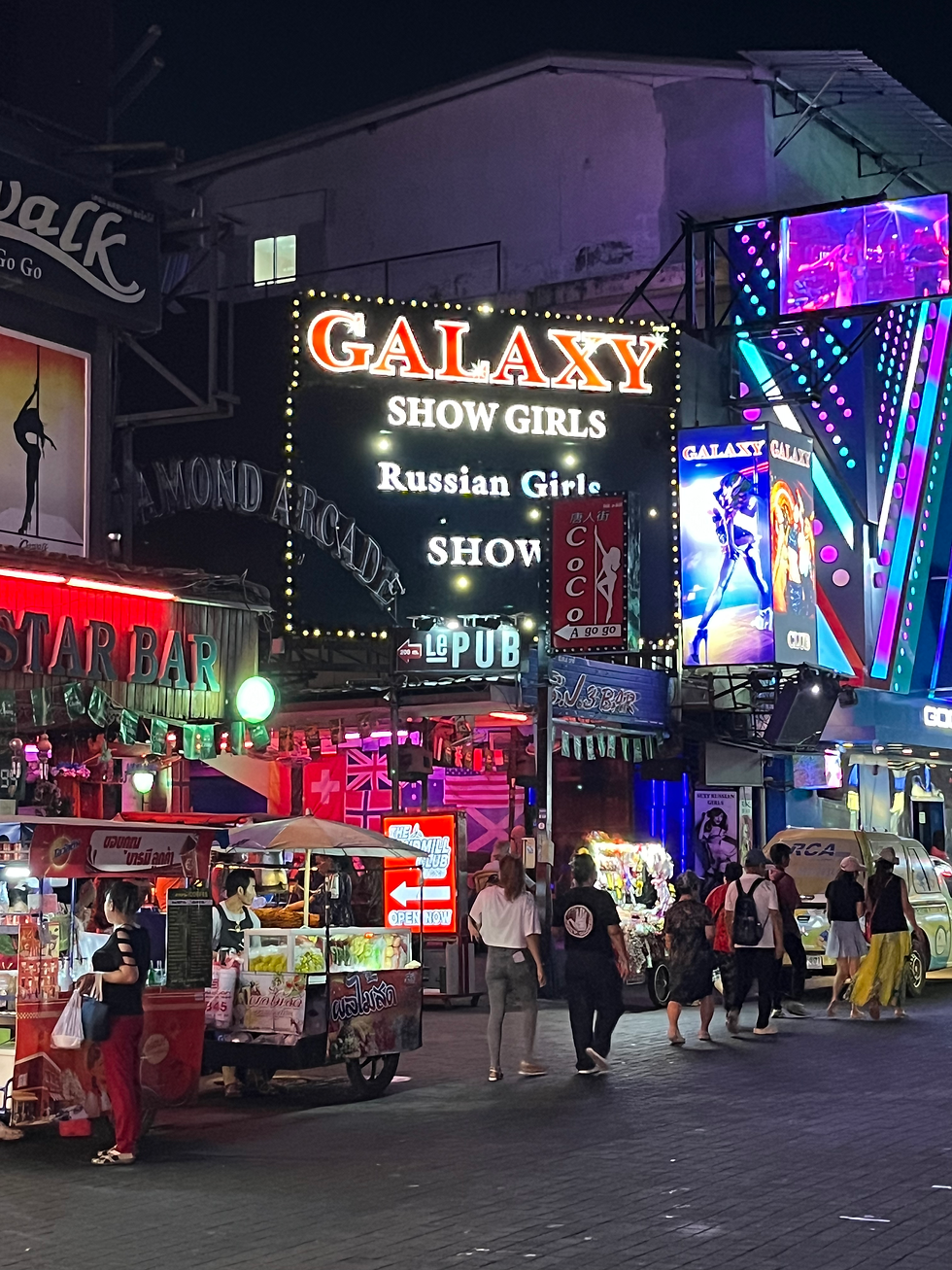
Booking Your Accommodations Near A Party Zone
That cheap hotel near the beach bars can look like a win when you're planning a Thailand trip. Great location, short walk home, lots of food nearby, and the photos probably show a bright little room with a balcony. If this is your intention when you come to Thailand, this is great information to consider.
Then midnight hits.
The bass starts shaking the window. Scooters rip past. People shout in the hallway. Someone gets locked out and bangs on a door that may or may not be yours. At 3 AM, the party is still going. At 6 AM, the cleanup begins.
Thailand is an incredible place to travel, and yes, the nightlife can be a lot of fun. But sleeping right next to a party zone is a different experience from visiting one for a night out; if you want your trip to feel relaxed, flexible, and actually restful, where you stay matters more than most people think.
Party zones are fun to visit, not always fun to sleep in.
There’s a big difference between walking into a party area and being stuck inside one.
In places like Patong in Phuket, parts of Koh Phi Phi, Khao San Road in Bangkok, and some beach strips on Koh Phangan, nightlife is the main event. That means music, crowds, neon lights, late-night food, taxis, motorbikes, and people moving around until the early morning.
That can be exciting when you're in the mood for it. It’s less fun when you have an early ferry, a temple visit, a diving trip, or a long travel day coming up.
The biggest issue is control. If you're staying a 10- or 15-minute walk away, you can join the fun and leave when you're ready. If your room is above a bar, behind a club, or on the main party street, you don’t get to choose when the night ends.
A room near nightlife can also feel different from what the listing suggests. “Central location” often means “bring earplugs.” “Steps from entertainment” can mean “you’ll hear every song until closing.” Reviews usually tell the truth, so read them closely.
Look for phrases like:
“Great if you like to party”
“A bit noisy at night”
“Music until late”
“Bring earplugs”
“Not ideal for light sleepers”
“Close to bars”
Those aren’t small details. They’re warnings wrapped in polite traveler language.
Sleep loss can ruin the next day.
Thailand rewards early starts.
Morning markets are better before the heat kicks in. Island tours often leave early. Temples feel calmer before the crowds. Even a simple beach day is better when you wake up rested instead of feeling like you slept inside a speaker.
One bad night is annoying. Several bad nights in a row can mess with the whole trip.
You might skip plans you were excited about. You might spend more money on taxis because you’re too tired to walk. You might get cranky over things that normally wouldn’t bother you, like a slow breakfast order or a delayed boat.
And if you’re dealing with jet lag, the last thing you need is a room beside a club.
This is why avoiding accommodations near Thailand party zones isn’t about being boring. It’s about protecting the parts of the trip you actually came for. You can still go out. You can still have drinks, dance, meet people, and enjoy the late-night energy. You don’t have to sleep in the middle of it.
A good base should give you options. Party when you want. Rest when you need.
The area can feel different at night than it does during the day.
A street can seem perfect when you check in at 2 PM.
The café downstairs is cute. The beach is close. The massage shop next door looks convenient. The hotel lobby feels calm. Then the sun goes down, the signs turn on, and the whole area changes.
This is common in tourist nightlife areas. During the day, they can feel sleepy or even slightly empty. At night, they become loud, crowded, and chaotic.
That shift affects more than noise. It can change how comfortable you feel walking back to your room, especially if the street is packed, people are drunk, or taxi drivers are crowding the curb. Thailand is generally a friendly and welcoming country. Still, any heavy nightlife area can come with the usual late-night problems: pushy touts, messy sidewalks, a risk of petty theft, and crowds that make simple movement harder.
There’s also the practical side. If your hotel sits right on a busy party strip, ride-share pickups and taxi stops can be annoying. Drivers may not want to enter the busiest section, or traffic may crawl. Dragging luggage through a crowd after a long travel day is not the travel memory you’re hoping for.
A quieter area nearby usually gives you the best of both worlds. You can walk or take a short ride to the nightlife, then return to a quieter street where it’s easier to sleep, shower, and reset.
Cheap rooms near nightlife can cost you in other ways.
Party-zone hotels and hostels can be tempting because they’re often affordable and easy to find. For some travelers, especially people who want a social hostel scene, that’s the point. No judgment there.
But if your plan includes more than nightlife, the cheapest central room may not be the best value.
Think about the hidden costs:
Poor sleep
You lose energy for the next day.
Extra transportation
You may pay more to escape the area during peak noise or traffic.
Changed plans
You might skip early tours or move slower than expected.
Stress
Loud halls, drunk guests, and late-night street noise can wear you down.
Last-minute rebooking
If the room is unbearable, you may end up paying for another hotel anyway.
It’s not that every hotel near a party street is bad. Some have excellent soundproofing, interior rooms, or quieter back buildings. But you need to confirm that before booking, not after you’ve already paid.
When checking a listing, don’t just look at star ratings. Open the reviews and search for words like `noise`, `music`, `bar`, `club`, `sleep`, and `quiet`. If multiple guests mention the same issue, believe them.
Also check the map carefully. A hotel can look close to the beach, but the exact street matters. Being two blocks off the main strip can make a huge difference.
How to choose a better place to stay
You don’t need to stay far away from everything. You need a little buffer.
A good rule is to stay close enough to reach nightlife easily, but far enough that the sound doesn’t follow you home. In many Thai destinations, that might mean a 10 to 20-minute walk, a short tuk-tuk ride, or a quick taxi from the busy strip.
Before you book, try this:
Read the lowest reviews first.
Not to scare yourself, but to spot patterns. If noise comes up again and again, move on.
Check the map at street level.
Look for nearby bars, clubs, main roads, and late-night venues.
Choose side streets over main strips.
A small lane can be much calmer than the main entertainment road.
Ask the hotel directly.
Message them and ask, “Is the room quiet at night?” A clear answer is a good sign. A vague answer tells you plenty.
Pick flexible bookings when possible.
If you’re unsure about the area, give yourself the option to change.
Avoid rooms above restaurants or bars.
Even if the bar closes early, staff cleanup and street noise can continue.
If nightlife is a big part of your trip, stay near it, not inside it. That small distinction can make your whole stay better.
Pick comfort over convenience when booking in Thailand.
Thailand’s party areas are famous for a reason. They’re lively, social, and easy to enjoy for a night out. But booking your room right in the middle of one can turn your hotel into part of the nightlife, whether you asked for that or not.
The sweet spot is simple: stay somewhere calm, with easy access to the fun. You’ll sleep better, enjoy your days more, and still be close enough to go out when the mood hits.
A few extra minutes of walking is a small trade for a quiet room and a better trip.

Slow Down In Thailand For A Richer Travel Experience
Thailand can tempt you into packing your trip like a buffet plate. Bangkok, Chiang Mai, Pai, Phuket, Krabi, Koh Samui, Koh Tao, Ayutthaya, maybe a jungle trek, maybe a cooking class, maybe three beaches because they all look different online.
It sounds exciting until you realize half your vacation is spent checking out, getting to airports, waiting for ferries, and dragging your bag through another hot street at noon.
Thailand rewards a slower pace. Not because there’s less to see, but because the best parts often happen between the “must-see” stops. A quiet breakfast at a plastic table. A temple you wander into by accident. A beach you return to at sunset three nights in a row. A neighborhood that starts to feel familiar.
If you want a trip that feels rich instead of rushed, Thailand is one of the best places to slow down.
Trying to see everything can make Thailand feel smaller
A fast Thailand itinerary usually looks great on paper. A few days in Bangkok, two nights in Chiang Mai, a quick island hop, then one final stop before flying home. You cover more ground, sure. But you may not actually experience more.
Every move has a cost.
You lose time to:
Packing and repacking
Airport transfers
Ferry schedules
Hotel check-ins
Weather delays
Figuring out a new neighborhood from scratch
Being tired when you arrive
That last one matters. Thailand is easy to enjoy, but it can still be physically draining. The heat, traffic, long travel days, and early tours add up. If you’re changing places every two days, you’re often seeing each destination at your lowest energy.
A slower trip gives you room to recover. It also gives each place a chance to surprise you.
Bangkok, for example, isn’t just a stopover city. Spend one night there, and you might only remember traffic and a temple checklist. Spend four or five days, and you start to notice the rhythm: morning markets, river boats, tiny coffee shops, family-run food stalls, quiet sois, rooftop views, and neighborhoods that feel completely different from each other.
The same goes for Chiang Mai, the islands, and smaller towns. Depth beats distance more often than people expect.
Pick fewer bases and stay longer.
A good slow Thailand trip starts with a simple shift: choose bases, not trophies.
Instead of asking, “How many places can I fit in?” try asking, “Where would I actually enjoy waking up for several days?”
For a first trip of 10 to 14 days, two or three bases is plenty. That might look like:
Trip length | Better pace | How it feels |
7 days | Bangkok plus one beach or Chiang Mai | Relaxed, with one clear contrast |
10 days | Bangkok, Chiang Mai, and one island area | Balanced without constant moving |
14 days | Three bases with day trips | Full, but still breathable |
This doesn’t mean you sit still the whole time. It means you stop treating every place like a one-night sample.
From Bangkok, you can take a day trip to Ayutthaya or spend a full afternoon along the Chao Phraya River. From Chiang Mai, you can visit temples, take a cooking class, explore the old city, and head into the hills without changing hotels. From Krabi or Phuket, you can choose boat trips when the weather looks good instead of locking yourself into a packed schedule.
Staying longer also makes travel feel easier. You learn the shortcut back to your guesthouse. You find the fruit stand you like. You stop needing a map for every meal. That comfort creates space for better choices.
And honestly, it’s nice to have a “home” for a few days.
Leave blank space in your days.
Blank space might feel wasteful when you’ve flown halfway around the world. It isn’t. It’s where a lot of the good stuff happens.
Thailand is full of small pleasures that don’t need booking:
Sitting with an iced Thai tea while afternoon rain passes
Getting a foot massage after a long walk
Returning to the same noodle stall because it was that good
Watching monks collect alms in the early morning
Taking a long-tail boat just because the river looks beautiful
Spending an extra hour at a market with no plan
If every hour is scheduled, you’ll miss those moments or rush through them.
Try planning one main thing per day. A temple visit. A cooking class. A boat trip. A hike. Then leave the rest loose. This makes the day feel full without turning it into a race.
It also gives you a buffer for real travel conditions. A storm may cancel a tour. A ferry may run late. A place you thought you’d love may not click. Another place may make you want to stay all afternoon.
A flexible day lets Thailand lead a little.
Let food slow you down.
Food is one of the easiest ways to travel more slowly in Thailand. Not fancy food, necessarily. Everyday food.
A rushed traveler searches “best restaurants near me,” eats, pays, and leaves. A slower traveler starts noticing patterns. Which stall has a line after work? Where do local families sit? What’s cooking in the big metal pot? Why does one vendor sell only one dish, and why is it incredible?
Some of the best meals in Thailand are simple: boat noodles, grilled chicken with sticky rice, papaya salad, khao soi in the north, roti near the beach, mango sticky rice when it’s in season. You don’t need to chase a viral spot. You need time to look around.
Food also helps you connect to a place. Southern curries hit differently than northern noodle soups. Bangkok’s street food has a different pace than a quiet island night market. When you slow down, those differences become part of the trip instead of just another meal photo.
A good rule: if you find a place you love, go back. There’s no prize for eating somewhere new every single time. Returning can be its own kind of travel.
Choose experiences that fit the pace of the place.
Not every destination in Thailand wants the same kind of schedule.
Bangkok has energy, but it also has pockets of calm. Mix big sights like the Grand Palace or Wat Pho with slower neighborhoods, river rides, and long meals.
Chiang Mai suits a gentler rhythm. Mornings are great for temples or markets. Afternoons are better for resting, cooking classes, cafés, or a massage. Evenings are made for night markets and easy wandering.
Beach areas are where people most often overplan. Island hopping sounds dreamy, but too many ferry days can turn paradise into logistics. Pick one island or coastline and get to know it. Swim, read, eat, nap, walk, repeat. That’s not “doing nothing.” That’s the point.
If you’re drawn to the north, give yourself time for mountain roads and slower village stays. If you’re drawn to the sea, don’t split your beach time across three far-apart islands unless you truly enjoy transit.
The right pace depends on the place, but rushing rarely improves it.
Build a trip you’ll remember, not just prove
There’s a quiet pressure to make travel look impressive. More stops, more photos, more famous names checked off the list. Thailand makes that easy because there’s so much to see.
But the trip you remember years later may not be the one with the longest route. It might be the morning you learned how to order coffee in Thai. The guesthouse owner who helped you choose a beach. The second visit to the same temple when no tour groups were around. The night market dinner you still think about.
Slowing down doesn’t mean missing out. It means giving your days enough room to become stories.
So if your Thailand itinerary feels crammed, cut one stop. Maybe two. Stay longer in fewer places. Keep a few mornings open. Let a good meal stretch. Take the later ferry if it means one more swim.
Thailand doesn’t need to be conquered. It’s better when it’s absorbed slowly, one neighborhood, one meal, one sunset at a time.
Quick tips that make Thailand easier
A few small habits can save a lot of hassle:
Download offline maps before long travel days.
Bolt and Grab are great Apps to have.
Keep cash on hand, especially outside major cities.
Learn a few Thai phrases, even if your pronunciation isn’t perfect.
Use your right hand or both hands when giving or receiving things.
Don’t touch anyone’s head, including children.
Avoid pointing your feet at people, shrines, or Buddha images.
Check temple dress codes before you go.
Book ferries and domestic travel early during holidays and peak season.
Give yourself extra time in Bangkok traffic.
Be patient when plans change, because they will.
Thailand rewards travelers who stay flexible. A rainy afternoon might lead you to a tiny noodle shop. A missed ferry might turn into a night in a town you never planned to visit. The best trips usually leave space for surprises.
You can show your appreciation with a virtual coffee if you have found value in my blog.

Some of the links found on my website are affiliate links. I earn from qualifying purchases as an Amazon Associate and an Expedia Associate. Through other links, I may also receive a small commission at no extra cost to you. Using them is a way to support me, help offset the cost of running this website, and ensure I can continue providing free content and resources.
I truly appreciate the support!


Comments