


Exploring the Mysteries of the Abandoned 1964 World’s Fair Site, New York

The 1964 World’s Fair in New York City was a landmark event that showcased innovation, culture, and optimism for the future. Yet, decades later, the site where this grand exposition took place has fallen into neglect and obscurity. Exploring the abandoned grounds reveals a fascinating story of ambition, decline, and the passage of time. This post takes you through the history, remnants, and ongoing mysteries of the 1964 World’s Fair site, inviting you to uncover what remains of this once-celebrated event.

The Vision Behind the 1964 World’s Fair
The 1964 World’s Fair was designed to celebrate human progress and the promise of tomorrow. Held in Flushing Meadows–Corona Park, Queens, it attracted over 51 million visitors during its two-year run. The fair introduced many innovations, including early computer technology, futuristic architecture, and cultural exhibits from around the world.
The site was chosen for its size and accessibility, and it was transformed from a former ash dump into a sprawling exhibition space. Iconic structures such as the Unisphere, a giant steel globe, symbolized global unity and technological advancement. The fair’s theme, “Peace Through Understanding,” reflected the optimism of the post-war era.
What Happened After the Fair Closed?
After the fair ended in 1965, many pavilions and structures were dismantled or left to decay. Unlike some world fairs that left lasting legacies, the 1964 event’s site struggled to find a new purpose. Some buildings were repurposed, but many were abandoned, falling victim to weather, vandalism, and neglect.
The Unisphere remains the most visible and well-maintained relic, serving as a symbol of Queens and a popular park landmark. However, much of the original fairgrounds has been overtaken by nature or urban development. The site’s decline reflects shifting priorities and the challenges of maintaining large-scale event spaces after their initial use.
Exploring the Remnants Today
Visiting the abandoned 1964 World’s Fair site offers a glimpse into a forgotten chapter of New York’s history. While much of the fair’s infrastructure is gone, some remnants still stand:
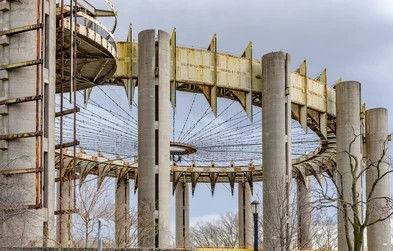
The New York State Pavilion: This structure includes three observation towers and a large tent-like roof. It has been closed for decades, but it remains a striking example of mid-century modern design.
The Perisphere and Trylon: Originally iconic symbols of the fair, these were dismantled, but their shapes and designs inspired later architecture and art.
Old pathways and foundations: Walking through the park, you can find traces of the original layout, including concrete foundations and faded signage.

Urban explorers and historians often document these sites, sharing photos and stories that capture the eerie beauty of decay and abandonment.
The Unisphere’s Enduring Legacy
The Unisphere is the most enduring symbol of the 1964 World’s Fair. Standing 140 feet tall and weighing 700,000 pounds, it was designed to celebrate the beginning of the space age and global interconnection. Today, it is surrounded by fountains and a public park, maintained by the New York City Parks Department.
The Unisphere’s survival contrasts with the fate of many other fair structures. It serves as a reminder of the fair’s original spirit and the hope for a connected world. Visitors often gather here for events, photography, and quiet reflection.
Challenges of Preserving the Site
Preserving the abandoned 1964 World’s Fair site presents several challenges:
Funding: Restoration and maintenance require significant investment, which is difficult to secure for a site with limited commercial use.
Safety: Many structures are unsafe for public access, leading to closures and restricted areas.
Urban development pressures: The surrounding area has evolved, and there is ongoing debate about how to balance preservation with new construction and park use.
Local groups and preservationists advocate for protecting the site’s history while finding sustainable ways to reuse the space. Some proposals include turning parts of the site into museums, cultural centers, or community spaces.

Why the Site Still Captivates People
The abandoned 1964 World’s Fair site fascinates visitors for several reasons:
Historical significance: It represents a unique moment in mid-20th-century culture and technology.
Visual contrast: The mix of futuristic design and natural decay creates striking scenes.
Mystery and nostalgia: Exploring the ruins invites reflection on the passage of time and changing societal values.
For photographers, urban explorers, and history enthusiasts, the site offers a rare opportunity to connect with a vanished world.
How to Visit and Explore Responsibly
If you want to explore the 1964 World’s Fair site, keep these tips in mind:
Visit public areas: The Unisphere and the surrounding park are open to visitors year-round.
Respect closures: Some structures, such as the New York State Pavilion, are off-limits for safety reasons.
Join guided tours: Occasionally, local groups organize tours that provide historical context and safe access.
Stay safe: Wear appropriate footwear and be cautious of uneven terrain or debris.
Leave no trace: Preserve the site by not disturbing or vandalizing any remains.
Exploring with respect helps ensure the site remains a valuable resource for future generations.
The Future of the 1964 World’s Fair Site
Efforts to revitalize the site continue, with community input playing a key role. Ideas include:
Creating interactive exhibits that tell the story of the fair.
Restoring key structures for public use.
Developing educational programs focused on innovation and history.
Balancing preservation with modern needs will shape the site’s future. The goal is to honor the fair’s legacy while making the space relevant and accessible today.
Places to Stay:
You can show your appreciation with a virtual coffee if you have found value in my blog.

Do not forget to subscribe to get my monthly newsletter.
Some of the links found on my website are affiliate links. I earn from qualifying purchases as an Amazon Associate and an Expedia Associate. Through other links, I may also receive a small commission at no extra cost to you. Using them supports me, helps offset the cost of running this website, and ensures I can continue to provide free content and resources.
I truly appreciate the support!


Comments